
Preamble
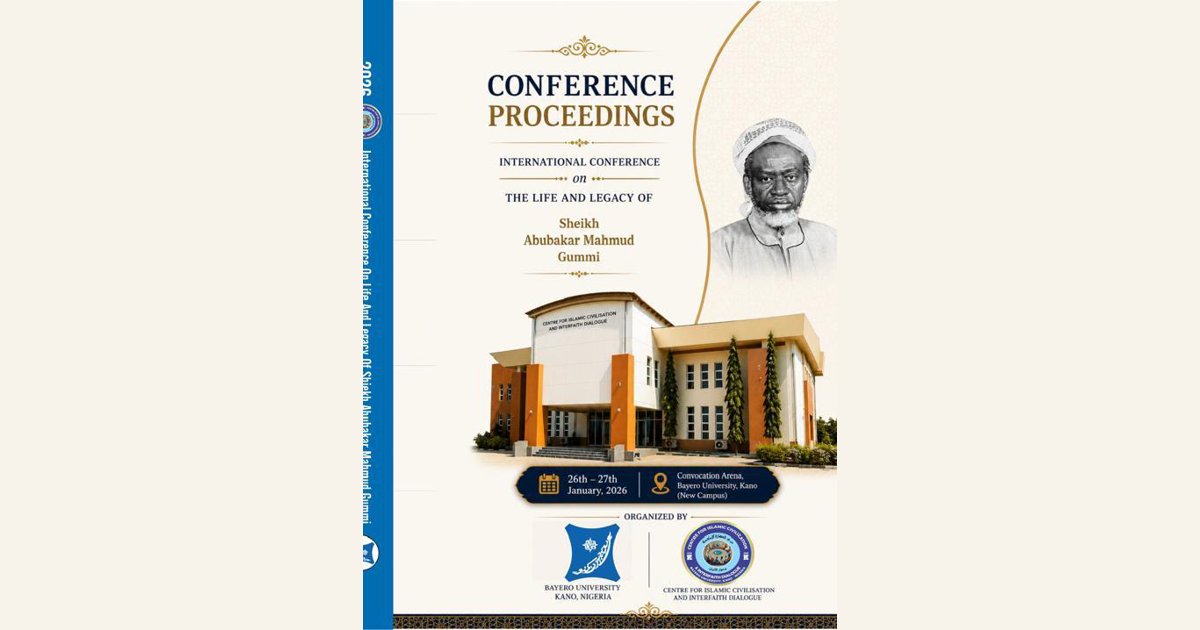
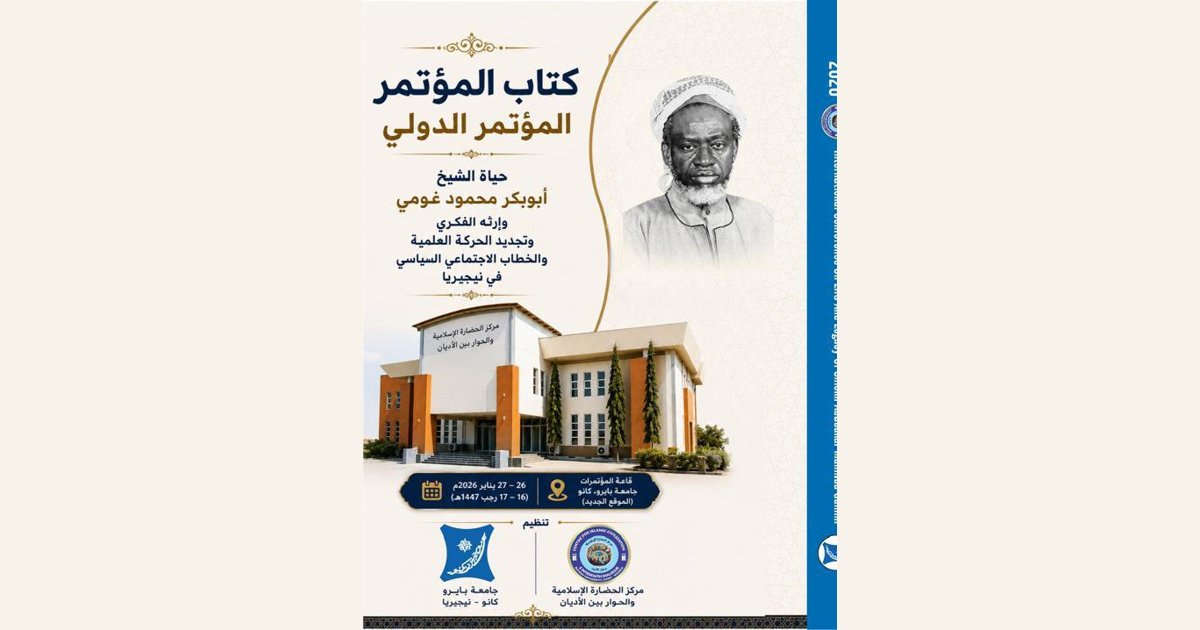
The 4th International Conference of the Centre for Islamic Civilization and Interfaith Dialogue (CICID), themed “The Life and Legacy of Shaykh Abubakar Mahmud Gumi: Reshaping Islamic Scholarship and Sociopolitical Discourse in Contemporary Nigeria,” was successfully held from 26th to 27th January 2026 at Bayero University, Kano. The conference formally commenced with the recitation of the Glorious Qur’an and opening prayers, seeking divine guidance and blessings for fruitful deliberations. It was convened to critically examine the life, intellectual heritage, and enduring contributions of Shaykh Abubakar Mahmud Gumi to Islamic thought, reform movements, interfaith relations, public service, and national unity in Nigeria and beyond. Attendance The conference was graced by a distinguished assembly of dignitaries, scholars, and stakeholders from Nigeria and abroad. Notable attendees and representatives included:
1. The President of the Federal Republic of Nigeria, His Excellency Asiwaju Bola Ahmed Tinubu, GCFR, represented by the Honourable Minister of Information and Culture, Alhaji Mohammed Idris Malagi. 2. His Excellency Alhaji Atiku Abubakar, GCON, (Wazirin Adamawa) Former Vice President of the Federal Republic of Nigeria, represented by Prof. Ahmad of KASU University. 3. The Deputy President of the Nigerian Senate, Senator Barau I. Jibrin, CON. 4. The Executive Governor of Kano State, Abba Kabir Yusuf, represented by Sheikh Aminu Daurawa. 5. The Executive Governor of Kaduna State, represented by the Director-General of Interfaith Affairs, Barr. Tahir Umar, Kaduna State. 6. Members of the Shiekh Late Abubakar MAhmud Gumi family, led by Dr. Ahmad Abubakar Gumi. 7. Leadership of the Jama‘atu Izalat al-Bid‘ah wa Iqamat al-Sunnah, led by Sheikh (Dr.) Abdullahi Bala Lau. 8. The Vice-Chancellor, Bayero University, Kano, members of the university management, Deans, Directors, distinguished Professors, Researchers, Students, Policymakers, Security personnel, and numerous admirers of the late Shaykh. The intellectual proceedings featured over one hundred academic papers, including the lead presentation by the Murshid alaam of the National Mosque, Professor Shehu Galadanci, alongside numerous commissioned and scholarly contributions exploring diverse facets of Shaykh Gumi's life and legacy. Observations
Following extensive presentations and deliberations, the conference made the following observations on the enduring impact of Shaykh Abubakar Mahmud Gumi:
1. Shaykh Abubakar Mahmud Gumi made monumental contributions to Qur’anic understanding, particularly through translation and interpretation accessible to the general Muslim populace. 2. His intellectual endeavours significantly shaped the evolution of modern Islamic thought in Nigeria. 3. He played a pivotal role in redirecting Islamic reform movements toward strict adherence to the Qur’an and Sunnah. 4. His exposition of ‘Aqidah was firmly grounded in classical Sunni orthodoxy. 5. He consistently preached against religious innovations (bid‘ah) and syncretic practices. 6. He exemplified exemplary Islamic character, marked by integrity, courage, and sincerity. 7. His political and socio-economic views reflected a strong commitment to justice, equity, and national development. 8. He was an advocate of Muslim–Christian coexistence and interfaith harmony. 9. His writings remain highly relevant to contemporary Islamic and societal discourse. 10. His da‘wah methodology emphasized wisdom, clarity, moderation, and public engagement. 11. He maintained constructive relations with traditional rulers, scholars, and civil and military administrations. 12. His influence on Muslim society in Nigeria was profound, widespread, and enduring. 13. He contributed significantly to the reform of Islamic education and offered balanced perspectives on Muslim engagement with Western education. 14. His economic views reflected Islamic ethical principles and social responsibility. 15. His public service demonstrated a strong commitment to diplomacy, national unity, and peaceful coexistence. Challenges The conference identified pressing challenges that threaten the full appreciation and application of Shaykh Gumi’s legacy:
1. Inadequate documentation and institutional archiving of his intellectual output. 2. Misinterpretation or selective appropriation of his views for sectarian or political purposes. 3. A declining emphasis on authentic, disciplined Islamic scholarship among younger generations. 4. Weak integration of his reform ideals into contemporary da‘wah methodologies and practices. 5. The resurgence of religious intolerance and mutual misunderstanding, which stands in direct contradiction to his lifelong vision for interfaith harmony. Resolutions and Recommendations In light of the observations and identified challenges, the conference resolved and recommended the following:
1. Relevant academic institutions should integrate the works and thought of Shaykh Gumi into curricula for Islamic Studies, Nigerian History, and Political Thought.
2. CICID and any prospective partner institutions should establish sustained research and documentation projects dedicated to preserving and analysing his intellectual legacy. 3. Scholars and Islamic organizations should consciously uphold his reform methodology, anchored in authentic knowledge (‘Ilm), wisdom (Hikmah), and moderation (Wasatiyyah). 4. Government bodies and interfaith councils should actively promote his ideals of respectful dialogue, religious tolerance, and national cohesion as a model 5. His major writings should be translated into major languages, republished, and comprehensively digitized for global accessibility. 6. Targeted programs should be developed to acquaint the youth with the values of integrity, scholarship, and selfless service to the nation. 7. Regular conferences, symposia, and public lectures should be institutionalized to continue critical engagement with his contributions. Appreciations The Conference expresses its profound appreciation and deep admiration for the following individuals and institutions for their exemplary stewardship, unwavering dedication, and outstanding commitment to the Conference's successful organization. Special appreciation is extended to the Vice-Chancellor of Bayero University, Kano, whose support, encouragement, and personal commitment were instrumental to the success of the Conference. The Conference also acknowledges the invaluable contributions of Professor A. A. Rasheed, mni, MFR, former Executive Secretary of the National Universities Commission; Alhaji Bashir I. Gwammaja; Sheikh Abdulwahhab Abdullahi; and Sheikh Dr. Abdullahi Bala Lau. The Conference further conveys its sincere gratitude to Distinguished Senator Abdulaziz A. Yari for his generous support, which substantially underwrote the Conference. Appreciation is also extended to Mal. Nuhu Ribadu, mni CON, Senator Abdurrahman Kawu Sumaila, OFR; Hajiya Saudatu Mahadi, MFR; Alhaji Yusuf Abdullahi (Fantiya); Sheikh Sani Yahya Jingir, as well as the Kano State Government and the Kaduna State Government, for their invaluable support and cooperation. Conclusion The 4th International Conference of CICID concludes that Shaykh Abubakar Mahmud Gumi stands as one of the most influential Islamic scholars, reformers, and national figures in Nigeria's history. His legacy provides an indispensable framework for addressing contemporary issues in religious practice, education, governance, and inter-community relations. This conference reaffirms the collective commitment of all stakeholders to preserve, promote, and diligently apply his enduring ideals for the benefit and unity of present and future generations. Chairman Central Organizing Committee 27th January, 2026
Comments