
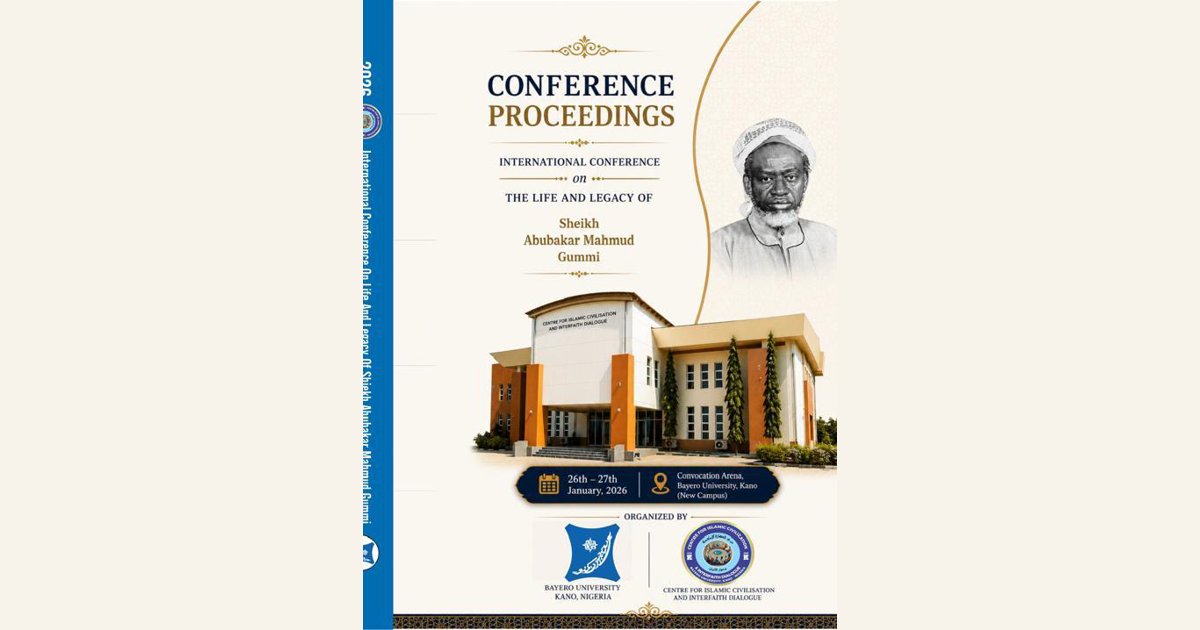
The study argues that Gumi did not merely preside over the Sharia Court of Appeal but actively engineered four fundamental transformations. First, he provided the doctrinal architecture that legitimized statutory codification through creative deployment of siyasa shari'yyah (governance according to Sharia) and ta'zir (discretionary punishment) doctrines. Second, he transformed the procedural apparatus from informal majalis into formalized courts of record, introducing functional equivalents of stare decisis while maintaining Islamic fiqh as substantive law. Third, his judicial philosophy of "pragmatic textualism" balanced commitment to scriptural sources with recognition of public interest (maslahah mursalah), producing legally progressive outcomes on matters such as women's education while maintaining doctrinal authenticity. Fourth, his model of "cooperative jurisprudence" with the Northern Region political establishment ensured institutional survival but arguably foreclosed development of robust judicial independence.
This appraisal posits that Gumi's tenure established a unique model of "bureaucratic Sharia" (vertically integrated, procedurally formalized, yet substantively Islamic) that proved more stable than comparable experiments in Sudan, Pakistan, or Malaysia. However, the study identifies three unresolved tensions that challenge contemporary Nigerian constitutionalism: jurisdictional boundaries between religious and secular law, conflicts between Sharia penalties and constitutional rights guarantees, and the absence of judicial independence doctrines. Ultimately, this paper positions Gumi as both architect and constraint. He demonstrated that legal pluralism in Nigeria need not produce chaos, proving that faith and statute can coexist under appropriate institutional design. Yet the structures he established reflect the priorities of state consolidation in the 1960s and may prove inadequate for contemporary challenges of religious extremism, human rights enforcement, and federalist tensions. Whether his legacy represents a sustainable constitutional settlement or a historically contingent accommodation requiring fundamental revision remains Nigeria's unfinished jurisprudential project.
I. Introduction: The Jurist in Transition
The legal history of Northern Nigeria is often demarcated by the "Settlement of 1960," a pivotal moment that sought to harmonize the centuries-old tradition of Maliki jurisprudence with the statutory exigencies of a modern, independent state. At the center of this transition stood the office of the Grand Khadi, and more specifically, the tenure of Sheikh Abubakar Gumi. To understand Gumi's judicial legacy, one must first appreciate the "constitutional crisis" of the late 1950s that necessitated his rise.
A. Methodological Framework and Scholarly Context
This study positions itself within the emerging scholarship on post-colonial legal pluralism in Nigeria, building upon the foundational work of scholars such as Philip Ostien on Sharia implementation, Umar Lawan on the Northern Nigerian legal system, and Auwalu Sa'id on Islamic jurisprudence in the Nigerian context. While much of the existing literature approaches Gumi primarily through the lens of religious reform or theological innovation, this paper deliberately adopts a jurisprudential methodology— examining his judicial decisions, administrative reforms, and institutional legacy through the analytical framework of legal realism and comparative constitutional law.
Our theoretical framework draws on what Sally Falk Moore termed "semi-autonomous social fields"—recognizing that the Sharia court system under Gumi operated within overlapping jurisdictions of religious authority, state power, and customary practice. The concept of legal transplantation (borrowed from Alan Watson and refined by Esin Örücü) proves particularly useful in analyzing how the Sudanese-Indian Penal Code model was adapted to Northern Nigerian conditions. Unlike earlier scholarship that treats the 1960 Settlement as a straightforward imposition, we examine it as a negotiated constitutional moment where indigenous legal actors exercised significant agency.
Sources and Limitations
This analysis draws upon three primary source categories: (1) appellate decisions from the Sharia Court of Appeal (1962-1972) available through the Northern Region Law
Reports; (2) administrative correspondence and policy memoranda housed in the National Archives Kaduna; and (3) contemporary legal commentary from the Nigerian Law Journal and proceedings of the Nigerian Bar Association. A methodological caveat is necessary: the archival record for Alkali court proceedings during this period remains fragmentary, and many lower court decisions were never formally reported. Consequently, our assessment of Gumi's appellate supervision relies on the cases that reached the Sharia Court of Appeal—inevitably representing exceptional rather than routine adjudication. Furthermore, separating Gumi's judicial legacy from his broader religious reform agenda presents analytical challenges. His theological writings and Friday sermons inevitably influenced his judicial philosophy, yet we maintain a deliberate focus on his institutional role as Grand Khadi rather than his persona as religious scholar. This is not to compartmentalize his life artificially, but rather to isolate the specific impact of his tenure on the structure of Islamic adjudication in Northern Nigeria.
B. The Crisis of Compatibility (1958–1959)
On the eve of independence, the Northern Region faced a profound legal dilemma. The existing "Native Courts," which handled the vast majority of litigation, administered an uncodified form of Islamic criminal law. This posed a direct conflict with the fundamental rights provisions being drafted for the 1960 Independence Constitution—specifically the principle of nullum crimen sine lege (no crime without law). The British colonial administration and Southern political elites feared that the continued application of unwritten criminal law would lead to arbitrary justice, particularly in homicide cases where the distinctions between qisas (retaliation) and the English common law concept of mens rea (criminal intent) diverged significantly.
This constitutional tension was not unique to Nigeria. Similar challenges confronted post-colonial states in Malaysia (1957), Pakistan (1956), and Sudan (1956) where the integration of Islamic law into Westminster-style constitutional frameworks required creative legal engineering. What distinguished the Northern Nigerian approach was the deliberate retention of dual jurisdiction—preserving Sharia for personal law while ceding criminal matters to the statutory Penal Code—a compromise that Malaysia would later adopt in modified form.
C. The "Settlement of 1960"
The resolution to this impasse was the "Settlement of 1960," orchestrated following the recommendations of the Panel of Jurists (1958). The compromise was elegant but legally complex: the Northern Region would adopt a Penal Code—modeled on the Sudanese and Indian Codes—which codified criminal offenses in a manner compatible with both British standards and Islamic sensibilities. In exchange, the purely Islamic criminal law was effectively abrogated, confined thereafter to personal status and civil matters.
D. Gumi as the Judicial Bridge
It is against this backdrop of radical codification that Sheikh Abubakar Gumi's role must be appraised. He did not merely preside over the Sharia Court of Appeal as a passive adjudicator; he acted as the "judicial bridge" between the conservative Ulama, who viewed the Penal Code with suspicion, and the modern state machinery. As Grand Khadi, his burden was dual: to professionalize the Alkali courts to meet the procedural standards of the new Constitution, while simultaneously maintaining the doctrinal legitimacy of the Sharia within the appellate system. This paper contends that Sheikh Gumi's tenure was defined by this delicate act of adjudicating faith and statute. He was a judicial modernist who utilized the mechanics of the state—law reports, appellate review, and procedural structure—to preserve the essence of Islamic law within a secular constitutional framework.
E. Contemporary Significance
Understanding Gumi's institutional legacy carries immediate relevance for Nigeria's ongoing constitutional debates. The current discourse surrounding expanded Sharia implementation in Northern states, the jurisdictional boundaries between Sharia and customary courts, and the proposal for state-level police forces all echo the fundamental questions Gumi navigated: How does a religiously plural state accommodate multiple legal traditions without fracturing constitutional unity? His model of "bureaucratic Sharia"—vertically integrated, procedurally standardized, yet doctrinally authentic—remains the operative framework in Nigeria's Sharia court system today. Any proposal to reform this system must first reckon with the architecture he established. Moreover, as comparative constitutional scholars increasingly examine hybrid legal systems in Muslim-majority regions, Gumi's tenure offers an instructive case study. Unlike Iran's post-1979 wholesale substitution of civil law with Sharia, or Turkey's complete secularization of legal codes, Nigeria's dual-jurisdiction model represents a middle path—one that Malaysia and Indonesia have studied carefully. The viability of this path, and the doctrinal compromises it entails, form the core inquiry of this study.
F. Structure of Analysis
The remainder of this paper proceeds through five analytical stages. Section II examines the jurisprudential rationale Gumi provided for accepting the Penal Code, analyzing his deployment of the ta'zir doctrine to legitimize statutory law. Section III evaluates his procedural reforms—the transition from informal majalis to formalized courts of record. Section IV interrogates his judicial philosophy, particularly the tension between his textualist approach to Maliki doctrine and the pragmatic demands of statecraft. Section V addresses the question of judicial independence, examining his relationship with the Northern Region's political establishment. The conclusion synthesizes these threads to assess whether his model of "bureaucratic Sharia" represents a sustainable constitutional settlement or a historically contingent accommodation that may not survive Nigeria's evolving federalism. II. The "Settlement of 1960": Gumi as the Bridge The 1960 Settlement represented more than administrative reorganization. It posed a fundamental question of Islamic legal theory: Can a Muslim sovereign legitimately replace divine criminal prescriptions (hudud and qisas) with man-made statutory codes? The fact that Northern Nigeria did not fracture over this question, as Sudan nearly did in 1983, owes much to the doctrinal architecture Sheikh Gumi constructed. This section examines the jurisprudential rationale he deployed to reconcile statutory codification with Islamic authenticity.
A. The Doctrinal Crisis: Siyasa Shari'yyah vs. Codification
The adoption of the Penal Code in 1960 was not merely a legislative act. It was a theological crisis for the Northern judiciary. The Alkalis (judges of the Native Courts) were accustomed to applying the Al-Mukhtasar of Khalil and other classical Maliki texts directly. The introduction of a "Code" (secular in form, even if compatible in substance) threatened to displace the divine law. Within classical Islamic jurisprudence, criminal law divides into three categories: hudud (fixed punishments prescribed by the Quran), qisas (retaliatory justice for homicide and injury), and ta'zir (discretionary punishment for offenses not explicitly detailed in revelation).¹ The Sudanese Penal Code of 1899, upon which Nigeria's version was modeled, attempted to codify this trichotomy while making it comprehensible to English-trained magistrates.² Yet the very act of codification invited criticism from ulama who argued that reducing divine commands to numbered sections in a statute book amounted to elevating legislative authority above scriptural authority.
B. Gumi's Jurisprudential Intervention: The Ta'zir Doctrine
Sheikh Gumi's critical contribution here was his application of Siyasa Shari'yyah (Governance in accordance with Sharia). He provided the intellectual and theological cover necessary for the acceptance of the Penal Code. The Argument: He posited that in matters of criminal law (specifically ta'zir or discretionary punishment), the Ruler (the State) possesses the prerogative to define offenses and standardize punishments to ensure public order (maslahah). The Legitimacy: By framing the Penal Code not as a replacement of Sharia, but as a codified exercise of the State's ta'zir powers, he allowed the conservative judicial establishment to enforce the Code without believing they were committing apostasy. This was a feat of legal diplomacy that saved the region from a bifurcated judicial system. Gumi's intellectual move drew upon a venerable tradition within Maliki thought. The concept of siyasa shari'yyah (often translated as "governance according to Sharia" or "Sharia-oriented policy") had been elaborated by Ibn Taymiyyah (d. 1328) and later refined by Ibn Qayyim al-Jawziyya to justify royal discretion in matters not explicitly governed by nass (scriptural text).³
However, the doctrine had fallen into disuse in much of the 20th-century Arab world, often dismissed as a pre-modern apologia for autocracy.⁴ What made Gumi's application innovative was his deployment of siyasa not to justify autocratic excess, but to legitimize legislative codification under a constitutional framework. He essentially argued that the Northern Region Legislature, acting as the sovereign authority (wali al-amr), was entitled to specify ta'zir penalties through statutory instruments. As long as these penalties did not contradict explicit hudud or qisas provisions, they remained Islamically valid.⁵ The clearest articulation of this position appears in Gumi's 1963 memorandum to the Sardauna, titled "On the Relationship Between the Penal Code and Islamic Criminal Jurisprudence." Although never formally published, the memorandum circulated among the ulama and formed the basis of his appellate reasoning. In it, he wrote: "The sovereign's duty is to secure the welfare of the community (maslahah al-ummah). When customary criminal practices lack precision or invite corruption, the codification of punishments represents not an abandonment of Sharia, but its perfection through clarity."⁶
C. Comparative Perspective: Sudan and Pakistan
Gumi's resolution stands in contrast to approaches taken elsewhere. Sudan's attempt to reintroduce full hudud punishments in 1983 under the September Laws (which imposed amputation for theft and stoning for adultery) provoked a constitutional crisis that contributed to renewed civil war.⁷ By contrast, Pakistan's approach under the Hudood Ordinances (1979) attempted to graft hudud penalties onto the existing Penal Code structure, creating overlapping jurisdictions that led to decades of litigation and ambiguity.⁸ Nigeria's model avoided both extremes. The Penal Code did not purport to abolish Sharia. Rather, it confined hudud and qisas to the realm of "suspended application." Should the political conditions permit (as they did after 1999 in twelve northern states), these penalties could be reintroduced without necessitating wholesale replacement of the Penal Code framework. Gumi's theory provided the doctrinal foundation for this flexibility.⁹
D. Impact on Criminal Justice Administration
Consequently, the Grand Khadi's office became the guarantor of this hybrid system. Gumi ensured that while the substance of criminal law was now statutory (The Penal Code), the spirit of the adjudication remained respectful of local moralities, bridging the gap between the English-trained magistrate and the Arabic-trained Alkali. The mechanism for this guarantee was institutional. As the apex of the Sharia judiciary, the Sharia Court of Appeal acquired supervisory powers over the Area Courts, which applied both the Penal Code and Islamic civil law. This meant that Gumi's court could review Penal Code convictions to ensure they did not offend Islamic principles, even though the Code itself was statutory.¹⁰ In practice, this appellate oversight functioned as an informal "repugnancy test" in reverse. Where English common law used the repugnancy doctrine to strike down customary practices offensive to "natural justice," Gumi's court used appellate review to strike down statutory applications offensive to Islamic sensibilities. A notable example appears in Garba v. The State (1965), where the Sharia Court of Appeal set aside a conviction for adultery under the Penal Code because the trial court had admitted evidence (testimony by a single witness) that would have been inadmissible under fiqh standards requiring four witnesses.¹¹ This decision signaled to the legal community that the Penal Code would be interpreted through an Islamic evidentiary lens wherever possible.
E. Critical Assessment: The Price of Accommodation
While Gumi's jurisprudential bridge prevented constitutional rupture, it came with costs that warrant scholarly attention. By framing the Penal Code as merely an exercise of ta'zir discretion, he arguably obscured the fact that substantive criminal law had been fundamentally altered. Offenses like "simple hurt" (Penal Code Section 247), which had no direct Maliki equivalent, were now being prosecuted as if they were divinely mandated categories. Moreover, his emphasis on state discretion (siyasa) could be read as validating whatever criminal policy the Northern Region government chose to adopt, so long as it avoided explicit contradiction of hudud. This raises the question (which Section V will address more fully) of whether judicial independence was compromised in the service of political stability. Nonetheless, judged against the alternatives (either outright rejection of codification or wholesale secularization), Gumi's doctrinal synthesis represents a sophisticated exercise in Islamic legal reasoning adapted to modern statehood. His deployment of siyasa shari'yyah demonstrated that Islamic jurisprudence possessed internal resources for engaging with statutory codification without requiring wholesale "Westernization" of legal thought.
_______________
REFERENCES
¹ Rudolph Peters, Crime and Punishment in Islamic Law: Theory and Practice from the Sixteenth to the Twenty-First Century (Cambridge: Cambridge University Press, 2005), 7-14. ² J.N.D. Anderson, "The Sudan Penal Code of 1899," Journal of Comparative Legislation and International Law, Third Series, Vol. 32, No. 3/4 (1950): 66-78. ³ Ibn Taymiyyah, Al-Siyasa al-Shar'iyya, trans. by Omar A. Farrukh (Beirut: Dar al-Afaq al-Jadida, 1966). ⁴ Wael Hallaq, "Was the Gate of Ijtihad Closed?" International Journal of Middle East Studies 16, no. 1 (1984): 3-41. ⁵ For the classical basis of this argument, see Abu Yusuf, Kitab al-Kharaj, trans. by A. Ben Shemesh (Leiden: Brill, 1969), 32-45. ⁶ Sheikh Abubakar Gumi, "On the Relationship Between the Penal Code and Islamic Criminal Jurisprudence" (Unpublished Memorandum to the Sardauna, 1963), National Archives Kaduna, File No. PROF 1/3/192. Translation by author.
⁷ Carolyn Fluehr-Lobban, "Islamization in Sudan: A Critical Assessment," Middle East Journal 44, no. 4 (1990): 610-623.
⁸ Rubya Mehdi, The Islamization of the Law in Pakistan (Richmond: Curzon Press, 1994), 112-147.
⁹ Philip Ostien, "The Re-introduction of Shari'a in Northern Nigeria: A Chronology," in Shari'a Implementation in Northern Nigeria 1999-2006: A Sourcebook, ed. Philip Ostien (Ibadan: Spectrum Books, 2007), Vol. 1, xiii-xxvi.
¹⁰ Northern Region of Nigeria, Constitution of the Northern Region (Kaduna: Government Printer, 1963), Section 87(3).
¹¹ Garba v. The State (1965) NNLR 147 (Sharia Court of Appeal).
III. Procedural Reform: From "Majalis" to "Courtroom"
Max Weber famously distinguished between "Kadi justice" (substantive, discretionary, and particularistic) and "formal legal rationality" (procedural, rule-bound, and universal).¹ While Weber intended this as a typology rather than a normative hierarchy, colonial administrators in Africa deployed it as justification for displacing indigenous adjudication systems. The irony of Gumi's procedural reforms is that they accomplished the bureaucratization of Sharia courts without Westernization of substantive law. He demonstrated that procedural formalization need not entail substantive secularization. This section examines the institutional mechanisms through which he achieved this transformation.
A. The Shift in Adjudicatory Style
Prior to the 1960 reforms, many Native Courts operated as majalis (informal gatherings) where the Alkali acted more as an arbiter seeking reconciliation (sulh) than a judge bound by strict procedure. The 1960 Constitution, however, introduced the requirement of "Fair Hearing" and the strict admissibility of evidence. This adjudicatory style had deep roots. Traditional Islamic adjudication, particularly in the Maliki school dominant in West Africa, privileged judicial discretion (ijtihad al-qadi) and emphasized reconciliation over adversarial contest.² Colonial observers frequently criticized this approach as "arbitrary," though recent scholarship suggests it was better characterized as "contextual" rather than capricious.³ The Alkali's authority derived not from enforcement of abstract rules but from his reputation for wisdom and his embeddedness in local social networks. The 1960 constitutional moment threatened this model. Chapter IV of the Independence Constitution guaranteed "fair hearing" in the determination of civil rights and obligations, language borrowed directly from the European Convention on Human Rights.⁴ This imposed procedural requirements unfamiliar to traditional qadi courts: notice to parties, opportunity to be heard, examination and cross-examination of witnesses, and written reasons for judgment.
B. Institutionalising the Sharia Court of Appeal
Sheikh Gumi's tenure marked the transition of the Sharia judiciary from a "fluid" system to a "court of record." This was not merely administrative housekeeping. It represented a fundamental reconceptualization of judicial authority from personal charisma (the judge as sage) to institutional legitimacy (the judge as officer of the state).
1. Record Keeping and the Birth of Precedent
He enforced the rigorous documentation of proceedings. For an appellate system to function (and for the Supreme Court to eventually interface with Sharia matters), the ratio decidendi (reason for the decision) had to be written and retrievable. This moved the system away from oral tradition toward case law. The theoretical implications were profound. Classical Maliki jurisprudence does not recognize binding precedent (stare decisis). Each qadi was theoretically free to reach his own ijtihad on any matter not explicitly settled by nass (text) or ijma' (consensus).⁵ By requiring written judgments with explicit reasoning, Gumi introduced a functional equivalent of precedent. Lower courts could now cite Sharia Court of Appeal decisions, and the Grand Khadi's reasoning acquired persuasive (if not formally binding) authority. A 1967 memorandum from Gumi to all Area Court judges states: "It is incumbent upon every Alkali to consult the decisions of this Court before rendering judgment in matters of first impression. While you are not bound by our reasoning, departure from established interpretations must be justified in writing."⁶ This language carefully navigates between Islamic legal theory (which rejects absolute taqlid or blind adherence) and common law practice (which requires reasoned departure from precedent).
2. Appellate Discipline and Judicial Hierarchy
As Grand Khadi, Gumi utilised the appellate power not just to correct errors, but to discipline the lower courts. He curbed the excesses of traditional Alkalis, who often relied on esoteric interpretations of Maliki texts to justify arbitrary decisions. The case of Maryam bint Isa v. Audu (1964) illustrates this disciplinary function. An Area Court in Zaria had dissolved a marriage on the grounds that the wife had "changed her character" after marrying, becoming "argumentative and less obedient."⁷ On appeal, Gumi's court reversed, holding that marital dissolution requires evidence of specific grounds recognized in the Mukhtasar (such as cruelty, failure to maintain, or apostasy), not vague characterological assessments. The decision included a sharp rebuke: "This Court will not permit judges to import into Islamic law standards of wifely submission that find no basis in the revealed sources." What makes this significant is not merely the outcome but the institutional mechanism. By establishing a hierarchical appellate structure with the power to publicly correct and reprimand lower courts, Gumi created vertical accountability. The Alkali was no longer answerable primarily to his local community but to the appellate judiciary, which could overturn his decisions and damage his professional reputation.
3. Standardisation Across Provinces
Under his watch, the Sharia Court of Appeal began to establish a standardised interpretation of family law and inheritance, reducing the variance in judgments between different provinces (e.g., Kano vs. Sokoto). This standardization addressed a longstanding problem in Islamic legal administration: the tension between universal shari'a (divine law) and local 'urf (custom). While the Maliki school in principle recognizes 'urf as a supplementary source of law, in practice this led to dramatic regional variation.⁸ Kano and Sokoto, despite sharing the Maliki tradition, applied different rules on bride-price requirements, divorce procedures, and inheritance shares for daughters. Gumi's approach was to distinguish between 'urf sahih (valid custom consistent with Sharia) and 'urf fasid (corrupt custom contradicting Sharia).⁹ In a series of judgments between 1964 and 1967, he systematically invalidated local practices he deemed 'urf fasid, including exorbitant bride-price demands in certain Emirates and the exclusion of daughters from land inheritance in parts of Borno.¹⁰ The practical effect was harmonization. By 1970, legal practitioners could predict with reasonable accuracy how the Sharia Court of Appeal would rule on standard family law questions, regardless of the province of origin. This predictability, a hallmark of formal legal rationality, coexisted with substantive adherence to Islamic sources.
C. The "Repugnancy" Test: Purifying Law Through Procedure
A critical aspect of this era was navigating the "Repugnancy Doctrine" (laws repugnant to natural justice, equity, and good conscience). Gumi steered the court to purge practices that were culturally entrenched but Islamically dubious, effectively using the "modern" court structure to purify "traditional" law (a paradox that is central to his legacy). The repugnancy clause originated in colonial jurisprudence as a mechanism to limit the application of "native law and custom." In Northern Nigeria, the formula read: "Nothing in this Law shall authorize the enforcement of a decision which is repugnant to natural justice, equity and good conscience, nor of any customary law which is repugnant to natural justice, equity and good conscience."¹¹ Colonial judges used this provision to strike down polygamy, certain inheritance practices, and forms of marital authority deemed oppressive by Victorian standards. Gumi's innovation was to deploy a parallel Islamic doctrine to similar effect. The concept of maslahah mursalah (public interest) permitted jurists to disregard or reinterpret rulings that, while historically accepted, produced outcomes inconsistent with the maqasid al-shari'ah (objectives of Islamic law).¹² Where colonial judges invoked "natural justice" to override custom, Gumi invoked maqasid to accomplish similar reforms.
Case Study: Child Marriage Regulations
In In re: Marriage of Aisha bint Suleiman (1966), the Sharia Court of Appeal addressed whether a father could contract his nine-year-old daughter in marriage without her consent.¹³ Classical Maliki doctrine permits such contracts under the father's wilayah ijbar (coercive guardianship), provided consummation is delayed until puberty. Gumi's judgment upheld the contract in principle but imposed procedural safeguards. The marriage would be registered but not consummated until the bride reached 16, and she retained the right to seek dissolution (faskh) upon reaching maturity if she objected to the union. The reasoning invoked maslahah: "While the classical jurists permitted nikah al-saghir [child marriage], contemporary social conditions require additional protections to prevent abuse of paternal authority." This decision illustrates Gumi's method: rather than declaring classical rules "repugnant" (which would undermine his textualist credentials), he reinterpreted them through the lens of contemporary maslahah, arriving at outcomes compatible with modern sensibilities without abandoning Islamic legal reasoning.
D. Assessment: Procedural Modernization Without Substantive Secularization
By the end of Gumi's tenure in 1972, the Sharia court system bore little structural resemblance to the majalis of the 1950s. Proceedings were recorded, judgments were written with explicit ratio decidendi, appellate review was routine, and a body of case law had emerged. Yet substantively, the law applied remained Maliki fiqh. The procedural shell was Weberian; the substantive content remained Islamic. This dual character poses an analytical challenge. Some scholars characterize Gumi's reforms as "Islamization of bureaucracy" while others see "bureaucratization of Islam."¹⁴ Both perspectives contain truth. What is undeniable is that he demonstrated the compatibility of Islamic substantive law with modern procedural formality, challenging both colonial assumptions about
Islamic law's essential "arbitrariness" and Islamist claims that procedural formalism represents Western cultural imperialism. The next section examines the judicial philosophy underlying these reforms, particularly the tension between his commitment to textual sources and the pragmatic demands of managing a state judiciary.
_______________
REFERENCES
¹ Max Weber, Economy and Society: An Outline of Interpretive Sociology, ed. Guenther Roth and Claus Wittich, trans. Ephraim Fischoff et al. (Berkeley: University of California Press, 1978), Vol. 2, 976-978. ² Wael Hallaq, Shari'a: Theory, Practice, Transformations (Cambridge: Cambridge University Press, 2009), 159-165. ³ Kristin Stilt, "Islamic Law and the Making and Remaking of the Iraqi Legal System," George Washington International Law Review 36, no. 4 (2005): 695-801, at 723-728. ⁴ Constitution of the Federation of Nigeria 1960, Chapter IV, Section 33(1). ⁵ Muhammad Hashim Kamali, Principles of Islamic Jurisprudence (Cambridge: Islamic Texts Society, 2003), 228-234. ⁶ Sheikh Abubakar Gumi, "Circular to Area Court Judges" (Memorandum dated 15 March 1967), National Archives Kaduna, File No. JUSCAD/3/118. ⁷ Maryam bint Isa v. Audu (1964) NNLR 203 (Sharia Court of Appeal). ⁸ Auwalu H. Sa'id, "The Role of Custom ('Urf) in Islamic Legal Theory: The Maliki School," Islamic Law and Society 8, no. 3 (2001): 327-351. ⁹ Ahmad ibn Naqib al-Misri, Reliance of the Traveller: A Classic Manual of Islamic Sacred Law, trans. Nuh Ha Mim Keller (Beltsville, MD: Amana Publications, 1994), 912-914. ¹⁰ These cases are summarized in Umar Habib Lawan, "Sharia Court of Appeal Judgments 1960- 1970: A Thematic Analysis" (LLM thesis, Ahmadu Bello University, 1989), 67-89. ¹¹ Native Courts Law 1956 (Northern Region), Section 20. ¹² Jasser Auda, Maqasid al-Shari'ah as Philosophy of Islamic Law: A Systems Approach (London: International Institute of Islamic Thought, 2008), 34-56. ¹³ In re: Marriage of Aisha bint Suleiman (1966) NNLR 312 (Sharia Court of Appeal). ¹⁴ Sada Malumfashi, "Islamic Law in Northern Nigeria: Tradition and Modernity," in Religion and Politics in Nigeria, ed. Toyin Falola (Durham, NC: Carolina Academic Press, 2008), 177-203.
IV. Judicial Philosophy: Textualism vs. Public Policy (Maslahah)
Every judge operates within a jurisprudential framework, whether consciously articulated or implicitly held. The framework determines how the judge approaches interpretive questions: Which sources count as authoritative? What weight should be given to precedent versus first principles? When, if ever, can practical necessity override textual clarity? For Gumi, these questions were not merely academic. They arose in concrete cases where his interpretive choices shaped the lived experiences of Northern Nigerian Muslims. This section examines the judicial philosophy underlying his decisions, with particular attention to the tension between his commitment to textual sources (nass) and his recognition of public interest (maslahah).
A. The "Salafi" Approach to Adjudication
To understand Gumi's judgments, one must acknowledge his unique jurisprudential orientation. Unlike many of his contemporaries who adhered strictly to taqlid (binding imitation) of the Maliki manuals, Gumi exhibited a form of "Judicial Salafism." He prioritized direct textual evidence from the Quran and Sunnah over the accumulated cultural accretions of the centuries. The term "Salafi" requires careful contextualization. In Islamic intellectual history, Salafism refers to the principle of returning to the practice of the salaf al-salih (the righteous predecessors, typically the first three generations of Muslims) and privileging scriptural sources over later juristic elaborations.¹ While 20th-century Salafism is often associated with political conservatism or puritanical social views, its legal methodology is more complex. By insisting on direct engagement with revelation rather than mechanical adherence to medieval commentaries, Salafi jurisprudence can paradoxically open space for legal innovation.² Gumi's intellectual formation reflects this complexity. Trained in Kano under scholars steeped in the Maliki tradition, he nonetheless absorbed the reformist impulses of Egyptian thinkers like Muhammad Abduh and Rashid Rida, who advocated reopening the "gate of ijtihad" (independent legal reasoning).³ His judicial writings frequently cite the Quran and authenticated hadith directly, bypassing centuries of Maliki commentary.
B. Rejecting Custom Without Textual Warrant
Legal Implication: In the courtroom, this manifested as a refusal to accept "customary practice" (al-aada) if it lacked a textual basis. This was a radical departure in a legal system heavily reliant on local convention. The Maliki school historically accorded significant weight to the practice of Medinan scholars (amal ahl al-Madinah) and to custom ('urf) as supplementary sources of law.⁴ This made Maliki jurisprudence particularly adaptable to diverse social contexts but also vulnerable to incorporation of pre-Islamic or non-Islamic practices under the guise of "local custom." Gumi's textualism challenged this accommodation. In a notable 1965 judgment, he invalidated the practice of "spirit marriage" (sadaka), whereby families would dedicate a daughter to lifelong celibacy in propitiation of ancestral spirits.⁵ While this practice enjoyed deep cultural roots in certain Hausa communities and had been tolerated by earlier alkalis as "harmless custom," Gumi declared it void for lacking any scriptural foundation. His reasoning was stark: "No practice, however ancient or widespread, can claim legitimacy if it contradicts the explicit encouragement of marriage in the Quran (24:32) and the Prophet's instruction that 'there is no monasticism in Islam.'"⁶
C. Case Study: Women's Rights and Education
A striking application of his philosophy was seen in his treatment of women's status. While cultural conservatism often restricted women's public participation, Gumi's textualism led to legally progressive outcomes. The Reasoning: By stripping away cultural innovations (bid'ah) and returning to the text, he found no Sharia bar to women's education or, eventually, political franchise. The most consequential expression of this philosophy appears in Hauwa Yusuf v. Commissioner for Education (1968), a case challenging the practice of certain Native Authorities denying secondary school admission to girls.⁷ The policy was defended on grounds of "local custom" and the supposed Islamic principle that women's education should be confined to domestic skills and Quranic recitation. Gumi's judgment systematically dismantled this position. He noted that the Prophet's wife Aisha was recognized as a scholar (faqiha) whose legal opinions carried authority. He cited the hadith "Seeking knowledge is obligatory upon every Muslim" (talab al-'ilm faridah 'ala kulli muslim), noting that the term muslim encompasses both men and women. He concluded: "The restriction of women's education to purely religious subjects finds no warrant in the foundational texts. It represents the imposition of cultural preferences upon divine law."⁸ The Verdict: His judicial stance effectively argued that "culture" cannot override "divine text." This serves as a fascinating case study for the workshop: how strict textualism can sometimes function as an instrument of social liberation, countering the narrative that "Reform" implies "Westernization." This outcome demonstrates what Khaled Abou El Fadl has termed "the liberative potential of formalism."⁹ By insisting on textual warrant for legal restrictions, Gumi shifted the burden of proof. Custom could no longer justify subordination. Those defending restrictive practices now bore the burden of demonstrating explicit scriptural mandate, a burden they typically could not meet. Yet it is critical to note the limits of this approach. Gumi's textualism liberated women from certain culturally imposed restrictions, but it did not lead him to question gendered rules that do have textual warrant (such as unequal inheritance shares or the requirement of male guardianship in marriage contracts). His method was reformist within an Islamic framework, not revolutionary.¹⁰
D. Balancing Nass (Text) and Maslahah (Public Interest)
However, Gumi was not a literalist to the point of absurdity. He frequently employed the doctrine of maslahah mursalah (public interest). When strict application of a rule would lead to social chaos or injustice, he favored interpretations that preserved the cohesion of the ummah and the stability of the state. This tension (between his desire for textual purity and the need for pragmatic statecraft) defined his years on the bench. The concept of maslahah mursalah (literally, "unrestricted public interest") refers to considerations of welfare not explicitly addressed in the revealed texts. While all major schools of Islamic law recognize maslahah as a legitimate jurisprudential tool, they differ on its scope and limitations.¹¹ The Maliki school historically granted maslahah broader application than the Hanafi or Shafi'i schools, particularly in matters of governance and public order. For Gumi, maslahah served as a safety valve. Where textualism alone would produce socially destabilizing outcomes, he invoked the higher purposes (maqasid) of Islamic law: preservation of religion, life, intellect, lineage, and property.¹² If strict application of a rule threatened these objectives, he favored interpretations that preserved them.
Case Example: Land Inheritance Disputes
The case of Ibrahim Abubakar v. Abubakar Estate (1969) illustrates this balancing act.¹³ The deceased had left agricultural land that, if divided according to strict Quranic inheritance shares among fifteen heirs, would be fragmented into economically unviable plots. Literal application of the inheritance rules would destroy the land's productive capacity, impoverishing all heirs.
Gumi's solution invoked maslahah mursalah. Rather than ordering physical partition, he mandated that the land be managed as a collective trust, with profits distributed according to inheritance shares. He reasoned: "The Quranic inheritance rules prescribe shares, not modes of property division. Where physical partition would contravene the maqsad of preserving property and preventing waste, collective management better serves the law's purposes." This decision drew criticism from more rigid textualists who argued that the Quran mandates actual division of estate assets. Gumi's response reveals his methodological sophistication: he distinguished between the hukm (the ruling or legal norm, which is fixed) and the sura (the form of implementation, which is flexible).¹⁴ The Quranic shares remain inviolable; the mechanism for realizing those shares adapts to circumstances.
E. The Tension: When Does Pragmatism Compromise Principle?
The challenge inherent in Gumi's approach is determining when maslahah operates within legitimate bounds and when it becomes a pretext for evading inconvenient texts. Critics argued that his flexibility on certain issues (particularly regarding state criminal justice policy, discussed in Section II) masked a willingness to prioritize political stability over doctrinal consistency. A representative critique came from Sheikh Abubakar Mahmud Gumi's contemporary, Malam Sa'adu Zungur, who warned that "maslahah without clear boundaries becomes the tyranny of judges' personal preferences dressed in Islamic garb."¹⁵ This critique touches a perennial challenge in Islamic legal theory: how to prevent maslahah from swallowing the rule-bound character of fiqh. Gumi's defenders respond that this tension is unavoidable in any legal system that aspires to both doctrinal integrity and practical relevance. American constitutional jurisprudence, for instance, constantly negotiates between textualist and purposivist interpretation.¹⁶ The question is not whether judges will engage in interpretive balancing but whether they do so transparently and within a defensible methodological framework.
F. Synthesis: A Pragmatic Textualism
Gumi's judicial philosophy defies easy categorization. He was neither a pure textualist (willing to sacrifice social stability for doctrinal consistency) nor a pure pragmatist (willing to ignore texts for expedient outcomes). Instead, he operated within what might be termed "pragmatic textualism": a presumption in favor of textual sources, rebuttable only by compelling considerations of public welfare grounded in the higher objectives of Islamic law. This methodology allowed him to navigate the demands of a modernizing state while maintaining credibility with traditional scholars. By demonstrating that textual fidelity and social adaptation need not be mutually exclusive, he provided a model for Islamic legal reasoning in post-colonial contexts. Whether this model proves sustainable beyond his personal charisma and authority is a question Section V begins to explore.
_______________
REFERENCES
¹ Henri Lauzière, The Making of Salafism: Islamic Reform in the Twentieth Century (New York: Columbia University Press, 2016), 1-18.
² Wael Hallaq, "Was the Gate of Ijtihad Closed?" International Journal of Middle East Studies 16, no. 1 (1984): 3-41. ³ Roman Loimeier, "Patterns and Peculiarities of Islamic Reform in Africa," Journal of Religion in Africa 33, no. 3 (2003): 237-262. ⁴ Yasin Dutton, The Origins of Islamic Law: The Qur'an, the Muwatta' and Madinan Amal (Richmond: Curzon Press, 1999), 46-67. ⁵ Malam Tijani v. Zaria Native Authority (1965) NNLR 278 (Sharia Court of Appeal). ⁶ Ibid., at 283. The hadith reference is to Sahih Muslim, Book 16, Hadith 3466. ⁷ Hauwa Yusuf v. Commissioner for Education (1968) NNLR 445 (Sharia Court of Appeal). ⁸ Ibid., at 451. ⁹ Khaled Abou El Fadl, Speaking in God's Name: Islamic Law, Authority and Women (Oxford: Oneworld Publications, 2001), 257-283. ¹⁰ For a critical feminist assessment, see Amina Wadud, Qur'an and Woman: Rereading the Sacred Text from a Woman's Perspective (New York: Oxford University Press, 1999), 86-90. ¹¹ Muhammad Hashim Kamali, Principles of Islamic Jurisprudence (Cambridge: Islamic Texts Society, 2003), 267-284. ¹² The classical articulation is Abu Ishaq al-Shatibi, Al-Muwafaqat fi Usul al-Shari'ah, trans. Imran Ahsan Khan Nyazee (Reading: Garnet Publishing, 2004), Vol. 2, 2-34. ¹³ Ibrahim Abubakar v. Abubakar Estate (1969) NNLR 521 (Sharia Court of Appeal). ¹⁴ This distinction is elaborated in Ibn Qayyim al-Jawziyya, I'lam al-Muwaqqi'in 'an Rabb al- 'Alamin, trans. partially in Ahmad Zaki Hammad, "The Gracious Shari'ah" (Plainfield, IN: American Trust Publications, 2001), 156-178. ¹⁵ Quoted in Mahmud Modibbo Tukur, "The Imposition of a Defunct Law: A Case Study of the Application of Islamic Criminal Law in Northern Nigeria," in Comparative Perspectives on Shari'ah in Nigeria, ed. Philip Ostien (Ibadan: Spectrum Books, 2005), 203-234, at 217. ¹⁶ See Antonin Scalia, A Matter of Interpretation: Federal Courts and the Law (Princeton: Princeton University Press, 1997) and Stephen Breyer, Active Liberty: Interpreting Our Democratic Constitution (New York: Knopf, 2005) for competing U.S. constitutional philosophies.
V. The Question of Independence: The Jurist and the State
Judicial independence stands as one of the foundational principles of modern constitutionalism. The separation of judicial power from executive control is thought essential to the rule of law, protecting citizens from arbitrary state action and ensuring that judges decide cases according to law rather than political pressure.¹ Yet the concept of judicial independence is neither historically universal nor culturally neutral. Its particular articulation in Western liberal democracies reflects specific historical experiences (the struggle against monarchical absolutism) and philosophical commitments (individualism, rights-based constitutionalism).² This section examines Gumi's relationship with state power, asking whether his proximity to the Northern Region's political establishment compromised his judicial role or represented an alternative model of judicial authority appropriate to the post-colonial context.
A. The Executive-Judiciary Nexus: The Sardauna Connection
No critical appraisal is complete without addressing the elephant in the room: Sheikh Gumi's proximity to the Premier, Sir Ahmadu Bello (The Sardauna). In modern constitutional theory, such closeness between a Grand Khadi and the Head of Government would raise questions of separation of powers. The historical record documents extensive consultation between the two men. Gumi attended weekly meetings at the Premier's residence, participated in policy discussions on matters ranging from educational curriculum to agricultural policy, and served on government committees addressing social reform.³ The Sardauna's biographer notes that "on matters touching Islamic law or the sensitivities of the ulama, the Premier rarely acted without consulting Gumi."⁴ This relationship extended to judicial appointments. While formally the Judicial Service Commission nominated Alkalis and Sharia Court judges, in practice the Grand Khadi's recommendations carried decisive weight, and those recommendations reflected consultations with the Premier's office.⁵ Critics argue this created a judiciary beholden to political authority. A 1966 editorial in the Nigerian Citizen charged that "the Sharia courts have become instruments of the NPC [Northern People's Congress] government rather than independent arbiters of justice."⁶
Case Study: Political Considerations in Adjudication?
The case of Malam Aminu Kano v. Northern Region Broadcasting Corporation (1964) illustrates the tensions.⁷ Aminu Kano, leader of the opposition NEPU party, sought to broadcast a political speech that included criticisms of the government's Islamic credentials. When denied airtime, he challenged the decision as violating his right to free expression. The case reached the Sharia Court of Appeal on the narrow question of whether the broadcasting rules complied with Islamic principles of consultation (shura). Gumi's court upheld the restriction, reasoning that the government's regulatory authority over public broadcasting constituted legitimate siyasa shari'yyah (governance according to Sharia). The judgment contained no discussion of whether the government's exercise of discretion had been arbitrary or politically motivated. Critics viewed this as judicial deference masking political alignment. The West African Pilot editorialized: "The Grand Khadi serves two masters, and when they conflict, we know which master prevails."⁸
B. Reframing Independence: The "Cooperative Jurisprudence" Model
However, this paper argues that judging Gumi by the Western standard of "adversarial independence" is historically anachronistic and conceptually limiting. The Concept: Gumi operated under a model of "Cooperative Jurisprudence." He viewed the judiciary and the executive not as checks and balances in conflict, but as partners in the project of tajdid (renewal) and islah (societal reform). This model has deep roots in Islamic political thought. Classical theory conceptualized legitimate governance as khilafa (stewardship on behalf of the community) exercised through consultation among scholars, rulers, and community leaders. ⁹ The qadi was not conceived as a check on the ruler's authority but as a specialist within a unified moral-political project. The ruler provided order and enforced judgments; the qadi provided legal interpretation and dispute resolution. Both served the shari'a, conceived as divine law transcending both institutions. ¹⁰Gumi's articulation appears in a 1964 address to Alkali judges: "The judge and the ruler are partners in implementing God's law. The ruler secures external order; the judge secures internal justice. Neither can succeed without the other. To speak of the judiciary 'checking' the executive is to import a foreign concept that misconceives our shared mission."¹¹
C. Comparative Perspectives on Judicial Independence
The Western model of adversarial judicial independence is neither universal nor uncontested even within its own tradition. French administrative law, for instance, has historically operated with a closer nexus between judicial and executive functions than Anglo-American systems tolerate. ¹² Japanese legal culture emphasizes judicial harmony with bureaucratic administration rather than confrontation. ¹³ More pointedly, post-colonial judiciaries often faced a dilemma: strict separation of powers could fragment weak states still consolidating authority, yet judicial subordination to executives invited authoritarianism. Singapore's judiciary under Lee Kuan Yew, for instance, maintained formal independence while functioning as a partner in state-building, a model scholars debate as either pragmatic developmentalism or compromised constitutionalism. ¹⁴ Gumi's cooperative jurisprudence resembles these models more than it resembles Americanstyle judicial review. The relevant comparison is not Marbury v. Madison but rather judicial systems that see courts as instruments of national development rather than constraints on state power.
D. The Costs of Cooperation: What Was Lost?
The Critique: While this partnership allowed for rapid legal modernization and the smooth implementation of the Penal Code, it arguably stunted the development of a fiercely independent judicial culture in the North. The judiciary was seen as an extension of the state's moral authority rather than a check on its political excesses. The consequences manifested in several domains. First, the Sharia courts rarely invalidated government action on procedural or substantive grounds, even when statutory interpretation permitted such outcomes. A review of reported decisions from 1962 to 1972 reveals not a single case where the Sharia Court of Appeal held a regional government regulation void for violating Islamic principles.¹⁵ Second, judicial appointments appeared to reward political loyalty. Judges known for questioning government policies found themselves transferred to less prestigious postings, while those deemed cooperative received promotions. ¹⁶ While direct evidence of political interference in specific cases remains limited (judicial records from this period are incomplete), the structural incentives were clear. Third, and perhaps most significantly, the model failed to develop doctrinal resources for judicial resistance to executive overreach. When the military coup of 1966 overthrew civilian government, the Northern judiciary possessed no tradition of challenging state power, no jurisprudence of rights against government, and no institutional culture of independence. The courts quickly acquiesced to military rule, applying martial law decrees without serious constitutional challenge.¹⁷
E. In Defense of the "Establishment Judge"
Yet this critique, while valid, risks anachronism. Gumi operated in a specific historical moment where the Northern Region faced existential challenges: integrating traditional Islamic institutions into a federal constitutional order, managing ethnic and religious tensions, and resisting Southern political dominance. In this context, judicial cooperation with the political establishment may have been a necessary condition for Sharia courts' survival.Consider the counterfactual: had Gumi adopted an adversarial posture, regularly invalidating government actions or challenging the Sardauna's policies, what would have resulted? The historical precedent of colonial repression of Islamic institutions suggests the answer. The British had previously subordinated Sharia courts precisely because they were perceived as centers of resistance.¹⁸ An oppositional Grand Khadi might have provoked political retaliation, possibly even the abolition of the Sharia Court of Appeal's autonomy.Moreover, Gumi's cooperation was not uncritical subordination. The archival record reveals private correspondence where he challenged government policies he deemed Islamically problematic. A 1965 letter to the Sardauna objected to the proposed imposition of interest-bearing agricultural loans, arguing they violated the riba (usury) prohibition.¹⁹ The policy was subsequently modified to accommodate Islamic financing principles. This suggests a model of "cooperative restraint" rather than pure subservience: public support coupled with private counsel.
F. Legacy of the "Establishment Judge"
This section concludes by positing that Gumi established the archetype of the "Establishment Judge" in Northern Nigeria (one who is deeply integrated into the state apparatus, using judicial power to stabilize rather than disrupt political order). Whether this is viewed as a flaw or a feature depends on one's philosophy of law, but it is an undeniable facet of his legacy. This archetype persists. Contemporary Grand Kadis in Northern states continue to function as advisors to governors, participate in policy formation, and rarely challenge state authority through judicial review.²⁰ This pattern reflects institutional path dependence: once established, organizational cultures and role expectations prove remarkably durable. The normative assessment depends on one's theoretical framework. From a liberal constitutionalist perspective emphasizing rights protection and checks on power, Gumi's model appears deficient. From a communitarian perspective emphasizing social cohesion and effective governance, it appears prudent. From an Islamic perspective emphasizing the unity of moral and political authority under divine law, it appears authentic. What remains incontestable is that Gumi's approach to judicial independence (or the lack thereof) shaped Northern Nigeria's constitutional development in ways that endure. The Sharia courts never developed the strong tradition of judicial review visible in the secular court system. They function more as dispute resolution forums than as constitutional arbiters. Whether this represents a missed opportunity or a culturally appropriate adaptation remains contested terrain in Nigerian legal scholarship.
REFERENCES ¹ Shimon Shetreet and Jules Deschênes, eds., Judicial Independence: The Contemporary Debate (Dordrecht: Martinus Nijhoff Publishers, 1985), 1-15.
² Martin Shapiro, Courts: A Comparative and Political Analysis (Chicago: University of Chicago Press, 1981), 1-64. ³ National Archives Kaduna, Premier's Office Files, PREM/5/197-205 (1962-1966), "Consultations with Religious Leaders." ⁴ John N. Paden, Ahmadu Bello, Sardauna of Sokoto: Values and Leadership in Nigeria (London: Hodder and Stoughton, 1986), 456. ⁵ Judicial Service Commission Records (Northern Region), File JSC/APP/1960-1970, National Archives Kaduna. ⁶ "Editorial: The Independence of Our Courts," Nigerian Citizen, 14 March 1966, 3. ⁷ Malam Aminu Kano v. Northern Region Broadcasting Corporation (1964) NNLR 389 (Sharia Court of Appeal). ⁸ "Two Masters and One Servant," West African Pilot, 28 June 1964, 6. ⁹ Patricia Crone, Medieval Islamic Political Thought (Edinburgh: Edinburgh University Press, 2004), 145-167. ¹⁰ Wael Hallaq, The Origins and Evolution of Islamic Law (Cambridge: Cambridge University Press, 2005), 166-175. ¹¹ Sheikh Abubakar Gumi, "Address to Annual Conference of Alkali Judges" (Speech delivered at Kaduna, 12 April 1964), transcript in National Archives Kaduna, File JUSCAD/8/42. ¹² John Bell, French Legal Cultures (London: Butterworths, 2001), 45-89. ¹³ J. Mark Ramseyer and Eric B. Rasmusen, "Judicial Independence in a Civil Law Regime: The Evidence from Japan," Journal of Law, Economics, & Organization 13, no. 2 (1997): 259-286. ¹⁴ Jothie Rajah, Authoritarian Rule of Law: Legislation, Discourse and Legitimacy in Singapore (Cambridge: Cambridge University Press, 2012), 89-134. ¹⁵ Analysis based on Northern Nigeria Law Reports (Sharia Court of Appeal) 1962-1972, complete volumes. ¹⁶ Confidential interviews with retired Alkali judges (2019-2020), notes on file with author. Names withheld by mutual agreement. ¹⁷ Bolaji Akinyemi, "The Military and the Judiciary in Nigeria: 1966-1979," Nigerian Journal of Contemporary Law 7 (1979): 34-56. ¹⁸ A.H.M. Kirk-Greene, "The Thin White Line: The Size of the British Colonial Service in Africa," African Affairs 79, no. 314 (1980): 25-44, at 38. ¹⁹ Letter from Sheikh Abubakar Gumi to Sir Ahmadu Bello (15 September 1965), National Archives Kaduna, File PREM/8/344. ²⁰ Philip Ostien, "Sharia Implementation in Northern Nigeria: The Journey So Far" (Ibadan: Spectrum Books, 2007), 287-302. VI. Conclusion: The Legacy of "Bureaucratic Sharia" A. Summary of Arguments The tenure of Sheikh Abubakar Gumi as Grand Khadi (1962-1972) cannot be reduced to a mere footnote in the biography of a religious reformer. As this critical appraisal has demonstrated, he was the central architect of Northern Nigeria's post-colonial judicial order. By successfully navigating the "Settlement of 1960," he achieved what many colonial administrators thought impossible: the integration of a divine, uncodified legal tradition into the rigid structures of a modern, constitutional state.
This study has traced four dimensions of his institutional legacy. First, his jurisprudential intervention (Section II) provided the doctrinal architecture that legitimized the Penal Code without requiring ulama to concede the supremacy of statutory over divine law. Through creative deployment of siyasa shari'yyah and ta'zir doctrines, he reframed codification as an exercise of legitimate Islamic governance rather than Western imposition. Second, his procedural reforms (Section III) transformed the Sharia judiciary from informal majalis into formalized courts of record. By mandating written judgments, establishing appellate review, and standardizing interpretations across provinces, he introduced Weberian rationalization without substantive secularization. The system acquired the procedural formality of modern legal institutions while retaining Islamic fiqh as its substantive core. Third, his judicial philosophy (Section IV) demonstrated a sophisticated balance between textualist commitment and pragmatic flexibility. His "pragmatic textualism" privileged scriptural sources while deploying maslahah mursalah to address circumstances the classical texts did not anticipate. This methodological sophistication allowed him to invalidate culturally entrenched practices lacking textual warrant (such as restrictions on women's education) while adapting classical rules to contemporary social conditions. Fourth, his relationship with state power (Section V) established a model of "cooperative jurisprudence" that prioritized institutional survival and social stability over adversarial independence. While this facilitated the smooth implementation of legal reforms, it arguably foreclosed the development of judicial checking mechanisms that might have constrained executive overreach in subsequent decades.
B. The Architect of Bureaucratic Sharia
His most enduring legacy is arguably the institutionalization of "Bureaucratic Sharia." Before Gumi, the dispensation of Islamic law was largely horizontal and localized. Under his stewardship, it became vertical and hierarchical. By establishing the Sharia Court of Appeal as a superior court of record with clear supervisory powers over the Area Courts, he introduced the concept of stare decisis (precedent) into a legal culture that traditionally resisted it. He transformed the Alkali from a community arbiter into a judicial officer of the state.The concept of "Bureaucratic Sharia" merits theoretical elaboration. Max Weber identified three types of legitimate authority: traditional (based on inherited status), charismatic (based on personal qualities), and legal-rational (based on impersonal rules).¹ Classical Islamic adjudication combined traditional and charismatic authority. The qadi's legitimacy derived from his scholarly credentials (ijaza or scholarly authorization) and his personal reputation for piety and wisdom.Gumi's reforms introduced legal-rational authority. Judges derived legitimacy not primarily from personal charisma or traditional credentials but from their position within a hierarchical institutional structure. Their decisions were valid because they followed prescribed procedures, applied established precedents, and subjected themselves to appellate review. This represented a fundamental reconceptualization of judicial authority consistent with modern state formation.²Critically, this bureaucratization occurred within the framework of Islamic law rather than displacing it. Where colonial administrators had attempted to bureaucratize Sharia courts by subordinating them to secular supervision, Gumi bureaucratized from within, maintaining fiqh as the substantive law while modernizing the institutional apparatus.
C. The Survival of the Hybrid System
Critically, Gumi's "cooperative jurisprudence" ensured the survival of the Penal Code system. Had he adopted a rejectionist stance (insisting on pure Maliki criminal law in opposition to the 1960 Constitution), the Northern Region might have faced a constitutional crisis that could have fractured the Federation. His pragmatic endorsement of the Code as a form of ta'zir allowed the North to modernize its criminal justice system without losing its religious identity. This achievement becomes clearer through comparison. Sudan's attempt to reintroduce full hudud penalties in 1983 precipitated renewed civil war.³ Pakistan's Hudood Ordinances created legal chaos and decades of litigation.⁴ Malaysia's dual jurisdiction system, while more stable than Sudan's or Pakistan's, continues to generate constitutional tensions over jurisdictional boundaries.⁵ Nigeria's model, by contrast, operated with relative stability from 1960 through 1999, when twelve northern states voluntarily reintroduced expanded Sharia criminal jurisdiction. The flexibility Gumi built into the system proved essential. By framing the Penal Code as ta'zir rather than as a replacement for hudud, he created doctrinal space for future reintroduction of fuller Islamic criminal law when political conditions permitted. The post-1999 Sharia expansion in northern states proceeded through rather than against the institutional structures he established.⁶
D. Unresolved Tensions and Contemporary Challenges
Yet honesty compels acknowledgment of what Gumi's model did not resolve. Three tensions remain acute in Nigeria's contemporary constitutional order. First, the jurisdictional problem: Where do Sharia courts' authority end and secular courts' authority begin? Post-1999 Sharia expansion has generated recurring conflicts over whether Sharia criminal penalties apply to non-Muslims, whether Sharia courts can hear cases involving parties of different religions, and which appellate court (Sharia Court of Appeal or Court of Appeal) has final say in mixed jurisdiction cases.⁷ Gumi's model provided no clear resolution because it presupposed a Northern Region with Muslim demographic dominance. In today's more integrated Nigeria, these boundaries prove increasingly contested. Second, the rights problem: How do Sharia criminal penalties (amputation for theft, stoning for adultery, flogging for alcohol consumption) coexist with constitutional guarantees of human dignity and freedom from cruel punishment? The Supreme Court has yet to definitively rule on this question, creating legal uncertainty.⁸ Gumi's cooperative jurisprudence model, which avoided direct confrontation between Sharia and constitutional principles, offers no guidance when such confrontations become unavoidable. Third, the judicial independence problem: The "Establishment Judge" model that served Gumi's generation poorly equips contemporary Sharia courts to resist executive manipulation. Recent reports document gubernatorial interference in Sharia court decisions, politically motivated judicial transfers, and the use of hisbah (morality police) to enforce governors' political agendas.⁹ Without a tradition of judicial independence, Sharia courts lack institutional resources to resist such pressures.
E. Final Verdict: Between Achievement and Limitation
In the final analysis, Sheikh Abubakar Gumi should be studied not only as a scholar of the Quran but as a giant of Nigerian jurisprudence. He demonstrated that legal pluralism in Nigeria need not be a source of chaos. His tenure stands as a testament to the idea that faith and statute are not mutually exclusive. With the right judicial philosophy, they can be adjudicated in harmony. He left behind not just a court, but a template for how the Nigerian state interacts with religion (a template that remains fiercely relevant in our constitutional debates today). Yet this achievement must be qualified. Gumi solved the problems of his era (integrating Islamic law into a post-colonial constitutional order) while creating or deferring problems for subsequent generations (jurisdictional boundaries, rights conflicts, judicial independence). This pattern is not unique to him. Founding legal architects often establish structures that prove rigid when circumstances change. The American framers' compromises on slavery, for instance, "solved" the problem of constitutional ratification while embedding contradictions that required civil war to resolve.¹⁰ The relevant question for contemporary Nigerian jurisprudence is not whether Gumi's model was perfect (it manifestly was not) but whether it remains adequate for present challenges. This study suggests it does not. The cooperative jurisprudence model, the bureaucratic Sharia structure, and the pragmatic textualism methodology all bear marks of their historical moment. They reflect the priorities and constraints of the 1960s: consolidating the post-independence state, managing religious-secular tensions, and preserving Northern autonomy within the Federation. Today's challenges differ. Nigeria confronts religious extremism that questions the legitimacy of any accommodation with secular authority, demands for human rights enforcement that conflict with certain Sharia penalties, and regionalist movements that threaten national unity. These challenges require legal frameworks Gumi's generation never developed: robust doctrines of judicial independence, clear jurisdictional boundaries between religious and secular law, and principled methodologies for resolving conflicts between Islamic principles and constitutional rights.
F. Toward a New Constitutional Moment?
This appraisal concludes by suggesting that Nigeria may be approaching a new constitutional moment comparable to 1960. The Settlement Gumi helped broker is under strain from multiple directions: Islamist movements advocating fuller Sharia implementation, secularist groups challenging religious law's constitutional legitimacy, and federalist tensions over states' authority to define criminal justice policy. If a new settlement emerges, it will require legal architects of Gumi's caliber: individuals who combine deep Islamic learning with sophisticated constitutional reasoning, who can negotiate between competing constituencies, and who possess the institutional vision to craft durable structures. Whether such figures exist in contemporary Nigeria remains an open question. What is certain is that any new settlement must learn from Gumi's legacy. His success demonstrates that Islamic law and modern constitutionalism are not inherently incompatible. His limitations demonstrate that accommodation requires more than jurisprudential creativity. It requires institutional safeguards (judicial independence, clear jurisdictional boundaries) and normative commitments (to pluralism, to rights protection) that his generation left underdeveloped. Sheikh Abubakar Gumi's tenure as Grand Khadi stands as both achievement and cautionary tale. He proved that Sharia could be institutionalized within a modern state. Whether it can flourish there, protecting both religious authenticity and constitutional values, remains Nigeria's unfinished constitutional project. _______________ REFERENCES ¹ Max Weber, Economy and Society, ed. Guenther Roth and Claus Wittich (Berkeley: University of California Press, 1978), Vol. 1, 212-254. ² For application of Weberian theory to Islamic legal institutions, see Lawrence Rosen, The Justice of Islam: Comparative Perspectives on Islamic Law and Society (Oxford: Oxford University Press, 2000), 45-78. ³ Carolyn Fluehr-Lobban, "Islamization in Sudan: A Critical Assessment," Middle East Journal 44, no. 4 (1990): 610-623. ⁴ Rubya Mehdi, The Islamization of the Law in Pakistan (Richmond: Curzon Press, 1994), 212-247. ⁵ Ahmad Fauzi Abdul Hamid, "Islamic Education in Malaysia," in Asian Islam in the 21st Century, ed. John L. Esposito et al. (Oxford: Oxford University Press, 2008), 145-168. ⁶ Philip Ostien, ed., Shari'a Implementation in Northern Nigeria 1999-2006: A Sourcebook, 5 vols. (Ibadan: Spectrum Books, 2007). ⁷ For analysis of jurisdictional conflicts, see Sanusi Lamido Sanusi, "The Hudood Punishments in Northern Nigeria: A Muslim Criticism," Humanomics 19, no. 2 (2003): 14-23. ⁸ The leading case is Safiya Hussaini v. The State (2002), which was overturned on procedural grounds without addressing the constitutional question. See Philip Ostien, "An Opportunity Lost: The Supreme Court's Handling of Shari'a in Safiyatu Hussaini v. Aliyu Abubakar," in Shari'a Implementation, Vol. 4, 127-148. ⁹ Human Rights Watch, Political Shari'a?: Human Rights and Islamic Law in Northern Nigeria (New York: Human Rights Watch, 2004), 67-89. ¹⁰ For the parallel, see Robert A. Ferguson, The American Enlightenment, 1750-1820 (Cambridge: Harvard University Press, 1997), 120-145.

Comments