
Introduction
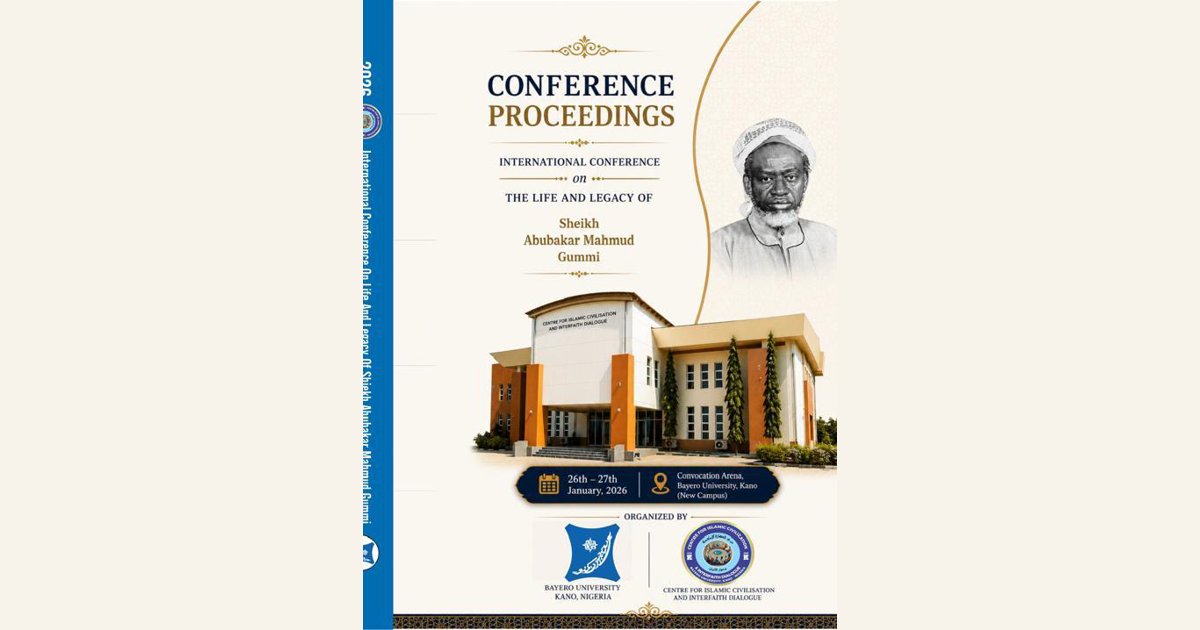
The trajectory of Nigeria’s socio-political development has been a central subject of scholarly inquiry, generating a rich corpus of literature focused on the machinations of nationalist politicians, the interventions of military rulers, the dynamics of federalism, and the pathologies of the post-colonial state. This discourse has predominantly framed political agency and ideational influence within secular and institutional paradigms. However, in a nation where religious identity permeates the fabric of social life and public consciousness, the role of influential religious scholars as architects of political thought, shapers of public morality, and mediators of state-society relations remains a critically underexplored dimension. This paper argues that a full understanding of Nigeria's political evolution is incomplete without accounting for the intellectual and mobilizational contributions of its major religious figures. Focusing on one of the most prominent Islamic scholars of the 20th century, this study posits that Sheikh AbubakarGumi (1924-1992) was not merely a religious preacher but a seminal political thinker and a vital agent of socio-political formation. Through a critical analysis of his sermons, writings, and public engagements, this research illuminates how Gumi articulated and enacted a unique political philosophy—one that sought to harmonize orthodox Islamic principles of governance with the pragmatic imperatives of a pluralistic Nigerian nation-state. In doing so, the paper contributes to a more nuanced, interdisciplinary understanding of political authority, civic ethics, and national integration in Africa’s most populous nation. Background to the Study Nigeria’s political history, from the twilight of colonial rule through independence and into the post-colonial era, has been characterised by the struggle to construct a stable, legitimate, and inclusive political order. The dominant narratives of this struggle have rightly highlighted the roles of founding fathers like NnamdiAzikiwe, ObafemiAwolowo, and Ahmadu Bello; the disruptive force of military regimes; and the persistent challenges of corruption, ethno-regional competition, and weak institutions. Concurrently, the religious landscape, particularly in Northern Nigeria, has been a powerful undercurrent shaping societal values, community organization, and political legitimacy. Islamic scholarship, with its deep historical roots dating back to the Sokoto Caliphate, has traditionally served as a repository of ethical norms, legal reasoning, and social authority. In this context, the emergence of Sheikh AbubakarGumi represents a pivotal convergence of religious scholarship and modern statecraft. As the first Grand Khadi of the Northern Region (1962-1967), a close counsellor to the Sultanate of Sokoto, and a pioneering broadcaster with an unparalleled mass audience via BBC Hausa and Radio Kaduna, Gumi occupied a singular niche. He stood at the intersection of traditional Islamic authority, the nascent Nigerian judiciary, the mass media, and the corridors of political power. His era spanning the optimism of independence, the trauma of civil war, the oil boom and bust, and the political turmoil of the Second Republic was one of profound national redefinition. During these decades, the question of how a society guided by deep religious faith should engage with a secular, pluralist state was, and remains, acutely pressing. Gumi’s life and work constitute a prolonged, public, and influential meditation on this very question, offering a critical case study of "religion in the public square" in a complex African democracy. Statement of the Problem While extensive scholarship exists on the political impact of institutional Islam in Nigeria such as studies on the Sokoto Caliphate’s legacy, contemporary Sharia implementation movements, or militant groups like Boko Haram there is a significant lacuna regarding the systematic political thought of individual Islamic scholars who operated within the framework of the modern Nigerian state. Much of the literature on religion and politics adopts a macro-sociological or security-focused lens, often overlooking the nuanced intellectual contributions of religious leaders as agents of civic education, ethical critique, and national cohesion. Specifically, the political ideas and socio-political agency of Sheikh AbubakarGumi have not received the sustained academic analysis their historical significance warrants. Existing works on Gumi are largely biographical, hagiographical, or theological, celebrating his religious scholarship and piety but failing to critically engage with his political philosophy as a coherent body of thought. Consequently, his constitutive role in shaping discourses on good governance, justice, citizenship, and national unity in Nigeria remains obscured. This gap leads to an incomplete understanding of the ideational forces that have influenced Nigeria’s political culture, particularly in the Muslim-majority north, and ignores a significant model of religious leadership that advocated engagement, dialogue, and ethical accountability within a pluralist polity. Therefore, this study addresses the following core problem: the lack of a systematic, critical analysis of Sheikh AbubakarGumi’s political philosophy and its impact on Nigeria’s socio-political development. It seeks to move beyond viewing him solely as a religious icon and instead investigates him as a public intellectual and a socio-political actor whose interventions mediated between faith, tradition, and the modern state. The study questions how his synthesis of Islamic ethics and civic nationalism functioned, what impact it had, and what his legacy reveals about the potentials and limitations of "Civil Islam" in a diverse, post-colonial society. Significance of the Study This research holds substantial significance for multiple domains of academic inquiry and practical engagement with Nigerian society. Its contributions can be categorized as follows: Academic Significance · To Nigerian/African Political Thought: The study challenges and expands the prevailing canon of Nigerian political history, which is dominated by the ideas of secular nationalist elites and military actors. By rigorously analysing the political philosophy of a foremost Islamic scholar, it argues for the inclusion of indigenous, faith-based intellectual traditions as essential components of the nation’s political heritage. It demonstrates that political thinking occurred— and was influential outside the confines of formal political parties and state houses. · To the Study of Religion and Politics: It moves beyond the prevalent security-focused or sensationalist analyses of "Political Islam" in Nigeria, which often centre on extremism and conflict. Instead, it offers a nuanced case study of "Civil Islam," providing a framework for understanding how religious authority can be deployed to support civic ethics, pluralism, and national integration. This enriches comparative studies on religion and democracy, particularly in post-colonial African states. · To Historical and Biographical Scholarship: It provides a critical, analytical dimension to the existing body of work on Sheikh AbubakarGumi, moving beyond biography and hagiography to construct a systematic examination of his political ideas and their historical context. It treats him as a subject of intellectual history.
Practical and Societal Significance
· For Contemporary Religious Leadership: The research delineates a model of religious leadership that combines moral authority with civic responsibility. In an era where religious rhetoric can be divisive, Gumi’s example as a bridge-builder, ethical counsellor to power, and advocate for the common good offers a relevant template for faith leaders seeking positive socio-political impact within a diverse democracy. · For National Cohesion and Dialogue: By highlighting Gumi’s firm commitment to Nigerian unity and his active engagement in inter-faith and inter-ethnic mediation, the study recovers a historical narrative of constructive compromise and shared citizenship. This contributes to a more balanced public discourse, countering narratives of inevitable division and offering historical precedents for peaceful coexistence. · For Governance and Public Accountability: The study underscores the perennial relevance of Gumi’s core messages on justice (adl), anti-corruption, and leadership as a trust (amanah). It revitalises a powerful, culturally-grounded vocabulary for demanding ethical governance, demonstrating how public critique can emanate from moral and religious platforms. Policy Implications · The findings suggest that policymakers and state institutions could benefit from a deeper understanding of how to constructively engage with legitimate faith-based authorities and moral frameworks that resonate with large segments of the populace. It points to the potential of such engagement in fostering social trust and implementing civic education initiatives. In sum, this study is significant because it retrieves a vital but overlooked strand of Nigeria’s political imagination. It argues that figures like Sheikh AbubakarGumi were not peripheral but central to the ongoing national conversation about the soul of Nigerian governance. By integrating his ideas into the broader analysis of Nigeria’s development, this research provides a more holistic, complex, and ultimately more accurate picture of the forces that have shaped— and continue to shape—the nation’s socio-political landscape. Literature Review This review surveys the existing scholarly terrain to situate the study of Sheikh AbubakarGumi’s political ideas within broader academic conversations. It examines four key areas: the dominant narratives of Nigerian political development, the treatment of Islam and politics in Nigeria, the theoretical paradigm of "Civil Islam," and the extant literature on Gumi himself. The synthesis will clarify the specific gap this research aims to fill. Scholarship on Nigerian Political Development The historiography of Nigeria’s political evolution has been predominantly shaped by analyses of secular actors and institutions. Foundational works focused on the nationalist struggle, the roles of major political parties, and the philosophies of elite figures like Azikiwe, Awolowo, and Ahmadu Bello (Coleman; Sklar). Subsequent scholarship has critically engaged with the crises of the post-colonial state, emphasising the corrosive effects of military rule, the "resource curse" of oil, and the persistent challenges of ethno-regional competition and weak governance (Joseph; Mustapha). A significant vein of research has dissected the structural and institutional dimensions of Nigerian federalism, corruption, and state failure (Suberu; Diamond). While this body of work is indispensable, its overwhelming focus on formal political structures and secular elites has, as Falola and Heaton note, often marginalised alternative sources of political thought and social mobilization, particularly those emanating from religious spheres (10-12). This study contends that a full understanding of Nigeria’s political fabric requires engaging with these influential, non-secular domains. Islam and Politics in Nigeria Academic engagement with Islam in Nigerian politics has often followed distinct, sometimes overlapping, tracks. The first track examines historical and revivalist movements, most notably the 19th-century Sokoto Jihad, analyzed as a formative political and ideological project (Last; Hiskett). The second, more voluminous track in recent decades concerns contemporary reformist and militant movements. Studies of the Maitatsine disturbances, the Izala society, and especially Boko Haram have proliferated, typically framing Islam as a source of social unrest or a challenge to the secular state (Loimeier; Mohammed; Pérouse de Montclos). The third track focuses on the political and constitutional debates surrounding the application of Sharia law, particularly following its expansion in twelve northern states in 1999, analyzing its implications for federalism, human rights, and inter-religious relations (Ostien; Kalu and Lowery; Kenny). A fourth track considers Sufi brotherhoods (the Tijaniyya and Qadiriyya) as socio-political networks with significant influence over electoral politics and community leadership (Brenner; Umar). While these studies are valuable, they collectively present a narrative where political Islam is largely synonymous with either historical state-building, legal imposition, social disruption, or electoral bloc voting. The quieter, yet persistent, role of mainstream Islamic scholars in shaping civic culture and ethical governance discourse remains under-theorized in this corpus. The "Civil Islam" and Public Religion Paradigm This study employs the conceptual lens of "Civil Islam," a term powerfully articulated by Robert Hefner in his work on Indonesia. Hefner defines Civil Islam as a "religious virtue that supports pluralism and civic freedom" and describes movements that seek to "cultivate public ethics and a morally grounded citizenry while working within the framework of a plural, constitutional state" (Hefner 215). This framework moves beyond the binary of secularism versus theocracy, offering a way to analyze religious engagements with the public sphere that are compatible with democratic civility. The broader theory of the "deprivatization" of religion, as argued by José Casanova, posits that religious traditions worldwide are abandoning the confined private role assigned to them by secularization theory and entering the public arena to debate normative issues (Casanova 5-6). In the African context, scholars have applied these ideas to examine how religious communities contribute to civil society and public moral argument (Gifford; Ellis and terHaar). However, the application of this specific paradigm to analyze an influential individual scholar in Nigeria, rather than a movement or institution, is nascent. This paper seeks to apply and refine the "Civil Islam" concept through the micro-history of Gumi’s intellectual and activist legacy. Existing Works on Sheikh AbubakarGumi
Literature specifically focusing on Sheikh AbubakarGumi can be categorized into three types. The first is biographical and hagiographical accounts, often written by associates or admirers. The most comprehensive is his autobiography, Al-ʿAqidahaṣ-Ṣaḥiḥahbi-Muwafaqat ash-Shariʿah (The Sound Creed in Accordance with the Shariah), translated and annotated by Gumi and Tsiga, which provides essential primary material but is naturally subjective (Gumi and Tsiga). Other works, like those by Alkali, offer narrative chronicles of his life and religious contributions, emphasizing his piety and scholarly stature (Alkali). The second category comprises theological and jurisprudential analyses, which examine his legal opinions (fatawa) as Grand Khadi and his reformist Salafi-inclined teachings, often within debates on Islamic orthodoxy in West Africa (see works cited in 2.2). The third, and most sparse, category involves academic analyses of his political role. Brief but insightful discussions can be found in broader works on Nigerian Islam; for example, Falola mentions his role as a "moral critic" (Falola 145), while Ibrahim, in a seminal article on religion and politics, identifies Gumi as a key figure in the "state-cleric alliance" but does not elaborate a detailed study of his political thought (Ibrahim 285). A notable recent contribution is a PhD thesis by Dawud that begins this analytical work, though its primary focus remains theological (Dawud). Crucially, a dedicated, systematic excavation and analysis of his political philosophy—its sources, coherence, articulation, and impact—as the central subject of inquiry is absent from the literature. Gap Identification Synthesizing the reviewed literature reveals a clear and compelling gap. While studies on Nigerian political development are rich, they neglect the ideational contributions of religious intellectuals. Conversely, scholarship on Islam in Nigeria frequently focuses on violence, law, or social movements, overlooking the nuanced civic-political discourse propagated by establishment scholars like Gumi. The theoretical tools of "Civil Islam" and public religion have been applied to movements and institutions but rarely to the corpus of an individual religious authority figure in the African context. Finally, while Gumi is recognized as a major historical figure, existing works about him are either biographical, theological, or fragmentary in their political analysis. Therefore, this study identifies its niche: to conduct a systematic, critical, and theory-informed analysis of the political ideas of Sheikh AbubakarGumi, framing him as an exponent of "Civil Islam" whose philosophy and praxis constituted a significant force in Nigeria's socio-political development. It bridges the gaps between political history, religious studies, and intellectual biography to offer a more integrated understanding of how faith, governance, and national identity have been negotiated in modern Nigeria. Methodology This study employs a qualitative research design anchored in historical analysis to reconstruct and critically examine the political ideas of Sheikh AbubakarGumi. Recognizing that his thought was articulated and enacted over time in response to specific socio-political contexts, a methodology that prioritizes depth, contextual interpretation, and textual analysis is deemed most appropriate. The methodological framework is detailed across four key components: research design, data sources, method of data collection, and technique of data analysis.
The research adopts ahistorical-analytical design within the broader paradigm of qualitative inquiry. This design is selected for its strength in interpreting past events, ideas, and actors within their specific historical context to understand their significance and interrelationships (Tosh 65). It moves beyond mere chronicle to provide a critical analysis of how Gumi’s political philosophy was formed, expressed, and functioned in the Nigerian public sphere. This approach aligns with the study’s aim to trace the development and impact of an intellectual tradition, treating Gumi’s body of work as a historical corpus to be dissected and understood in light of the political dynamics of his era from the 1960s to the early 1990s. Data for this study is drawn from a triangulation of primary and secondary sources to ensure robustness and validity.The study utilizesqualitative content analysis as its primary analytical technique. This method is ideal for subjectively interpreting the content of text data through a systematic process of coding and identifying themes or patterns (Hsieh and Shannon 1278). Historical and Biographical Context To comprehend the political ideas of Sheikh AbubakarGumi, one must first situate him within the specific historical currents of 20th-century Nigeria and map the unique coordinates of his authority. His life spanned the formative and turbulent decades of the Nigerian nation-state, and his influence derived from a rare confluence of institutional roles that placed him at the heart of socio-political discourse. The Man and His Epoch Sheikh Abubakar Mahmud Gumi (1924–1992) was a product of both traditional Islamic scholarship and the transformative colonial and post-colonial order. His early education in the Qur’anic school system and under prominent scholars like Sheikh Abubakar Na Mangi laid a foundation in classical Islamic sciences (Alkali 15-22). His subsequent entry into the Northern Nigerian civil service and his legal training, which culminated in his appointment as the first Grand Khadi of the Northern Region (1962-1967), positioned him at a critical juncture. This role placed him at the apex of the region’s Sharia court system during a period of intense legal modernization and negotiation between Islamic law and the secular Nigerian state (Ostien 42). His tenure coincided with Nigeria’s fragile post-independence era, the collapse of the First Republic, and the Civil War (1967-1970). Following his judicial service, Gumi’s influence grew not from state office but from his stature as a counsellor to the Sultanate of Sokoto and, most significantly, as a public intellectual with unprecedented access to the masses. Through his weekly sermons on Radio Kaduna and his commentaries on the BBC Hausa Service, he became a household voice across West Africa. His lifetime, therefore, encapsulates the key challenges of the Nigerian project: managing pluralism, defining the role of religion in public life, combating endemic corruption, and fostering national unity amidst diversity. His discourse was consistently framed as a response to these pressing issues, making his work a running commentary on Nigeria’s post-colonial evolution. Nexus of Authority
Gumi’s political significance stemmed from his strategic location at the intersection of several, often separate, spheres of influence. This nexus granted him a platform unlike that of the typical politician, academic, or traditional cleric. · Religious Scholarship: As a recognized Mufassir (Qur’anic exegete) and Muhaddith (scholar of Hadith), his opinions carried the weight of religious orthodoxy. His reformist, Salafi-leaning stance challenged Sufi brotherhood dominance and appealed to a growing urban Muslim youth, creating a direct channel for his political messages (Loimeier 212). · The Judiciary: His experience as Grand Khadi provided him with intimate knowledge of state machinery, legal formalism, and the complexities of governance, lending a pragmatic edge to his critiques of injustice and administrative failure. · Traditional Authority: His close advisory relationship with Sultan Abubakar III and the Sokoto Caliphate establishment connected him to the historical and symbolic center of Muslim political authority in Northern Nigeria, granting him legitimacy within traditional power structures. · Mass Media: His mastery of radio broadcasting allowed him to bypass traditional gatekeepers and speak directly to millions. This modern tool amplified his religious message into a powerful medium for civic education and social critique. · The Modern State: While never a partisan politician, he maintained lines of communication with successive governments, from the First Republic through military regimes to the Second Republic. He acted as an informal moral counselor to power, a role vividly illustrated by anecdotes from the presidency of ShehuShagari (1979-1983). As narrated by the late scholar Sheikh Muhammad AuwalAlbani Zaria, President Shagari was reportedly so mindful of Gumi’s unwavering integrity that the mere prospect of a visit from the Sheikh would cause him introspection, knowing that “Gumi never visited him because of worldly gain” (Albani). This perception was rooted in a long-standing reputation; Albani further reported that Shagari recalled from their school days that Gumi “never asked even if he has to drink his garri without sugar,” underscoring a lifelong ethos of austerity and independence from material influence (Albani). This unique positioning made Gumi a singularly influential figure. His death in 1992 was perceived not merely as the loss of a religious leader but as a significant political event. This was captured in contemporary media, with the national magazine TELL framing his passing under the headline “Exit of 'Ayatollah' GUMI, New Political Problems Emerge,” highlighting the perceived vacuum in moral authority and political mediation his death created (“Exit of 'Ayatollah' GUMI” 12). Analyzing his ideas, therefore, requires understanding how they were forged and projected from this powerful, multidimensional vantage point. The Core of Gumi’s Political Philosophy Sheikh AbubakarGumi’s political thought was not a formal treatise but a living philosophy, articulated through sermons, legal opinions, and public interventions. It was a systematic engagement with the challenges of post-colonial governance, derived from a rigorous interpretation of Islamic sources and adapted to the Nigerian context. This section distills the core pillars of his political philosophy, which together form a coherent framework for ethical statecraft and civic responsibility.
Pillars of His Political Thought 1) Governance as a Divine Trust (Amanah) For Gumi,political authority was fundamentally a sacred contract. He rooted this in the Qur’anic concept of Amanah (trust), which he interpreted as the bedrock of legitimate leadership. In his sermons, he consistently argued that power was not an entitlement for the ruler’s benefit but a responsibility before God (haqq Allah) and the people (haqq al-‘ibad). He stated, “Leadership is a burden, not an ornament... a leader will be questioned about his flock on the Day of Judgment” (Gumi, Wa’azin Gumi vol. 3 45). This theological framing elevated governance from mere administration to an act of religious devotion. His critique of corruption and oppression flowed directly from this principle; to abuse public office was not just a criminal act but a breach of divine trust. As analyzed by Ibrahim, this emphasis served to “sacralize the demand for accountability,” giving his political critique an unassailable moral force within his Muslim audience (Ibrahim 290). 2) The Primacy of Justice (Adl) and Anti-Corruption Closely linked toAmanah was the imperative of Adl (justice). Gumi equated unjust governance with disbelief, famously warning that “a day of injustice by a ruler is more severe in the sight of God than sixty years of sin by the ruled” (Gumi and Tsiga 178). His discourse was saturated with condemnation of zulm (oppression) and hulul (embezzlement), which he saw as the twin cancers destroying the Nigerian polity. His Friday sermons often detailed the societal harms of corruption, linking grand political theft to the everyday suffering of the common man. He did not limit justice to punitive measures but framed it as the establishment of equity in resource distribution, access to opportunities, and the fair application of law. This pillar made his pulpit a unique platform for what would now be termed anti-corruption advocacy, long before it became a central theme in national discourse. 3) Civic Responsibility and Active Citizenship Gumi’s philosophy was not solely dirigiste,aimed only at rulers. He articulated a robust concept of citizenship (ra’iyyah) that entailed active duties beyond passive obedience. Drawing from the Prophetic tradition of “the best jihad is a word of truth before a tyrant ruler,” he obligated the learned and the commoner alike to engage in nasihah (sincere advice) and to “enjoin good and forbid evil” (Al-Hisbah) towards those in authority (Alkali 204). This empowered his followers to see themselves as stakeholders with a religious duty to critique maladministration. However, he balanced this with a strong injunction against anarchic rebellion, advocating for change through prescribed channels, dialogue, and moral persuasion. His model of citizenship thus promoted civic engagement while discouraging destabilizing vi
Comments