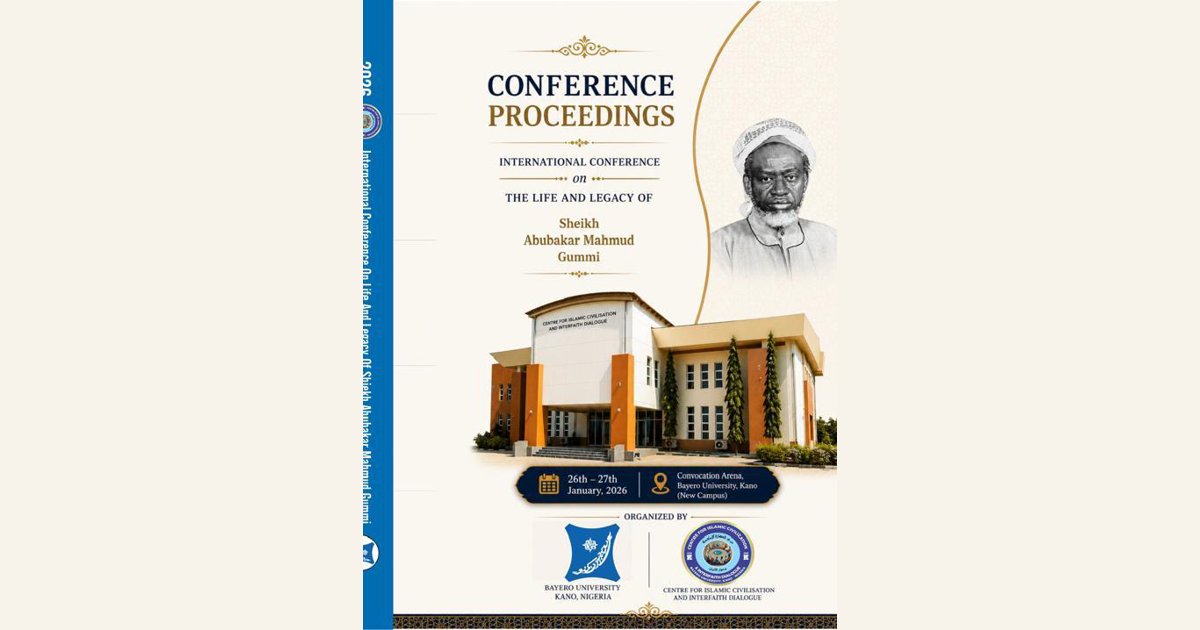
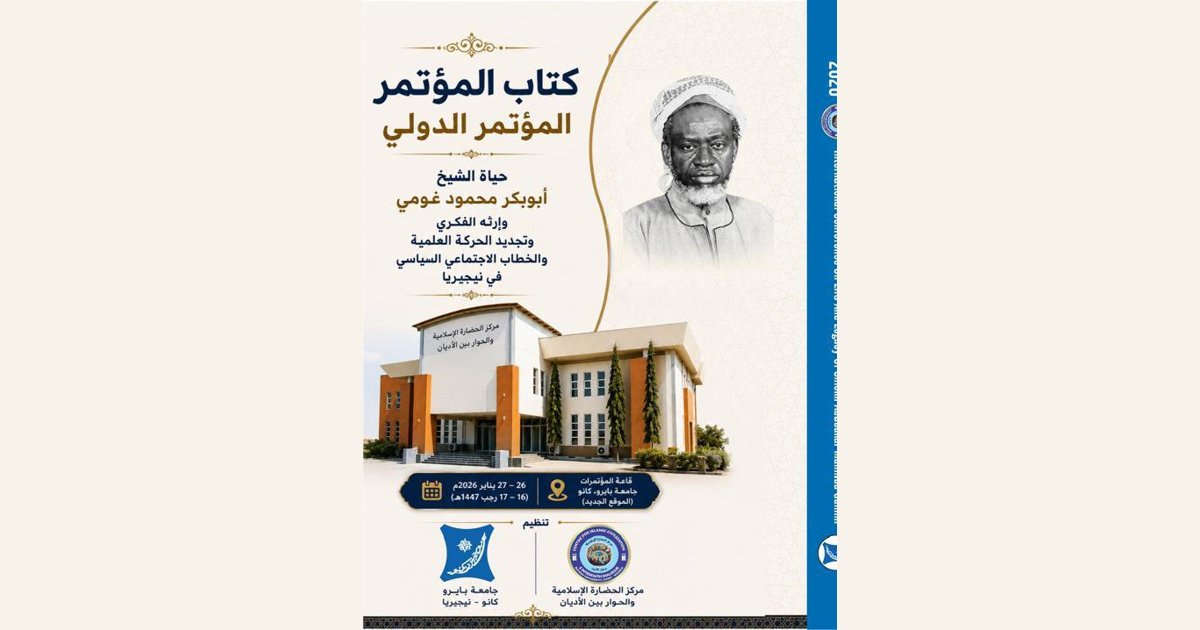
This paper examines Shaikh Abubakar Mahmud Gummi's documented positions on three major issues during his lifetime (1950–1992)—Shari'ah after colonial rule, the 1978–79 constitutional debates, and the Maitatsine uprisings—and demonstrates how these positions provide a consistent interpretive framework for understanding what his stance would likely have been on five contemporary challenges: post-1999 Shari'ah implementation, Boko Haram, Christian-Muslim violence, the education debate, and Muslim identity in modern Nigeria. Drawing from his writings, sermons, and reformist methodology, the paper argues that Gummi's intellectual consistency, rooted in Salafi reformism, anti-extremism, and prioritization of knowledge over power, offers Nigerian Muslims—and indeed West African Muslims—a coherent model for navigating modernity without compromising Islamic authenticity. From a Ghanaian outsider's perspective, the paper also reflects on lessons the broader West African Muslim community can draw from Gummi's legacy.
1. Introduction: A Ghanaian Looking North
As I prepared to write this paper from my office in Accra, a colleague asked me, "Why are you Ghanaians always looking to Nigeria for everything?" I responded, "My brother, when your neighbor's house is both a library and occasionally on fire, you must pay attention—there are lessons in the books and warnings in the smoke."
Indeed, Nigeria's Islamic intellectual tradition, particularly in the North, represents one of the richest repositories of scholarly discourse in West Africa. Shaikh Abubakar Mahmud Gummi (1922–1992) stands as a towering figure whose influence extends far beyond Nigeria's borders. His life coincided with critical transitions: from colonialism to independence, from Western hegemony to indigenous assertion, from traditional scholarship to modern challenges.
This paper seeks to accomplish three objectives:
i.
Document Shaikh Gummi's actual positions on three major issues during his lifetime (1950–1992): Shari'ah after colonial rule, the 1978–79 constitutional Shari'ah debates, and the Maitatsine uprisings.
ii. Extrapolate what his positions would likely have been on five post-1992 issues—post- 1999 Shari'ah implementation, Boko Haram insurgency, Christian-Muslim communal violence, Western versus Islamic education debates, and Muslim identity in media narratives—based on the internal logic and consistency of his documented methodology. iii. Reflect, from a Ghanaian Muslim scholar's perspective, on what lessons West African Muslims can draw from Gummi's intellectual legacy, particularly regarding the perennial tension between authenticity and modernity.
As we say in Ghana, "Obi nnim a, obi kyere"—if one does not know, another teaches. Let us learn from the master teacher.
2. Methodological Framework: Consistency as Interpretive Key
a. The Logic of Biographical Consistency This paper operates on a methodological principle that intellectual biographers and historians of ideas employ regularly: documented consistency. When a thinker demonstrates coherent principles across multiple issues over decades, it becomes methodologically sound to project how those principles would apply to subsequent issues (Skinner, 2002). This is not speculation; it is pattern recognition grounded in evidence.
Shaikh Gummi's thought exhibits remarkable internal consistency. His positions were not ad hoc reactions but applications of a stable intellectual framework rooted in:
i. Salafi reformism: Return to Qur'an and authentic Sunnah, rejection of innovation (bid'ah) and blind following (taqlīd) ii. Anti-extremism: Categorical rejection of takfīr (excommunication) and violence iii. Gradualism: Prioritization of education and moral reform before political transformation iv. Pragmatism: Engagement with existing political realities without compromising core principles v. Universalism: Belief that Islam's message transcends ethnic and cultural particularity b. Primary Sources
This analysis draws from:
i. Gummi's published works, particularly his Hausa translation and commentary of the Qur'an ii. Documented sermons and public statements (1950–1992) iii. His autobiography and biographical accounts by contemporaries iv. Archival materials from his roles as Grand Khadi and religious adviser
3. Part I: Shaikh Gummi's Documented Positions (1950–1992)
a. Shari'ah After Colonial Rule (1950s–1960s) Historical Context
When Nigeria gained independence in 1960, Muslim intellectuals faced a profound dilemma. The Sokoto and Borno Caliphates had been dismantled by colonial rule, and Islamic governance structures had been systematically replaced with British common law and Euro-Christian administrative frameworks. As one chronicler noted, colonialism left behind "a sad history of cultural plunder, civilisational destabilisation, social, moral and religious degeneration" (Conference Background Document).Many Muslims demanded immediate restoration of full Shari'ah. Gummi's response was more nuanced.
Gummi's Position Shaikh Gummi strongly affirmed that Shari'ah is a complete way of life, not merely personal law governing marriage and inheritance. However, he was realistic and gradualist, not revolutionary (Gummi, 1991).
His key arguments included:
1. Acceptance of Political Reality: Nigeria was a plural society. Muslims could not impose Shari'ah through force or confrontation. 2. Education as Prerequisite: Ignorant Muslims could not properly uphold Shari'ah. Mass education in Islamic sciences and modern disciplines must precede political implementation. 3. Working Within the System: Gummi himself served as judge, adviser, and eventually Grand Khadi—working within colonial and post-colonial legal structures while advocating for Muslim interests. 4. Moral Authority Over Political Power: True Islamic governance requires moral transformation of society first.
As he stated in a sermon in 1962: "The Shari'ah is not a sword we wave in the air. It is a lamp that must first illuminate our own hearts before it can guide our nation" (Gummi, 1962, cited in Loimeier, 1997).
The Ghanaian Parallel
This gradualist approach resonates with Ghana's experience. When Muslim communities in Northern Ghana sought greater recognition of Islamic law in the 1960s, Ghanaian scholars like Shaykh Abdullahi Guro Saeed also emphasized education and community development over confrontation. Perhaps wisdom flows more freely when you're not in the majority—we learn patience when we learn to coexist.
b. The 1978–79 Shari'ah Constitutional Debate Historical Context
During Nigeria's constitutional drafting process (1978–79), Muslim representatives demanded a Shari'ah Court of Appeal at the federal level. Christian groups strongly opposed this, and tensions escalated dramatically, threatening national unity (Ostien, 2007).
Gummi's Position
Shaikh Gummi supported Muslim demands for constitutional recognition of Shari'ah. However, he rejected inflammatory rhetoric and sectarian escalation that could damage Christian-Muslim relations (Gummi, 1978). His arguments emphasized:
1. Legal Consistency: Nigeria's constitution already recognized customary law for various ethnic groups. Excluding Shari'ah was discriminatory and unjust. 2. Rights, Not Imposition: Muslims were asking for their constitutional rights as citizens, not seeking to impose Islam on non-Muslims. 3. Intellectual Engagement: The debate should be conducted through legal and rational arguments, not emotional appeals or threats. 4. Critique of Muslim Politicians: He publicly criticized Muslim politicians who used Shari'ah as a "bargaining chip" in political negotiations, treating sacred law as currency (Gummi, 1979).
He warned: "When politicians carry the Qur'an in one hand and their ballot papers in the other, suspect both hands" (cited in Kukah, 1993).
Analysis Gummi's position demonstrated his consistent principle: defend Shari'ah constitutionally, but avoid politicizing it in ways that damage Muslim-Christian coexistence. He distinguished between legitimate advocacy and dangerous sectarianism.
As a Ghanaian, I observe that we have largely avoided this constitutional minefield—not necessarily because we are wiser, but perhaps because our Muslim population percentage makes us more naturally inclined toward accommodation. Sometimes demography teaches diplomacy.
c. The Maitatsine Uprisings (1980–1985)
Historical Context
Between 1980 and 1985, a militant movement led by Muhammad Marwa (known as Maitatsine, "the one who curses") launched violent uprisings in Kano, Maiduguri, Yola, and Gombe. The movement rejected the Sunnah, practiced takfīr (excommunication) of mainstream Muslims, and engaged in violence against civilians. Thousands died in the conflicts (Hickey, 1984).
Gummi's Position
Shaikh Gummi's response was unequivocal condemnation. He declared Maitatsine and his followers outside orthodox Islam (Gummi, 1982).
His critique had multiple dimensions:
1. Theological Rejection: Maitatsine's rejection of Hadith and the Sunnah placed him outside the fold of Sunni Islam. 2. Condemnation of Violence: Killing of innocent civilians, including fellow Muslims, violated fundamental Islamic principles. 3. Rejection of Takfīr: Excommunicating mainstream Muslims was a dangerous revival of Kharijite extremism. 4. Systemic Critique: Gummi also criticized the Nigerian state for ignoring poverty, unemployment, and religious ignorance that created fertile ground for extremism.
His most prophetic statement came in 1981: "If we suppress this movement with bullets alone, without addressing the ignorance and injustice that bred it, we will face something far worse in the future" (cited in Adesoji, 2010).
The Prophetic Warning
History vindicated Gummi's warning. The conditions he identified—poverty, state brutality, religious ignorance—would later contribute to the emergence of Boko Haram. As we say in Ghana, "Wo fre wo yonko a na wo frε wo ho"—when you call your friend, you call yourself. The seeds of today's crisis were planted in yesterday's neglect.
d. Summary of Gummi's Framework (1950–1992)
From these three documented positions, we can identify Shaikh Gummi's core principles:
sn Principle Application
1 Shari'ah Sacred but not theatrical; requires knowledge and justice 2 Violence Absolutely rejected under all circumstances 3 Politics Engage wisely; distrust exploitation of religion 4 Education Foundation of all authentic reform
5 Extremism Born from ignorance; scholars bear responsibility
6 Da'wah Must precede political power
This framework—derived from documented positions—now becomes our interpretive key for understanding what Gummi's stance would likely have been on post-1992 issues.
4. Part II: Extrapolating Gummi's Positions on Contemporary Issues (1993–Present) a. Post-1999 Reintroduction of Full Shari'ah in Northern States Historical Context Beginning in 1999, twelve northern Nigerian states reintroduced expanded Shari'ah law, including criminal codes (hudūd). This was heralded by some as the fulfillment of decades of Muslim aspirations. Others criticized it as political theater (Ostien, 2007; Casey, 2008).
What Would Gummi Have Said?
Based on his documented principles, Gummi would likely have offered conditional support with strong criticism.
Support: He would affirm that Muslims have the right to be governed by Shari'ah in states where they constitute the majority.
Critique: However, he would insist that:
1. Shari'ah Requires Justice, Not Just Punishments: Implementing hudūd penalties without establishing comprehensive social welfare, economic justice, and impartial legal systems contradicts the objectives (maqāṣid) of Shari'ah. 2. Selective Enforcement: The poor were disproportionately subjected to Shari'ah punishments while wealthy elites engaged in corruption with impunity. This is the opposite of Islamic justice. 3. Political Hypocrisy: Politicians who championed Shari'ah while tolerating (or engaging in) corruption turned sacred law into political symbolism. 4. Inadequate Implementation: True Shari'ah governance requires comprehensive systems of education, healthcare, social security—not merely penal codes.
Gummi would likely have said: "This is not Shari'ah as Umar ibn al-Khattab (RA) understood it."
When Caliph Umar suspended hudūd punishments during a famine, he demonstrated that Islamic law serves human welfare, not abstract legalism (Al-Qaradawi, 1996). Gummi, steeped in classical jurisprudence, would have recognized that post-1999 Shari'ah implementation often resembled political performance rather than prophetic justice.
The Ghanaian Observation
Watching from Ghana, where Muslims have not sought separate legal codes but rather full participation in national institutions, one wonders: Is it better to have symbolic Shari'ah courts that lack resources and authority, or to have Muslims excelling as judges, lawyers, and legislators in a plural legal system? Gummi, I suspect, would have said: "Why not both—but only if we can do justice to both."
b. Boko Haram Insurgency (2009–Present)
Historical Context
Since 2009, the extremist group Boko Haram (and its splinter ISWAP) has waged a violent insurgency in northeastern Nigeria, killing tens of thousands, displacing millions, and committing atrocities in the name of establishing an "Islamic state." The group rejects Western education (hence the name "Boko Haram"—Western education is forbidden), practices widespread takfīr, and targets civilians including Muslims (Thurston, 2018).
What Would Gummi Have Said?
There is virtually no doubt that Shaikh Gummi would have absolutely and categorically condemned Boko Haram. Based on his documented opposition to Maitatsine (which Boko Haram resembles in many ways), he would have:
1. Classified Them as Kharijites: Gummi was well-versed in Islamic history. He would recognize Boko Haram as a contemporary manifestation of Kharijism—the early extremist sect that declared Muslims who disagreed with them as apostates and waged war against the Muslim community (Ali, 2016). 2. Theological Condemnation: Their wholesale rejection of Western education contradicts explicit Qur'anic and Prophetic commands to seek knowledge. The Prophet Muhammad (peace be upon him) said: " The search for knowledge is an obligation laid on every Muslim… " (Mishkat al-Masabih 218, Book 2, Haith 20). Geography does not determine the permissibility of knowledge. 3. Moral Outrage: Their killing of innocent civilians—including Muslims—in markets, mosques, schools, and villages violates every principle of Islamic warfare and ethics. 4. Warning About Consequences: Gummi would warn that Boko Haram causes more harm to Islam's reputation than to the Nigerian state.
However—and this is crucial—Gummi would also:
5. Criticize Muslim Scholars: He would blame scholars who abandoned grassroots da'wah, leaving ignorant young men vulnerable to extremist recruitment. 6. Condemn State Brutality: Military excesses, extrajudicial killings, and heavy-handed tactics that radicalize communities must be addressed. 7. Emphasize Systemic Reform: Poverty, unemployment, corruption, and poor governance create the conditions for extremism. Military solutions alone cannot succeed.
Gummi would likely state: "They are more dangerous to Islam than to the Nigerian state. They confirm every lie that enemies of Islam tell about us."
The Ghanaian Reflection
In Ghana, we have been spared this particular trial – wal hamdulillah, though we border Burkina Faso where violence has erupted and unfortunately being termed Islamist. Perhaps our relative peace stems partly from stronger integration between Islamic and secular education—our Muslim youth attend universities, become doctors, nurses, engineers, law-makers etc., and see no contradiction between Islam and western style of knowledge.
I once joked with Nigerian colleagues: "You see, we Ghanaians solved the 'Boko Haram' problem before it started—we just sent our children to both Qur'anic school and regular school. They're too busy with homework to have time for extremism!" But behind the humor lies a serious point: integrated education may be one key to preventing radicalization.
c. Christian-Muslim Communal Violence Historical Context
Nigeria has experienced recurring Christian-Muslim communal violence, particularly in the Middle Belt states. These conflicts—often triggered by religious, ethnic, or economic tensions— have claimed thousands of lives and deepened sectarian divisions (Higazi, 2013).
What Would Gummi Have Said?
Based on his documented emphasis on Muslim-Christian coexistence during the 1978–79 debates, Gummi would:
1. Reject "Religious War" Framing: He would insist that most conflicts are rooted in economic competition, political manipulation, and land disputes—not theology. Politicians and elites exploit religious identities for their own gain. 2. Call Muslims to Moral Superiority: Muslims must exercise discipline, restraint, and patience even when wronged. Retaliatory violence weakens Islam's moral authority. 3. Demand Equal Justice: The state must protect all citizens equally. Selective prosecution and impunity undermine trust and fuel violence. 4. Warn Against Manipulation: Both Muslim and Christian communities are victims when politicians benefit from bloodshed while communities suffer.
His approach would be: Firm on Muslim rights, but peaceful, lawful, and principled.
He might say: "When Christians and Muslims kill each other, the politicians who incited them sleep peacefully in Abuja. Who truly wins?"
The Ghanaian Context
Ghana's record of religious harmony—though not perfect—offers lessons. Our political system deliberately avoids religious mobilization. Presidential candidates choose running mates from different religious backgrounds. Muslims and Christians intermarry, attend each other's ceremonies, and collaborate in civil society.
When I present this to Nigerian audiences, they often ask: "How do you do it?" My response: "We simply remembered that we are neighbors before we are co-religionists, and family before we are citizens of different faiths." Gummi understood this. He knew that political Shari'ah without social harmony builds palaces on quicksand.
d. Western vs. Islamic Education Debate Historical Context
The tension between "Western" secular education and "Islamic" traditional education has persisted in northern Nigeria. Some view Western education as Christianization or cultural imperialism. Others see traditional Islamic schools (Almajiri system) as inadequate for modern economic participation (Hoechner, 2018).
What Would Gummi Have Said?
This is perhaps the easiest to determine because Gummi already explicitly addressed this during his lifetime. His position was crystal clear: strong advocacy for integrated education (Gummi Conference Document).
He believed that:
1. Islam Commands Knowledge Acquisition: The Qur'an's first revelation was "Read" (Iqra'). Islam makes no distinction between "Islamic" and "Western" style of education—there is only beneficial knowledge and harmful knowledge. 2. Reject False Dichotomies: Science, mathematics, medicine, engineering, Technology and AI are not "Western"—they are human knowledge that Muslims contributed to and must reclaim. 3. Reform Qur'anic Schools: Traditional madrasahs and Islamiyahs must be reformed to include modern subjects while maintaining religious foundation. 4. Produce Muslim Professionals: Muslims need doctors, nurses, engineers, scientists, economists, lawyers—professionals who are Islamically grounded but modernly competent. 5. Reject Ignorance as Piety: He would say: "Ignorance is not taqwā (piety). The Prophet was unlettered, but he commanded his Ummah to be learned."
Gummi himself modeled this. He studied at Islamic institutions in Sudan but also engaged deeply with modern disciplines and contemporary issues (Conference Background Document).
The Ghanaian Example
In Ghana, integrated Islamic schools have flourished. Institutions like Iqra Educational Center, SAID Arabic and English Academy, Al-Azhariya Secondary School, Islamic University College and Lakeside University Collage are Muslim institutions that combine Islamic studies with modern curricula. Our Muslim youth are not forced to choose between religious authenticity and professional competence. When one of my female makaranta student graduated as a medical doctor wearing her hijab, nobody questioned whether she had compromised her faith by studying "Western" medicine. This integration—which Gummi advocated—is perhaps his most practical legacy.
e. Muslim Identity, Media Narratives, and State Power
Historical Context
Post-9/11 global discourse has often stereotyped Muslims as potential extremists. Nigerian Muslims face similar stereotyping domestically, particularly after the Boko Haram insurgency. Muslims often feel misrepresented in media and marginalized in state institutions (Suleiman, 2017).
What Would Gummi Have Said?
Based on his documented emphasis on intellectual engagement and public reasoning, Gummi would:
1. Vehemently Oppose Stereotyping: He would strongly reject the portrayal of Muslims as inherently prone to violence or extremism.
2. Criticize Muslim Silence: However, he would also criticize Muslim communities for intellectual laziness, failure to produce articulate spokespersons, and being reactive rather than adopting proactive communication strategies. 3. Call for Strategic Engagement: Muslims must engage media professionally, write op-eds, participate in public debates, and produce high-quality scholarship. 4. Reject Victimhood Narratives: While acknowledging genuine grievances, he would warn against perpetual victimhood that paralyzes communities. Muslims should lead conversations, not merely react to them. 5. Emphasize Excellence: The best response to negative stereotypes is Muslims excelling in every field—medicine, law, business, arts, sciences, technology, artificial intelligence—thereby disproving prejudices through achievement.
His message would be: Muslims must stop reacting and start leading the conversation.He would remind Nigerian Muslims that Islam spread in West Africa largely through the moral example of traders and scholars, not through conquest or complaint (Levtzion, 2000). Moral authority earns respect; grievance culture rarely does.
The Ghanaian Advantage
Ghana's Muslims, comprising about 20% of the population, have learned to advocate effectively without alienating others. We produce public intellectuals, participate actively in national media, and have held high offices including Vice Presidents, Supreme Court Justice and Lawmakers. This integration—without assimilation—reflects Gummi's vision of confident Muslim participation in plural societies.
5. Synthesizing Gummi's Enduring Framework a. The Consistency Principle Confirmed
The analysis above demonstrates remarkable consistency. Whether addressing issues he actually confronted (Shari'ah after colonialism, constitutional debates, Maitatsine) or issues we project he would have confronted (post-1999 Shari'ah, Boko Haram, education), the same principles apply:
i. Shari'ah is sacred but must serve justice, not theater ii. Violence is absolutely rejected iii. Politics must be engaged wisely; religious exploitation condemned iv. Education is the foundation of authentic reform v. Extremism grows from ignorance; scholars bear responsibility vi. Da'wah and moral transformation must precede political power
b. Gummi's Central Insight
At the heart of Gummi's framework lies one profound insight: A corrupt society cannot uphold just Shari'ah. This is why he prioritized education, moral reform, and spiritual purification over political activism. He understood—as classical scholars like Imam al-Ghazali understood—that Islamic governance is meaningless without Islamic character, and Islamic law is impossible without Islamic consciousness. As we say in Ghana: "Sε wopε sε wobεyε ade papa a, εdi kan sε wo ankasa yε papa"—if you want to do good things, you must first yourself be good.
c. The West African Relevance
Gummi's framework holds profound relevance for all West African Muslim communities:
1. For Majority-Muslim Societies (e.g., Senegal, Gambia, Mali and to some extent Nigeria): His warning that Shari'ah implementation without justice, education, and welfare is political theater, not Islamic governance. 2. For Minority-Muslim Societies (e.g., Ghana, Benin, Togo): His model of confident Muslim participation in plural systems without either assimilation or isolation. 3. For All: His emphasis on education as the foundation of everything else. Ignorance, not Western influence, is Islam's greatest enemy. 6. Conclusion: Lessons for Contemporary Nigerian Muslims and Beyond
a. What Would Gummi Tell Contemporary Nigerian Muslims?
If Shaikh Abubakar Mahmud Gummi were alive today, I believe he would say: To Political Leaders: "Stop using Shari'ah as a campaign slogan. If you cannot establish justice, provide welfare, and combat corruption, do not invoke Allah's law to legitimize your rule." To Religious Scholars: "You have failed the youth. Your silence allowed extremists to poison minds that should have been filled with knowledge. Return to grassroots da'wah. Teach, don't just preach."
To Muslim Youth: "Ignorance is not piety. Learn the sciences, master the technologies and AI, excel in every field—but remain grounded in authentic Islamic knowledge. You can be both Muslim and modern."
To Extremists: "You are not the defenders of Islam; you are its defamers. Every bomb you detonate and every innocent you kill confirms the lies our enemies tell about our religion."
To All Muslims: "Reform yourselves before demanding reform of the state. A society that tolerates corruption, practices tribalism and nepotism as well as neglects the poor has no right to claim Islamic governance."
b. The Ghanaian Reflection
As a Ghanaian Muslim scholar, I have sought throughout this paper to maintain the "outsider" perspective—though we are all West Africans, after all, and Nigeria's challenges often prefigure our own. What strikes me most about Shaikh Gummi is his intellectual courage: he was willing to criticize both Muslim and non-Muslim authorities, both extremists and nominalists, both politicians and scholars. He modeled what it means to be accountable to truth rather than to power.In Ghana , we often say: "Obi nkyere akwadaa Nyame"—no one teaches a child about God (i.e., some truths are self-evident). But Gummi understood that ignorance is not selfcorrecting. Truth must be taught, justice must be demonstrated, and reform must be modeled.
As I end the presentation of this paper in Kano—the very city where Gummi preached, taught, and challenged both Muslim and secular authorities—I am reminded that his legacy is not primarily his positions on specific issues, but rather his methodology: rigorous scholarship, moral courage, prophetic critique, and unwavering commitment to both Islamic authenticity and human welfare.
c. Final Word
Shaikh Abubakar Mahmud Gummi was not perfect—no human is. But he was consistent, principled, and courageous. In an age of political opportunism, religious extremism, and intellectual laziness, his framework offers a path forward: Reform Muslims before reforming the state, because only a transformed community can build a just society. This is his enduring legacy. This is why, thirty-three years after his death, we gather in Kano to study his life and learn from his wisdom.
May Allah have mercy on him and benefit us through his knowledge.Wallāhu ta’aalaa a'lam (And Allah knows best). Was Salaamu ‘alaikum wa rahmatul Laah.
References Adesoji, A. (2010). The Boko Haram uprising and Islamic revivalism in Nigeria. Africa Spectrum, 45(2), 95–108.
Ali, A. Y. (2016). The Kharijites: The first Islamic extremists. Islamic Research Institute.
Al-Qaradawi, Y. (1996). Priorities of the Islamic movement in the coming phase. Awakening
Publications.
Casey, C. (2008). “Marginal Muslims”: Politics and the perceptual bounds of Islamic authenticity in northern Nigeria. Africa Today, 54(3), 67–92. Gummi, A. M. (1962). Sermon on Shariʿah and society [Recorded sermon]. Kano Central Mosque
Archives. Gummi, A. M. (1978, October 12). Statement on constitutional debates. New Nigerian. Gummi, A. M. (1979). On politicians and Shariʿah [Public address]. Bayero University. Gummi, A. M. (1982). Statement on Maitatsine uprising [Television interview]. Nigerian
Television Authority. Gummi, A. M. (1991). Where I stand. Spectrum Books. Hickey, R. (1984). The 1982 Maitatsine uprisings in Nigeria: A note. African Affairs, 83(331), 251–
256. Higazi, A. (2013). Rural–urban migration and agro-pastoralism in Nigeria’s Middle Belt (Briefing
Note). Africa Research Institute. Hoechner, H. (2018). Qur’anic schools in Northern Nigeria: Everyday experiences of youth, faith, and poverty. Cambridge University Press. Kukah, M. H. (1993). Religion, politics and power in Northern Nigeria. Spectrum Books. Levtzion, N. (2000). Islam in West Africa: Religion, society and politics to 1800. In N. Levtzion &
R. Pouwels (Eds.), The history of Islam in Africa (pp. 63–91). Ohio University Press. Loimeier, R. (1997). Islamic reform and political change in Northern Nigeria. African Studies,
57(2), 233–255.
Mishkāt al-Maṣābīḥ. (n.d.). Book 20, Hadith 2 (Hadith no. 218). Retrieved January 14, 2026, from https://sunnah.com/mishkat:218 Ostien, P. (Ed.). (2007). Sharia implementation in Northern Nigeria 1999–2006: A sourcebook (Vols.
1–5). Spectrum Books. Skinner, Q. (2002). Visions of politics: Regarding method (Vol. 1). Cambridge University Press. Suleiman, M. N. (2017). Muslim identity and representation in Nigerian media. Journal of Islamic
Studies, 28(2), 45–67.
Thurston, A. (2018). Boko Haram: The history of an African jihadist movement. Princeton
University Press.
Comments