
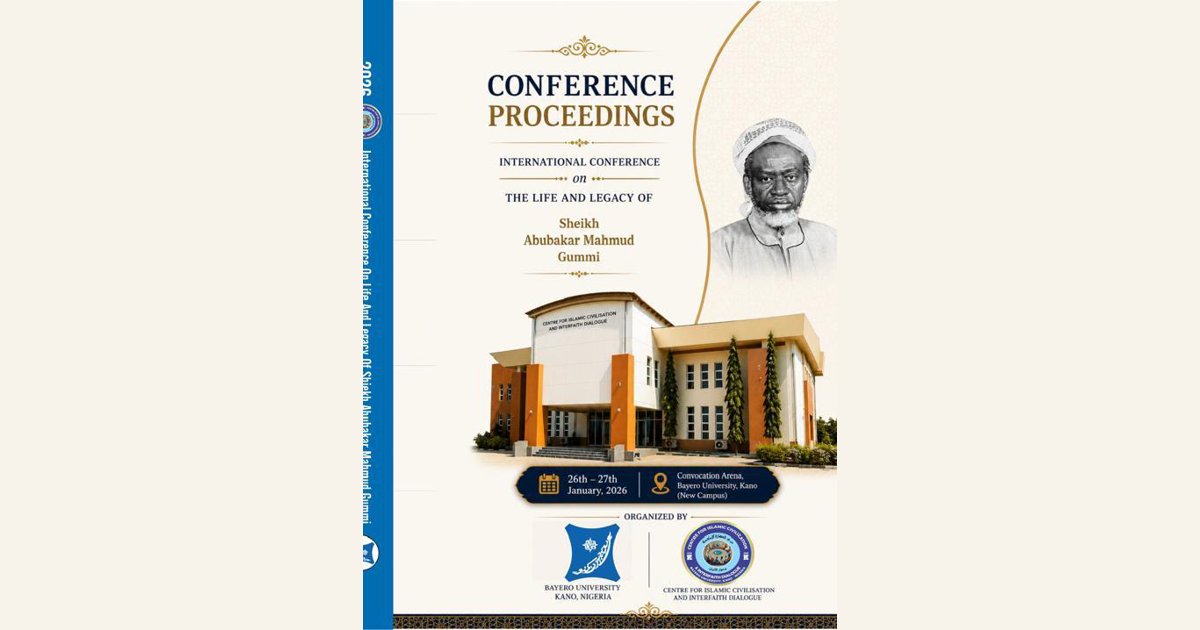
Islam teaches the values of peaceful coexistence, respect for human dignity, and ethical engagement with followers of other faiths. In Nigeria, where Muslims and Christian’s live side by side but often experience tension, the need for practical frameworks that nurture understanding and harmony is urgent. Sheikh Abubakar Mahmoud Gumi, a renowned Islamic scholar and reformist, dedicated his life to educating Muslims and promoting interreligious dialogue. He combined deep theological insight with practical societal engagement, insisting that Muslims uphold Islamic ethical principles while interacting with non-Muslims. Scholars such as Sulaiman (2010) argue that Gumi’s philosophy offers a model for balancing religious devotion with social responsibility, providing a blueprint for reducing prejudice, misunderstandings, and fostering cooperation across faith boundaries.
The history of Muslim-Christian relations in Nigeria reveals a complex mix of collaboration and conflict, often shaped by political, economic, and social pressures. Sectarian clashes frequently arise from miscommunication, intolerance, and entrenched stereotypes. Gumi’s interventions addressed these challenges by combining rigorous Islamic scholarship with grassroots outreach (Musa, 2015). He worked to correct theological misconceptions while simultaneously tackling practical societal issues that fuel division. His dual approach highlights the relevance of ethical dialogue and moral reasoning in bridging divides, making his vision particularly pertinent to contemporary Nigerian society, where religious coexistence remains both a challenge to an opportunity.
The theoretical framework guiding this study draws on Islamic ethics, interfaith dialogue, and moral reasoning, emphasizing that engagement with other religions should be informed by knowledge, compassion, and integrity (Al-Azami, 2008). Gumi’s approach exemplified these principles, showing that dialogue is not a superficial exchange of words but a deliberate, morally guided effort aimed at understanding, respect, and societal harmony. By analyzing his speeches, writings, and public interventions, this study seeks to illuminate the methodologies he employed and the ethical foundations of his interactions with Christians and other religious communities. His work demonstrates how religious teachings can be translated into practical strategies that foster peace and cooperation in multi-faith contexts.
Despite the presence of religious teachings advocating tolerance, interactions between faith communities in Nigeria often lack structured guidance, giving rise to sectarian clashes and social tension (Ojo, 2014). Misunderstandings and fears—such as the belief that interfaith dialogue compromises religious identity—further hinder constructive engagement (Al-Qaradawi, 2001). The limited integration of Gumi’s vision into schools, civil society programs, and public policy leaves communities vulnerable to prejudice, misinformation, and conflict (Musa, 2015). By examining his principles, this study highlights a framework for knowledge-based dialogue, ethical engagement, and social stability, showing how Gumi’s legacy can inform concrete strategies to build peaceful, cooperative, and resilient multi-religious communities in Nigeria.
Methodology
This study adopts a qualitative research design, using the content analysis method to explore Sheikh Abubakar Mahmoud Gumi’s perspective on Muslim -Christian relations and interfaith dialogue. This approach is appropriate because it enables in-depth examination of textual and oral materials, including speeches, books, articles, and recorded lectures, to understand the ethical, moral, and practical principles he advocated. The qualitative method emphasizes interpretation and contextual understanding rather than numerical measurement, aligning with the study’s objective of analyzing Gumi’s vision and approach for promoting peaceful coexistence. The population of the study comprises Gumi’s documented works, such as books, speeches, sermons, interviews, and articles on interfaith relations and ethical engagement with non-Muslims. Data are collected from primary sources, including his recorded speeches, writings, and public addresses, as well as secondary sources like scholarly analyses and biographies. These materials are systematically reviewed, classified, and organized by themes such as ethical engagement, principles of dialogue, and societal impact. The data are then analyzed through thematic content analysis, identifying recurring concepts and patterns in Gumi’s discourse, with interpretations grounded in Qur’anic guidance, Hadith teachings, and Islamic scholarly thought to provide a comprehensive understanding of his methods and vision for Muslim-Christian engagement.
Objectives of the Study
The general objective of this study is to examine Sheikh Abubakar Mahmoud Gumi’s perspective on Muslim -Christian relations and his approach to interfaith dialogue as a means of promoting mutual understanding and peaceful coexistence. While the Specific Objectives are as follows:
i. To explore how Sheikh Gumi encourages Muslims to ethically and respectfully engage with people of other faiths. ii. To identify the key principles and methods of interfaith dialogue he promoted for building trust and cooperation. iii. To assess the practical impact of his vision on fostering tolerance, harmony, and peaceful coexistence between Muslims and Christians. Biography of Sheikh Abubakar Mahmoud Gumi
Sheikh Abubakar Mahmoud Gumi was born in 1922 in Gumi town, present-day Zamfara State, Northern Nigeria, into a family deeply devoted to Islamic scholarship. From an early age, he was immersed in Qur’anic education, focusing on memorization, recitation, and the cultivation of moral discipline. Growing up in a region shaped by the Sokoto Caliphate’s legacy, Gumi was surrounded by structured Islamic institutions, including mosques, Qur’anic schools, and Sharia'h courts, which guided both spiritual and social life. This environment instilled in him a profound respect for knowledge, ethical responsibility, and the crucial role of scholars in shaping communal values, laying the foundation for his lifelong commitment to religious learning and reform (Gumi, 1991).
During his childhood and adolescence, Gumi studied in traditional Qur’anic schools, mastering the Qur’an, Arabic grammar, and principles of Islamic jurisprudence. These schools emphasized personal discipline, moral integrity, and respect for teachers, encouraging students to see scholarship as inseparable from ethical conduct and social responsibility. The combination of rigorous intellectual training and moral formation nurtured in him a deep commitment for guiding communities through both religious understanding and practical ethical leadership. This early education directly influenced his later reformist thought and public interventions (Sulaiman, 2014).
Coming of age during the late colonial era, Gumi observed the interaction between British administrators, local rulers, and Islamic authorities. This period, characterized by political restructuring under indirect rule, reinforced his belief that Islam could serve as an ethical and moral framework to guide society even amid political upheaval. He became convinced that scholars must engage actively in public life to preserve social cohesion, uphold authentic Islamic values, and address emerging social and moral challenges within a pluralistic society (Kukah, 1993).
Following Nigeria’s independence in 1960, Sheikh Gumi emerged as among of Northern Nigeria’s most influential Islamic scholars, known for his intellectual rigor, reformist vision, and public engagement. He consistently emphasized Islam as a comprehensive moral and ethical system capable of confronting societal injustices, corruption, and sectarian tensions. Through sermons, writings, and public lectures, he advocated doctrinal clarity, moral responsibility, and social guidance. Until his death in 1992, Gumi remained a central figure in shaping Islamic thought, promoting interfaith understanding, and modeling ethical leadership, leaving a lasting legacy in scholarship and community service (Loimeier, 2011).
Education of Sheikh Abubakar Mahmoud Gumi
Sheikh Abubakar Mahmoud Gumi began his education in traditional Qur’anic schools in Gumi town, where he received intensive instruction in the Qur’an, Arabic literacy, and foundational Islamic jurisprudence. The curriculum emphasized memorization, recitation, and proper understanding of classical texts, alongside moral and ethical guidance. This immersive training instilled in him discipline, intellectual rigor, and a profound sense of responsibility for preserving and transmitting Islamic knowledge. Scholars note that these early experiences were instrumental in shaping his lifelong dedication to religious scholarship and public ethical engagement (Gumi, 1989). As he advanced in his studies, Gumi delved into more complex areas of Islamic law (fiqh), theology (aqidah), and ethics (akhlaq), developing the ability to analyze legal and moral issues and apply Qur’anic principles to societal challenges. His education emphasized critical thinking and engagement with contemporary social concerns, while remaining anchored in Qur’anic and prophetic guidance. Mentorship from prominent Islamic scholars and reformers further expanded his intellectual horizons, exposing him to debates on religious reform and the societal role of Islamic scholarship. This combination of rigorous schooling and mentorship equipped Gumi with the knowledge, ethical grounding, and leadership skills that underpinned his reformist, public-oriented, and interfaith-focused work throughout his life (Sulaiman, 2014; Kukah, 1993).
Career of Sheikh Abubakar Mahmoud Gumi
Sheikh Abubakar Mahmud Gumi was one among the most influential Islamic scholars in post-colonial Northern Nigeria and served as Grand Khadi (chief judge) of the Northern Region in the 1960s, where he became a central authority in the interpretation of Shariʿa and Islamic education in the region. He developed a close working relationship with Sir Ahmadu Bello, the Sardauna of Sokoto and Premier of the Northern Region, who supported the growth of Islamic scholarship and organizations such as Jama’atuNasril Islam (JNI), an umbrella Muslim body Gumi helped established. This relationship gave Gumi political backing and institutional access to teach and preach; he used media, mosque forums, and public lectures in Kaduna (including what became the Sultan Bello Mosque) to advocate for a return to Qur’anic and Sunna-based Islam and challenge practices he considered innovations. His prominence in public Islamic discourse was bolstered by his ties with the Northern leadership and his role in JNI, which Sir Ahmadu Bello patronized as part of efforts to unify and reform Muslim practice in Northern Nigeria.
At the Sultan Bello Mosque in Kaduna—built in 1962 and named after Sultan Bello of Sokoto, but functioning as a central hub for worship and learning—Gumi’s teachings were widely recognized for their emphasis on tafsir (Qur’anic interpretation) and the fundamentals of Islamic belief. During Ramadan and other occasions he led tafsir sessions that focused on understanding the Qur’an in context and applying its guidance to daily life, and this became a hallmark of the mosque’s educational role. Gumi’s own written works were integral to his teaching and included texts such as Al-Aqidah al-Sahihah bi Muwafaqat al-Shariʿa (The Correct Belief in Line with the Shariʿa), Rad al-AzhanilaMaʿani al-Qur’an (Return to the Meanings of the Qur’an), Where I Stand (his English-language reflections on Islam and society), and translations such as the TarjamarMa’anonin al-Kur’aniMaigirma (Meanings of the Glorious Qur’an) and Tarjamarlittafin al-Arbain al-Nawawiyyah (Translation of Forty Hadith)—all of which guided how he framed Qur’anic interpretation, fiqh, tawhid, and ethical conduct in his mosque lectures and broader outreach.
Muslim–Christian Dialogue According to Sheikh Abubakar Mahmoud Gumi
Sheikh Abubakar Mahmoud Gumi emphasized that dialogue between Muslims and Christians is essential for peaceful coexistence and social harmony in Nigeria. He argued that engaging the other religious should be grounded in Islamic ethical principles, mutual respect, and knowledge of the other faith. According to Gumi, interfaith dialogue prevents misunderstandings, reduces sectarian tensions, and strengthens moral and communal cohesion. His perspective illustrates a practical approach rooted in Islamic jurisprudence and ethics, highlighting the importance of dialogue as a tool for societal stability and ethical leadership (Gumi, 1989).
He also emphasized that interfaith engagement should produce tangible benefits for society, such as promoting education, addressing poverty, and resolving communal conflicts. Gumi argued that collaborative initiatives between Muslims and Christians are not only permissible but recommended if they advance justice, social welfare, and peace. His focus on practical cooperation shows that dialogue extends beyond discussion to active problem-solving, creating spaces for moral and social development consistent with Islamic teachings (Musa, 2004).
Finally, Sheikh Gumi advocated institutionalizing interfaith dialogue through Islamic educational programs, mosques, and community organizations. He encouraged continuous learning about the beliefs of other faiths, arguing that awareness and knowledge foster empathy, respect, and cooperation. His model combines Qur’anic guidance, ethical reasoning, and practical engagement, providing Muslims with a framework to promote peaceful coexistence while remaining faithful to Islamic principles. (Gumi, 1982).
Theoretical Framework
This study is anchored in Adab al-Mu’amalah (Ethics of Interaction), an Islamic framework guiding Muslims on ethical and moral engagement with others, including non-Muslims, to promote justice, respect, and social harmony. The Qur’an emphasizes this principle, stating that Muslims should act justly toward those who do not oppose them (Qur’an 60:8). Sheikh Abubakar Mahmoud Gumi consistently applied this principle, advocating respectful interaction with Christians and other religious communities, recognizing shared moral values, and fostering cooperation for societal peace. Adab al-Mu’amalah thus provides a moral foundation for constructive interfaith relations and ethical engagement in pluralistic societies.
The Hadith further reinforces ethical interaction, as the Prophet Muhammad (peace be upon him) said, “None of you truly believes until he loves for his brother what he loves for himself” (Bukhari& Muslim). Scholars such as Al-Qaradawi (2001) expand this to include non-Muslims, emphasizing justice, empathy, and honesty. In practice, Adab al-Mu’amalah promotes knowledge, patience, moral awareness, and respectful communication, as illustrated in the Qur’anic instruction to “invite to the way of your Lord with wisdom and good instruction” (Qur’an 16:125). By following this ethical framework, Muslims can engage in dialogue that reduces misunderstanding and conflict, fosters collaboration, and sustains lasting harmony between religious communities, reflecting the core of Sheikh Gumi’s vision (Sulaiman, 2010).
Interfaith Dialogue
Interfaith dialogue refers to purposeful and structured interaction between adherents of different religions, aimed at fostering understanding, correcting misconceptions, and promoting peaceful coexistence. The Qur’an encourages such engagement, stating: “Invite to the way of your Lord with wisdom and good instruction, and argue with them in a way that is best” (Qur’an 16:125). This verse emphasizes that dialogue should be guided by wisdom, rationality, and respect, rather than force or hostility. Sheikh Abubakar Mahmoud Gumi consistently advocated that dialogue must be rooted in knowledge and moral understanding, ensuring that Muslims engage with Christians and other religious communities constructively, with the ultimate goal of promoting societal harmony.
Hadith literature also underscores the ethical principles necessary for effective dialogue. The Prophet Muhammad (peace be upon him) said: “Whoever believes in Allah and the Last Day, let him speak good or remain silent” (Bukhari& Muslim). This teaching implies that communication with others, including those of different faiths, should be thoughtful, truthful, and beneficial. And do not argue with the People of the Book except in a manner that is best, except with those among them who act unjustly. And say, ‘We believe in what has been revealed to us and revealed to you. Our God and your God is one, and to Him we submit.’”(Qur’an 29:46). Scholars like Al-Azami (2008) argue that dialogue in Islam is not merely a social activity but a moral obligation that fosters understanding, rectifies misconceptions, and creates opportunities for cooperation between communities. Gumi’s practice of public engagement, lectures, and community initiatives reflected these principles, showing that dialogue is both an ethical and practical tool for societal cohesion.
The Other Religions
The concept of the other religions in Islam emphasizes recognition, respect, and just treatment of people from different faiths. The Qur’an clearly instructs Muslims to respect freedom of belief: “There shall be no compulsion in [acceptance of] religion. The right course has become clear from the wrong” (Qur’an 2:256). This verse highlights that Islam acknowledges the autonomy of the individual in matters of faith, which forms the ethical foundation for approaching non-Muslims with tolerance and fairness. Sheikh Abubakar Mahmoud Gumi consistently advocated that Muslims should avoid prejudice and seek to understand Christians and other religious communities from a perspective of shared human values and morality rather than focusing solely on doctrinal differences.
Furthermore, recognizing the other religious is not limited to passive tolerance but extends to active ethical engagement. Hadith literature reinforces this principle, as the Prophet (peace be upon him) said: “None of you truly believes until he loves for his brother what he loves for himself” (Bukhari& Muslim). Islamic scholars, including Al-Qaradawi (2001), interpret this directive to include non-Muslims in the broader understanding of ethical responsibility. This approach encourages Muslims to interact with Christians in ways that promote trust, respect, and cooperation, establishing common ground for dialogue and collaborative action in society.
Peaceful Coexistence
Peaceful coexistence refers to the sustained state of mutual respect, tolerance, and collaborative living among diverse religious communities. The Qur’an emphasizes this principle by instructing: “Allah does not forbid you from those who do not fight you because of religion and do not expel you from your homes, from being righteous toward them and acting justly toward them. Indeed, Allah loves those who act justly” (Qur’an 60:8). This verse establishes that ethical treatment and justice toward non-Muslims is not only permissible but required, forming a foundation for harmonious social interactions. Sheikh Abubakar Mahmoud Gumi advocated that Muslims should uphold these principles in their interactions with Christians and other religious communities, promoting understanding and cooperation rather than conflict.
The Hadith literature further supports the importance of maintaining social harmony and coexistence. The Prophet (peace be upon him) said: “The best of people are those who are most beneficial to others” (Daraqutni). Scholars interpret this guidance to include non-Muslims, emphasizing that positive social contribution and ethical behavior toward all members of society are central to Islam. Gumi’s teachings consistently highlighted that peaceful coexistence is not passive tolerance but active engagement that prioritizes justice, empathy, and societal welfare, enabling communities to function cohesively despite religious differences.
Moreover, peaceful coexistence requires practical application through dialogue, ethical engagement, and collaborative initiatives in education, social development, and civic life. Scholars such as Musa (2015) note that Gumi’s vision links theoretical Islamic ethics with tangible outcomes, showing that promoting harmony among Muslims and Christians requires structured interfaith programs, community education, and conflict prevention strategies. By integrating knowledge, morality, and proactive engagement, Gumi provided a framework for reducing sectarian tensions and fostering a society where religious diversity is respected and valued as a source of collective enrichment and stability.
Findings
Sheikh Abubakar Mahmoud Gumi consistently demonstrated ethical and proactive engagement with other religious communities, particularly Christians, in Northern Nigeria, a region historically marked by interreligious tensions. Gumi Grounded in Qur’anic guidance, especially the injunction to act justly toward those who do not oppose Muslims (Qur’an 60:8), Gumi participated actively in interfaith forums and community initiatives, advocating for the recognition of the rights and dignity of non-Muslims. He emphasized knowledge as a prerequisite for meaningful engagement, delivering sermons and publishing articles in the 1970s and 1980s that encouraged Muslims to learn about Christian beliefs and practices to prevent misconceptions and hostility, particularly in Kaduna and Kano. Beyond theoretical exhortation, Gumi facilitated direct dialogue between Muslim and Christian leaders during periods of heightened tension, such as the Shariah debates, ensuring disputes were addressed peacefully. His approach combined ethical, moral, and practical principles, applying the teachings of Adab al-Mu’amalah to foster understanding, reduce conflict, and promote harmonious coexistence in multi-religious contexts.
Sheikh Gumi’s approach to interfaith dialogue was firmly rooted in Islamic ethical teachings and Qur’anic guidance, emphasizing wisdom, patience, and moral responsibility, as reflected in the instruction to “invite to the way of your Lord with wisdom and good instruction, and argue with them in a way that is best” (Qur’an 16:125). During the 1970s and 1980s, he applied these principles in interfaith forums in Kaduna and Kano, encouraging Muslims to engage Christians respectfully, focusing on shared values rather than divisive doctrinal differences. His methods extended beyond dialogue to practical collaboration, facilitating joint initiatives in education, community development, and social welfare, such as youth education and healthcare projects, reflecting his belief that engagement should be action-oriented and socially constructive (Al-Qaradawi, 2001). Additionally, Gumi promoted education and awareness among youth and community leaders through schools and civil society programs, fostering respectful interaction, cooperation, and societal harmony, thereby translating Islamic ethical principles into tangible outcomes that mitigated sectarian conflict.
The impact of Sheikh Gumi’s vision is evident in the reduction of sectarian tensions in Northern Nigerian communities where he was actively involved. During periods of heightened religious conflict, such as disputes over the implementation of Shariah law in the 1980s, his interventions emphasized negotiation and collaboration rather than confrontation, organizing joint Muslim-Christian committees to resolve local disputes over land, education, and social services peacefully. His approach applied the principles of Adab al-Mu’amalah, demonstrating that ethical engagement fosters social cohesion. Gumi’s influence extended to shaping attitudes among religious leaders and community members, with many adopting his knowledge-based, respectful dialogue with Christians, which strengthened interreligious understanding and reduced prejudice. Interfaith workshops and collaborative community programs, including jointly managed schools and healthcare projects, reflect both the immediate and long-term societal effects of his work, promoting tolerance, cooperation, and practical collaboration. By emphasizing shared moral values and ethical conduct, Gumi provided a replicable framework for sustainable interfaith engagement, influencing subsequent initiatives and illustrating how
Islamic ethical theory can be effectively translated into real-world peacebuilding and social stability (Musa, 2015).
Conclusion This study has examined Sheikh Abubakar Mahmoud Gumi’s vision of Islamic-Christian relations and his approach to interfaith dialogue, highlighting his emphasis on ethical engagement, knowledge-based interaction, and practical collaboration. The findings show that Gumi consistently applied the principles of Adab al-Mu’amalah, grounded in the Qur’an, Hadith, and Islamic scholarly thought, to foster mutual respect, tolerance, and peaceful coexistence between Muslims and Christians. By encouraging understanding of the beliefs of the other religious, focusing on shared moral values, and engaging in dialogue with wisdom and ethical awareness, he effectively reduced sectarian tensions. His principles were not merely theoretical but also practical, as evidenced through public lectures, interfaith forums, joint community initiatives, and mediation in disputes, which promoted cooperation, trust, and collaborative social, educational, and development projects in Northern Nigeria. Overall, Sheikh Gumi’s vision provides a robust framework for interfaith dialogue, offering a model for addressing contemporary religious tensions and fostering sustainable social harmony, and underscores the importance of expanding educational and civil society programs to enhance ethical engagement, mutual understanding, and lasting peace in multi-religious communities.
Recommendations
i. Expand interfaith dialogue programs in educational institutions to teach ethical engagement, shared values, and respect for other religions, reflecting Sheikh Gumi’s knowledge-based approach. ii. Implement joint community initiatives, such as social, educational, and healthcare projects, to build trust, reduce tensions, and strengthen social cohesion, with support from government, religious, and civil society organizations. iii. Train religious leaders in Adab al-Mu’amalah, ethical engagement, and knowledge-based dialogue, including practical skills in mediation and conflict resolution, to guide communities in fostering mutual understanding and preventing conflict. References
The Holy Qur’an: English translation of the meanings. King Fahd Complex for the Printing of the
Holy Qur’an. Abubakar, A. (2010). Islamic reform and societal engagement in Northern Nigeria. Kaduna:
Ahmadu Bello University Press. Al-Azami, M. M. (2008). The ethics of dialogue in Islam: Principles and applications. London:
Islamic Ethics Press. Al-Qaradawi, Y. (2001). Fiqh al-mu’amalat: Islamic ethics of interaction. Cairo: Dar al-Shuruq. Sahih al-Bukhari and Sahih Muslim. Translations. Riyadh: Islamic University Press. Daraqutni, A. (n.d.). Sunan ad-Daraqutni. Riyadh: Dar al-Salam. Gumi, A. M. (1982). Principles of interfaith engagement. Kano: Northern Nigerian Islamic
Publications. Gumi, A. M. (1991). Muslims and Christians: Dialogue for peace. Kaduna: Islamic Studies Press.
Gumi, A. M. (1991). Selected sermons and writings of Sheikh Abubakar Mahmoud Gumi. Kaduna:
Northern Nigeria Islamic Publications. Kukah, M. H. (1993). Religion, politics and governance in Northern Nigeria. Ibadan: Spectrum
Books. Loimeier, R. (2011). Muslim reformist movements in Northern Nigeria: The legacy of Sheikh
Abubakar Gumi. Leiden: Brill Academic Publishers. Musa, A. (2002). Ethics and interfaith relations in Nigeria. Abuja: National Institute of Security
Studies. Musa, A. (2004). Practical interfaith engagement in multi-religious societies. Kaduna: Kaduna
Academic Press. Musa, A. (2015). Peacebuilding through interreligious dialogue in Northern Nigeria. Kano: Centre for Religious Studies. Musa, M. (2015). Interfaith dialogue and social cohesion in Nigeria: Lessons from Sheikh
Abubakar Mahmoud Gumi. Journal of Religion and Society, 17, 45–68. Mustapha, A. R. (2007). Islamic education and reform in Northern Nigeria: The life of Sheikh
Gumi. Lagos: University Press. Ojo, J. (2014). Religious diversity and conflict management in Nigeria. Lagos: University Press. Oloyede, S. (2015). Islamic scholarship and political engagement in Nigeria. Ibadan: University
Press. Salihu, M. (2018). Legacy of Sheikh Abubakar Mahmoud Gumi: Scholarship and social reform.
Kano: Northern Scholars Publications. Sulaiman, A. (2010). Ethics of interaction and interfaith dialogue in Islam. Kaduna: Islamic Ethics
Press. Sulaiman, A. (2010). Islamic ethical engagement and interreligious understanding in Northern
Nigeria. Kano: Zaria Islamic Studies press. Sulaiman, A. (2014). Sheikh Gumi: Life, education, and reformist thought. Abuja: National
Institute for Security Studies.
Comments