
Introduction
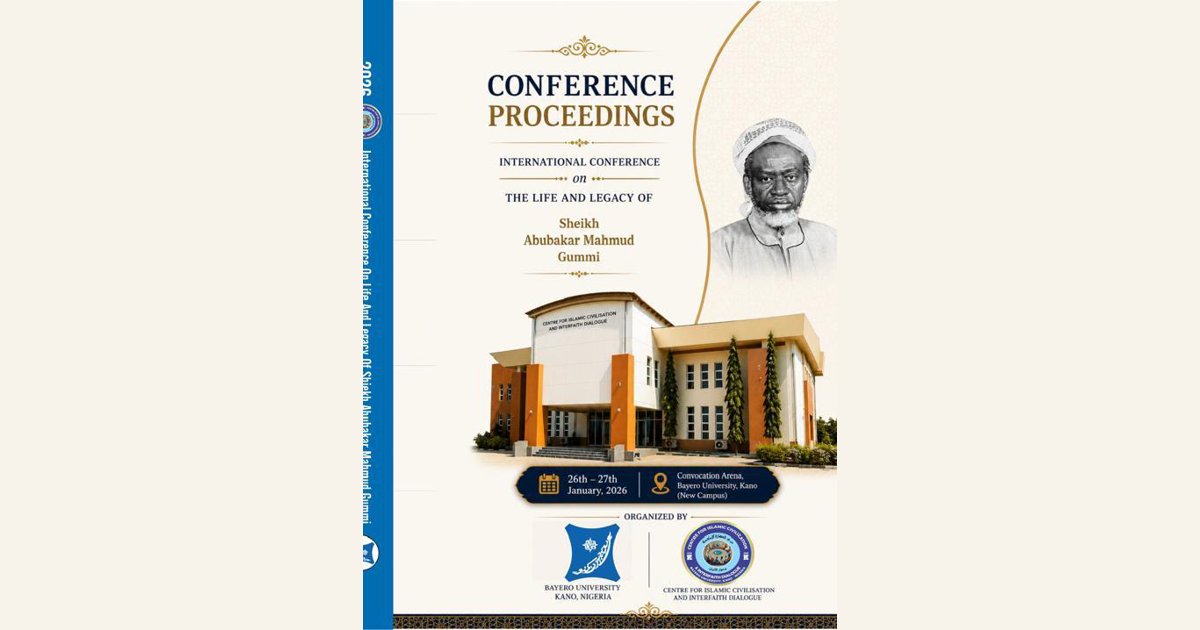
Nigeria is a nation defined by its diversity. With over 250 ethnic groups, multiple religious communities, uneven patterns of economic development, and a turbulent political history, the coutry’s sociopolitical discourse is complex and often contested. The regions of the North and South differ in historical experiences, colonial legacies, and sociopolitical expectations. Religion—both Islam and Christianity—functions as a powerful tool for mobilization and identity formation. In Northern Nigeria, Islamic scholars have long served as intermediaries between the state and society. They act as custodians of moral values, interpreters of social realities, and at times, critics of political authority. Among such figures, Shaykh Abubakar Mahmud Gummi is arguably one of the most influential in shaping modern Islamic thought, public discourse, and political consciousness.
Shaykh Abubakar Mahmud Gummi was not merely a religious scholar; he was an educator, jurist, administrator, diplomat, reformer, and political commentator. His contributions cut across:
Islamic jurisprudence, Education reform, Political mediation, Moral instruction, Media-based, religious communication, deological transformation of Islamic movements.
Historical Context of Sociopolitical Discourse in Nigeria 1. Pre-Colonial Northern Nigeria
Pre-colonial Northern Nigeria refers to the societies, political systems, economies, cultures, and religious life of the region before British colonial rule (before 1900). The area was not a single state but a collection of powerful kingdoms, emirates, and communities with sophisticated governance. Before colonial conquest, the Sokoto Caliphate governed most of Northern Nigeria based on Islamic law and Hausa-Fulani administrative structures. Scholars played major roles in:
Advising rulers, Educating citizens, Judging disputes, Shaping political authority
This laid the foundation for a long tradition of religious scholars holding sociopolitical influence.
2. Colonial Disruption and Reorganization
Colonialism in Africa was not merely a process of foreign occupation; it fundamentally altered existing political systems, economic structures, social relations, and cultural institutions. Through conquest and administration, colonial powers disrupted indigenous patterns of governance and reorganized societies to serve imperial interests. This process of disruption dismantled traditional systems, while reorganization imposed new political, economic, and social frameworks. British colonialism transformed this order by: Weakening Islamic legal authority, Introducing Western education, strengthening emirate authority under indirect rules, Creating a Western-educated elite class, Marginalizing Islamic scholars in administrative roles These changes produced tensions between Sufi orders, colonial authorities, and emerging reformers.
3. Post-Colonial Nigeria and Identity Politics
Nigeria’s post-colonial experience has been deeply shaped by identity politics—the mobilization of ethnic, religious, regional, and cultural identities for political and socio-economic advantage.
Since independence in 1960, competition among Nigeria’s diverse groups has influenced state formation, governance, conflict, and national integration. Rather than dissolving after colonial rule, identity divisions were often intensified by the structures inherited from colonialism and by post-colonial elite strategies.
Independence in 1960 ushered in: Civilian and military coups, Economic crises, Ethno-religious conflicts, Struggles for regional autonomy, Debates over Sharia and secularism
Religious leaders became highly influential, functioning as mediators, critics, and mobilizers.
4. Rise of Islamic Reformism
Islamic reformism is the intellectual, spiritual, and socio-political movements within Islam that seek to revive the original teachings of the Qur’an and Sunnah, purify religious practice from innovations (bid‘ah), and respond to changing historical realities. The rise of Islamic reformism is not a modern phenomenon alone; rather, it represents a recurring pattern of renewal (tajdīd) throughout Islamic history. However, from the eighteenth century onward, reformist movements became more organized and visible due to colonialism, globalization, and internal decline in Muslim societies. Northern Nigeria experienced ideological contestations between: Sufi orders (Tijaniyya and Qadiriyya), Reformist Salafi-oriented movements, Western-educated Muslim elites, Grassroot, Islamiyya students.
It was within this environment that Shaykh Gumi rose to prominence.
Brief Biography and Intellectual Development of Shaykh Abubakar Mahmud Gummi 1. Early Life and Family Background
Shaykh Abubakar Mahmud Gummi was Born in 1924 at Gummi (in present-day Zamfara State), Gumi grew up in a family with a strong tradition of Islamic learning. His father was a mallam and judge, and his community valued Islamic excellence. 2. Educational Trajectory Shaykh Abubakar Mahmud Gumi’s education blended classical and reformist influences: Traditional Qur’anic and Arabic studies, Kano School of Arabic Studies, School of Sharia in Sudan, Training in fiqh, hadith, grammar, aqeedah, and tafsir, Exposure to Middle Eastern reformist thought, This diverse background shaped his later intellectual stance. 3. Judicial and Scholarly Career Shaykh Abubakar Mahmud Gumi served as: Teacher at the School of Arabic Studies, Kano., Qadi (Islamic judge)., Grand Khadi of Northern Nigeria., Member of several Islamic legal and scholarly councils Shaykh Abubakar Mahmud Gummi earned respect for moral integrity, scholarship, and administrative discipline.
4. International Engagements
Shaykh Abubakar Mahmud Gummi represented Nigeria in: The Muslim World League (Saudi Arabia), International Islamic conferences, Hajj administrative reforms
His exposure to global Islamic reformism helped inspire his anti-bid‘a ideology. Shaykh Abubakar Mahmud Gumi’s Intellectual Orientation and Reformist Agenda 1.Scripturalist Reformism Shaykh Abubakar Mahmud Gumi advocated strict adherence to: Qur’an, Hadith, Teachings of the Salaf
He rejected practices he considered innovations (bid‘a), emphasizing: Pure monotheism (tawhid), Rational religious debate, Authentic sources of Islamic jurisprudence
2. Critique of Sufism
Shaykh Abubakar Mahmud Gummi challenged: Excessive veneration of saints, Intermediary practices, Rituals lacking textual basis, Shaykh-centered authority, Sufi inhibitions against modern education. This brought him into conflict with Tijaniyya and Qadiriyya leaders but won him a large following among youth and students. 3. Education as a Tool of Reform For Shaykh Abubakar Mahmud Gummi, proper education was essential for: Modernization, Social mobility, National development, Shaykh Abubakar Mahmud Gummi advocated:, Islamiyya schools, Integration of Western sciences, Bilingual Arabic-English literacy, Teacher training reforms, His ideas contributed to the present Islamiyya school system. 4. Islamic Law and Governance Islamic law and governance are built on a moral-legal framework that prioritizes justice, accountability, consultation, and public welfare. Rather than a rigid political model, Islam provides principles and objectives that can guide governance across time and context. The challenge for modern Muslim societies is to translate these values into institutions that are just, inclusive, and responsive to contemporary realities. Shaykh Abubakar Mahmud Gummi supported: Moral governance, Implementation of Sharia within constitutional limits, Rule of law, Accountability of leaders, But he rejected extremist approaches, emphasizing gradual, ethical reform.
Shaykh Abubakar Mahmud Gumi’s Sociopolitical Engagements 1. Relationship with Political Leaders
Sheikh Abubakar Mahmud Gumi maintained close and respectful relationships with many political leaders, especially in Northern Nigeria, cooperating with them to advance Islamic education and social reform. At the same time, he retained independence, speaking out critically when he believed governance lacked justice or moral grounding. His influence extended into institutional roles and continues to be acknowledged by contemporary leaders.
Throughout his life, Gumi maintained relationships with major Nigerian leaders: Sir Ahmadu Bello, General Yakubu Gowon, President Shehu Shagari, Muhammad Buhari, Ibrahim Badamasi Babangida. He served as adviser on religious affairs and criticized leaders when necessary.
2. Shaykh Abubakar Mahmud Gummi as Political Mediator
Shaykh Abubakar Mahmud Gummi intervened in: Civilian-military tensions, Religious conflicts, Northern regional politics, Ethno-religious disputes, His diplomacy helped stabilize several political crises. 3. Public Morality and Anti-Corruption Crusade
Shaykh Abubakar Mahmud Gumi’s Tafsir and public lectures criticized: Corruption, Nepotism, Misuse of public office, Immoral behavior, Poor governance. He argued that public office was a trust (amanah), not a privilege.
4. Promoting National Unity
National unity refers to the sense of togetherness, shared identity, and collective purpose among citizens of a country despite differences in ethnicity, religion, language, or region. In diverse societies, unity is not the absence of differences, but the ability to live with them peacefully and cooperatively.
Why National Unity Matters
Political Stability: Unity reduces ethnic and religious conflicts and strengthens democratic institutions. Economic Development: Peaceful coexistence attracts investment and enables collaborative national growth.
Social Harmony: It fosters mutual respect, tolerance, and a sense of belonging among citizens.
National Security: A united population is more resilient against extremism, separatism, and external threats.
Key Strategies for Promoting National Unity
1. Inclusive Governance Governments must ensure fair representation of all groups in political institutions. When citizens feel heard and treated equally, loyalty to the nation grows.
2. Civic Education and National Values
Schools, religious institutions, and the media should promote shared national ideals such as justice, integrity, equality, and mutual respect. Teaching history in a balanced way helps build a common narrative.
3. Inter-Group Dialogue
Regular dialogue among ethnic, religious, and regional communities reduces stereotypes and builds trust. Cultural exchanges, interfaith forums, and community projects are effective tools.
4. Social Justice and Equity
Unity cannot exist where injustice prevails. Reducing poverty, regional marginalization, and discrimination strengthens the social contract between citizens and the state.
5. Responsible Leadership
Leaders must avoid divisive rhetoric and instead emphasize common goals. National symbols, inclusive policies, and moral example play a crucial role in shaping public attitudes.
6. Media and Communication
Media organizations should avoid sensationalism that inflames divisions and instead highlight stories of cooperation, shared struggles, and national achievements. Challenges to National Unity, Ethnic and religious polarization, Political manipulation of identity, Economic inequality and regional imbalance, Misinformation and hate speech
Addressing these challenges requires long-term commitment, institutional reforms, and active citizen participation.
Promoting national unity is a collective responsibility of government, civil society, religious leaders, educators, the media, and citizens. Unity does not mean uniformity; rather, it means building a nation where diversity becomes a source of strength rather than conflict. A united nation is better equipped to achieve peace, justice, and sustainable development.
Shaykh Abubakar Mahmud Gummi advocated: Tolerance, Christian-Muslim dialogue,Respect for diversity, National integration. Despite his critiques of Sufism, he believed in peaceful coexistence.
The Role of Media in Gumi’s Influence
1. Radio Kaduna Tafsir Shaykh Abubakar Mahmud Gummi revolutionized religious teaching through radio: He reached millions weekly, Simplified complex Islamic teachings, Addressed political issues, Critiqued social ills, Used Hausa language for wide accessibility, This made him a national figure.
2. Written Works
Notable works include: Where I Stand, Pamphlets on Islamic reform, Fatwas and legal opinions,Articles on morality and governance
3. Influence on Mass Education
His use of media inspired contemporary preachers on: Radio, Television, YouTube, Social media, Modern scholars model their communication style on his.
Gumi and the Formation of Izala Movement
Although he did not create the movement formally, Gumi’s teachings were foundational to IzalatilBid‘aWaIqamatisSunnah (Izala). His influence included: Critique of Sufism, Call for purification of Islamic practice, Advocacy for modern education, Encouragement of youth activism, Izala became one of the largest Islamic reform movements in West Africa.
Gumi’s Thought on Governance, Democracy, and Leadership
1. Ethical Leadership
Ethical leadership refers to a style of leadership grounded in moral principles, integrity, fairness, and responsibility. An ethical leader not only pursues goals and results but also ensures that the means used are just, transparent, and respectful of human dignity.
- Core Principles of Ethical Leadership - Integrity - Acting consistently with moral values; keeping promises and avoiding corruption or hypocrisy. - Justice and Fairness - Treating all people impartially, without favoritism, discrimination, or abuse of power. - Accountability - Accepting responsibility for decisions and actions, and being open to evaluation and criticism. - Respect for Human Dignity - Valuing people as ends in themselves, not merely as tools for achieving objectives. - Transparency - Making decisions openly and honestly, especially in matters affecting others. - Service to the Common Good - Prioritizing societal welfare over personal gain or narrow group interests. - Characteristics of an Ethical Leader - Leads by example, not coercion - Demonstrates moral courage in difficult situations - Encourages ethical behavior in others - Resists corruption and abuse of authority - Promotes trust and credibility - Importance of Ethical Leadership - Builds trust in institutions and organizations - Reduces conflict and corruption - Enhances legitimacy and social stability - Encourages long-term success rather than short-term gain - Develops morally responsible followers and citizens - Ethical Leadership in Society and Governance In politics, education, religion, and business, ethical leadership:
- Ensures justice in policy-making - Protects public resources from misuse - Promotes unity, peace, and accountability - Strengthens democratic and moral culture - In the Islamic tradition, ethical leadership is rooted in: - Amānah (trust) - ʿAdl (justice) - Ṣidq (truthfulness) - Taqwā (Allah-consciousness) - Leaders are seen as servants of the people, responsible before both society and Allah.
Ethical leadership is not merely about holding power but about using power responsibly. It combines competence with character, authority with humility, and ambition with moral restraint. Societies that cultivate ethical leaders are more likely to achieve justice, stability, and sustainable development.
Shaykh Abubakar Mahmud Gummi taught that leaders must be: Honest, Morally upright, Compassionate, Just, Knowledgeable. He condemned leaders who lived extravagantly while citizens suffered.
2. Democracy and Islamic Values
Shaykh Abubakar Mahmud Gummi believed:
- Democracy was not inherently un-Islamic
- Moral frameworks could guide democratic governance - Muslim participation was necessary to protect rights - He opposed violent political agitation. 3. Role of Religion in Politics Shaykh Abubakar Mahmud Gummi emphasized that :
- Religion should shape moral behavior, not dictate party politics - Clerics must advise leaders, not replace them - Islam encourages civic responsibility Gumi’s Thought on Social Justice and Economic Ethics 1. Poverty and Inequality Shaykh Abubakar Mahmud Gummi argued that: Poverty was partly due to ignorance, Leaders failure to distribute wealth fairly, Government must provide education and social welfare
2. Zakat and Wealth Redistribution
Shaykh Abubakar Mahmud Gummi emphasized:
- Institutionalizing zakat
- Supporting the poor
- Reducing economic exploitation
- Transparency in charity administration
3. Women, Family, and Social Values
Shaykh Abubakar Mahmud Gummi taught:
- Women’s education is mandatory
- Family is central to moral society
- Islamic rights must be balanced with social realities Interfaith Relations and Religious Tolerance
1. Relations with Christians Shaykh Abubakar Mahmud Gummi encouraged: Respect for Christians, Dialogue on shared values, Peaceful coexistence, Cooperation for national development, He opposed inflammatory rhetoric and violence.
2. Religious Violence
Shaykh Abubakar Mahmud Gummi consistently condemned: Riots, Destruction of property, Attacks on churches or mosques, Misuse of religion for political gain
3. Ethics of Disagreement
Shaykh Abubakar Mahmud Gummi promoted: Rational debate, Academic critique, Avoiding insults, Referencing evidence
Contemporary Relevance of Gumi’s Ideas
1. Modern Islamic Movements
His teachings continue to influence: Izala, Salafi youth associations, Islamiyya schools, University Muslim Student groups
2. Governance and Public Policy
Debates on: Sharia, Education reform, Public morality, Anti-corruption, reflect Gumi’s continuing impact.
3. Counter-Radicalization
His rejection of extremism provides useful material for: Peacebuilding, Prevention of violent extremism, Interfaith dialogue
4. Media-based Preaching
Modern preachers use:, Television Tafsir, Radio, Facebook, TikTok, Podcasts, drawing from Gumi’s pioneering style.
Conclusion Shaykh Abubakar Mahmud Gumi remains one of the most influential Islamic figures in Nigeria’s sociopolitical history. His contributions to religious reform, education modernization, political mediation, moral critique, and public communication have shaped contemporary discourse. His legacy is visible in Islamic movements, governance debates, social reforms, and media preaching. Although controversial, his ideas continue to inspire scholars, reformers, students, and policymakers. Understanding Gumi’s thought is essential for understanding Northern Nigeria’s sociopolitical dynamics and the evolving relationship between religion and politics in the country.
References
Adamu, A. U. (2016). Islam, Media and Society in Northern Nigeria. Kano: Center for Hausa Studies. Adebanwi, W., &Obadare, E. (Eds.). (2010). Encountering the Nigerian State. New York: Palgrave Macmillan. Ahmed, U. (2010). The Izala Movement and the Transformation of Islamic Thought in Northern Nigeria. Ph.D. Thesis, Bayero University Kano. Brenner, L. (2001). Controlling Knowledge: Religion, Power, and Schooling in a West African Muslim Society. Bloomington: Indiana University Press. Falola, T., & Heaton, M. (2008). A History of Nigeria. Cambridge: Cambridge University Press. Federal Republic of Nigeria. (1979). Constitution of the Federal Republic of Nigeria. Lagos: Government Press. Gumi, A. M. (1992). Where I Stand. Ibadan: Spectrum Books. Gumi, A. M. (1972). The Muslim Women’s Rights. Kaduna: NNPC. Gumi, A. M. (1980). Islamic Education and Modern Society. Kaduna: Islamic Publications Bureau. Gumi, A. M. (1985). Tafsirin Ramadan (Annual Radio Kaduna Transcripts). Kaduna. Gumi, A. M. (1984). “Islamic Education for National Development.” Paper presented at the National Islamic Education Summit, Kano. Haruna, A. (2010). Islamic Scholarship in Northern Nigeria. Kaduna: Vanguard Publishers. Hiskett, M. (1984). The Development of Islam in West Africa. London: Longman. Ibrahim, M. (2003). “Religion and the State in Nigeria.” African Journal of Political Science, 8(1), 71–87. Ibrahim, J. (1997). Religion and Political Turbulence in Nigeria. Dakar: CODESRIA. Kane, O. (2013). Muslim Modernity in Postcolonial Nigeria. Leiden: Brill. Kane, O. (2007). “Islamism in West Africa: A Global Analytical Framework.” African Studies Review, 50(3), 1–25. Kukah, M. H. (1993). Religion, Politics and Power in Northern Nigeria. Ibadan: Spectrum Books. Kani, A. (2000). “The Rise of Reformist Islamic Movements in Hausaland.” Journal of Islamic tudies, 11(2S), 150–176 Kperogi, F. (2019). Nigeria’s Digital Culture and Media Islam. Lagos: Premium Books. Last, M. (2008). “The Search for Security in Muslim Northern Nigeria.” Africa, 78(1), 41–63. Last, M. (1967). The Sokoto Caliphate. London: Longman. Loimeier, R. (1997). Islamic Reform and Political Change in Northern Nigeria. Evanston: Northwestern University Press. Lubeck, P. (1985). “Islamic Revival and Grassroots Politics in Northern Nigeria.” African Affairs, 84(336), 227–249. Masquelier, A. (2007). “Negotiating Modernity: Youth, Islam, and Gender in Niger and Nigeria.” Social Anthropology, 15(3), 225–244. Masquelier, A. (2009). Women and Islamic Revival in Nigeria. Bloomington: Indiana University Press. Musa, A. (2012). The Role of Radio Kaduna in Islamic Revivalism (1960–1990). M.A. Thesis, University of Jos. National Archives Kaduna (NAK). (1965). Reports on Religious Affairs in Northern Nigeria. Kaduna. Northern Nigeria Ministry of Education. (1962). White Paper on Islamic Schools. Kaduna.
Northern Nigeria Judiciary. (1960). Records of the Grand Khadi’s Court. Kaduna: Government Printer. Ostien, P. (2007). Shari’a Implementation in Northern Nigeria 1999–2006. Ibadan: Spectrum Books. Paden, J. N. (2005). Muslim Civic Cultures and Conflict Resolution: The Case of Northern Nigeria. Washington, DC: Brookings Institution. Paden, J. (1989). “Islam and Democratic Culture in Northern Nigeria.” Paper presented at the Conference on African Democracy, Abuja. Sani, A. (2014). Shaykh Abubakar Gumi and Islamic Reform in Nigeria. M.A. Dissertation, Ahmadu Bello University, Zaria. Sulaiman, I. (1986). “The Izala Movement and its Impact on Nigerian Islam.” Islamic Culture, 60(2), 101–119.Paden, J. (1973). “Religion and Political Culture in Kano.” Journal of Modern African Studies, 11(3), 347–368. Umaru, F. (2015). The Islamic Reform Movement in Nigeria: A Historical Perspective. Kaduna: Ahmadu Bello University Press. Umar, M. S. (2012). Education and Islamic Reform in Northern Nigeria. Kano: Bayero University Press. Umar, M. S. (2006). “Islamic Reform and the Politics of Knowledge in Northern Nigeria.” Journal of Religion in Africa, 36(3), 265–292. Yahaya, I. (1988). “Arabic and Islamic Education in Northern Nigeria.” University of Kano Review, 4(1), 22–45.
Comments