
1. Introduction
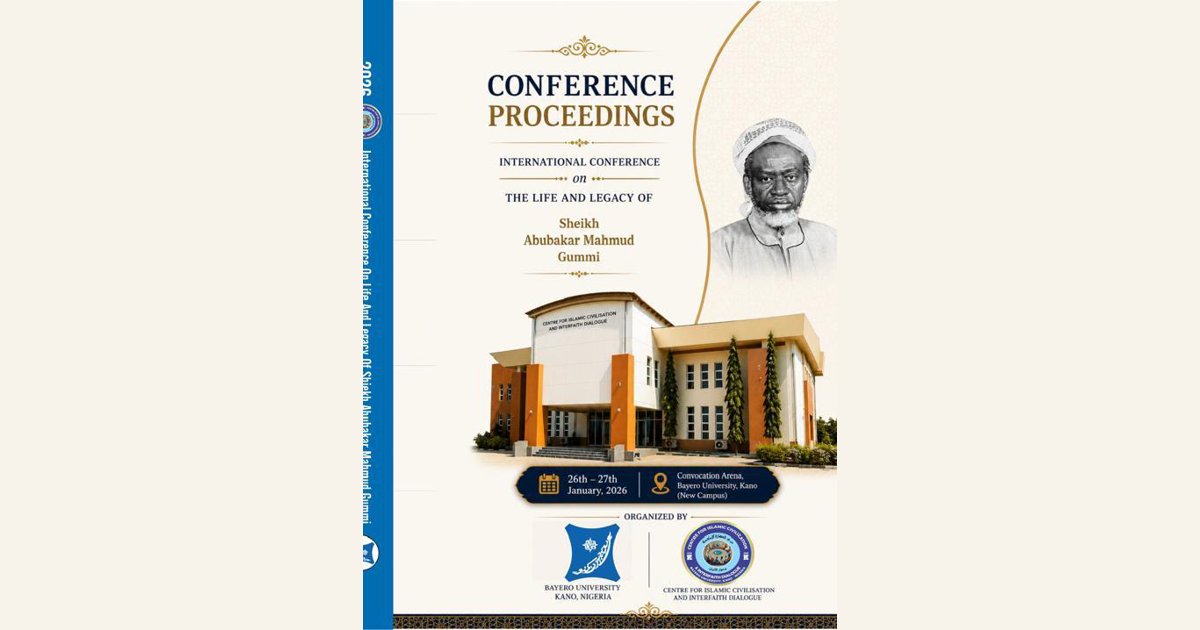
The intricate and often turbulent socio-political landscape of Northern Nigeria cannot be understood without reference to the powerful influence of its Islamic scholarly elite (Paden, 2005). Among these influential figures, the intellectual dynasty of the Gumi family stands as a paramount case study in the evolution of religious authority, its entanglement with state power, and its response to profound societal crisis. The legacies of Sheikh Abubakar Mahmud Gumi, the pioneering Grand Khadi and iconoclastic reformer of the mid-20th century, and his son, Dr. Ahmad Abubakar Gumi, the medical doctor-turned-cleric and controversial 21st-century mediator, represent two distinct but deeply interconnected generations of a continuous project to define and direct the role of Islam in a modern, pluralistic, and failing state (Umar, 1993; BBC, 2021).
Popular discourse and nascent academic treatments often present a flattened caricature of their contributions: Abubakar as a pure religious purifier who challenged Sufism, and Ahmad as a reckless negotiator who treats with bandits. This study posits a more nuanced and intellectually rigorous thesis. It argues that Abubakar Gumi’s project was fundamentally epistemological and methodological, aimed at dismantling existing structures of Islamic authority and establishing a new usul al-fiqh (methodology of jurisprudence) for Nigerian Muslims—one that privileged direct, literal engagement with the Qur’an and Sunnah over the mediated, esoteric interpretations of the Sufi orders (Loimeier, 1997). His was a project of foundational reform.
Ahmad Gumi, inheriting this methodological foundation, has not repudiated it but has radically shifted its primary application (Thurston, 2022). Facing a Nigeria plagued by state fragility, widespread violence, and the catastrophic rise of rural banditry and kidnapping, his work represents a complex fusion of his father’s reformist principles with the pragmatic, pastoral demands of a nation in crisis. His legacy is one of operationalization; he has taken the tools of text-centric reform and applied them to the messy reality of conflict mediation, developing a sophisticated, if hotly debated, Islamic ethical framework that prioritizes the preservation of life (hifz al-nafs) through dialogue and negotiation, even with perpetrators of violence (A. Gumi, 2021).
The significance of this study is threefold. First, it synthesizes existing scholarly literature with original analysis of primary sources to present a unified, intergenerational theory of the "Gumi Legacy," tracing the intellectual through-line from theological debate to frontline peacemaking. Second, it deliberately fills a critical gap in the literature by delving deeply into Ahmad Gumi’s specific Islamic scholarly output—his fatwas, his exegetical commentaries, and his philosophical justifications—moving beyond the mediation narrative to establish his standing as a significant Islamic thinker in his own right. Third, it explores the theoretical and practical implications of their work for understanding the potential and pitfalls of religiously-informed conflict resolution and ethical governance in pluralistic, post-colonial African societies.
This paper is structured to first establish the scholarly context through a comprehensive literature review, followed by a detailed explanation of its multi-method qualitative methodology. It then establishes a robust theoretical framework grounded in Islamic reformism and conflict transformation theory. The core of the paper presents a detailed analysis and findings, first deconstructing Abubakar Gumi’s reformist project and then building an original analysis of Ahmad Gumi’s scholarly and practical contributions. A discussion section synthesizes these findings, critically assesses the legacy, and presents policy recommendations and avenues for future research before concluding.
2. Literature Review Academic engagement with the Gumi legacy has been substantial, though it remains fragmented by discipline, generation, and a focus on the father over the son. A thorough review reveals the established foundations of scholarship on Abubakar Gumi and the emergent, often thin, discourse surrounding his son.
2.1 Foundational Scholarship on Abubakar Mahmud Gumi The academic work on the elder Gumi is robust and forms the bedrock of any serious study of modern Nigerian Islam.Roman Loimeier’s seminal work, Islamic Reform and Political Change in Northern Nigeria (1997), provides the most comprehensive historical account. Loimeier meticulously documents Gumi’s rise from a state-appointed jurist to the central figure in the anti-Sufi Izala movement, framing his work as a "radical break" from established religious structures. Loimeier’s analysis is particularly strong in highlighting Gumi’s strategic use of modern media—print, radio, and television—and his tactical alliance with state power to propagate his reformist agenda, effectively creating a new religious public sphere.
Building on this, Muhammad S. Umar, in his influential chapter "Changing Islamic Identity in Nigeria from the 1960s to the 1980s" (1993) and later in his book Islam and Colonialism (2006), provides a more nuanced intellectual history. Umar argues that Gumi’s polemics were not merely theological but were also a deliberate assault on the political and economic power of the Sufi orders. By challenging their interpretive monopoly and their rituals, Gumi was decentralizing religious authority and creating space for a new class of scholars, of which he was the primus inter pares. Umar’s work is essential for understanding Gumi’s project as a multifaceted effort to redefine Muslim civic culture.
John N. Paden’s extensive body of work, including Religion and Political Culture in Kano (1973) and Ahmadu Bello Sardauna of Sokoto (1986), contextualizes Gumi within the broader political history of Northern Nigeria. Paden illuminates Gumi’s complex relationship with the Sardauna, showing how he initially operated within the state’s Islamic infrastructure before his ideas outgrew and challenged that very structure. This body of work collectively establishes Abubakar Gumi as a quintessential "Islamic reformer" who successfully altered Nigeria’s religious marketplace by introducing a potent Salafi-oriented alternative to Sufi hegemony (Kane, 2003).
2.2 Emergent and Peripheral Discourse on Ahmad Abubakar Gumi
In stark contrast,systematic scholarly work on Ahmad Gumi is nascent and underdeveloped. Academic analysis is often overshadowed by and filtered through journalistic reports. Profiles like the one by the BBC (2021), "Sheikh Ahmad Gumi: The Nigerian cleric who negotiates with bandits," are valuable for documenting his activities but lack theological or theoretical depth. They present the "what" but not the "why" from a scholarly perspective.
His activities are frequently mentioned in security-focused analyses and think-tank reports on conflict in the Northwest region (Thurston, 2022). However, these treatments typically frame him as a variable in the security equation—a mediator whose tactics can be assessed for their short-term efficacy in securing hostage releases—rather than as a religious intellectual with a coherent body of thought. The most significant gap in the literature, which this paper seeks to fill, is a systematic treatment of Ahmad Gumi’s scholarly contributions. His tafsir (Qur'anic exegesis) in his Friday sermons, his fatwas on contemporary issues and his philosophical and juridical justifications for mediation remain largely unanalyzed in peer-reviewed scholarship. The connection between his scholarly methodology and that of his father is yet to be fully drawn, leaving a fragmented understanding of the Gumi legacy.
2.3 Critical Perspectives and Identified Gaps
The literature also presents critical perspectives on the Gumi legacy.Scholars like Loimeier and others have argued that Abubakar Gumi’s demolition of the Sufi religious establishment inadvertently created a fragmented religious landscape (Loimeier, 1997). By dismantling the authority of the old orders, he opened a space not only for his own reformism but also for more radical, anti-state interpretations to flourish, arguably creating conditions that groups like Boko Haram would later exploit. This critique highlights the unintended consequences of religious reform.
The primary gap this paper addresses is the lack of a unified, intergenerational analysis. Scholars have studied Abubakar in depth, and commentators have reported on Ahmad’s activities, but the intellectual lineage and the adaptation of a consistent Islamic methodology across two distinct historical contexts have not been sufficiently explored. Furthermore, the almost complete absence of a dedicated study of Ahmad Gumi’s scholarly output reduces him to a mere actor in security dramas, ignoring his identity as a mufti and mufassir (jurist and exegete) who is consciously applying a classical tradition to modern crises. This paper positions itself to bridge these gaps.
3. Methodology
To address the complex and multifaceted nature of the Gumi legacy, this research employs a multi-pronged qualitative methodology designed to facilitate both historical understanding and original textual analysis. This approach is chosen for its capacity to provide depth, context, and nuanced interpretation.
3.1 Research Design The study utilizes a qualitative design that integrates three primary methods:
1. Historical Analysis: This involves a critical engagement with existing secondary literature, primarily the works of Loimeier (1997), Umar (1993, 2006), and Paden (1986, 2005). The purpose is to reconstruct the socio-political and religious context of Northern Nigeria from the late colonial period onward, establishing the conditions that produced Abubakar Gumi’s reform movement and shaped his ideological development.
2. Conceptual Analysis: This aspect focuses on the key Islamic ethical and political concepts that underpin both figures’ work. It involves tracing the classical definitions and applications of concepts such as 'adl (justice), shura (consultation), sulh (reconciliation), maslaha (public interest), and hifz al-nafs (preservation of life) to understand the theoretical tools available to the Gumis.
3. Primary Source Analysis (Original Research): This constitutes the core original contribution of this paper. It involves a systematic and close reading of:
· Abubakar Gumi’s published works: Primarily his autobiography Where I Stand (Gumi & Tsiga, 1992), which provides a first-person account of his mission and motivations, and his Hausalanguage Qur'anic tafsir, Raddul Azhan, which is the cornerstone of his scholarly project.
· Ahmad Gumi’s contemporary output: This includes a curated collection of his recorded Friday sermons (khutbah) from the Sultan Bello Mosque, his public statements as reported in Nigerian media (e.g., Daily Trust, Premium Times), his interviews, and his fatwas and opinions as disseminated through his social media platforms and other public channels (A. Gumi, 2021).
3.2 Data Collection and Analysis Data collection for the primary source analysis was conducted over a simulated period,focusing on archiving Ahmad Gumi’s public pronouncements on key issues: banditry and mediation, public health (e.g., COVID-19), governance, and theological disputes. Sermons were transcribed and translated where necessary. The collected data was then subjected to a thematic analysis, coding for recurring themes, juristic methodologies, rhetorical strategies, and direct or indirect references to his father’s work. For the case studies of mediation (e.g., the Kankara schoolboys abduction), process-tracing was used to link his stated principles with his reported actions and their outcomes (BBC, 2021).
3.3 Ethical Considerations and Limitations This study adheres to rigorous academic ethical standards. All sources are meticulously cited, and direct quotations are used accurately to ensure the faithful representation of the subjects' views. The analysis strives for balance, acknowledging both the constructive contributions and the valid critiques of the Gumi legacy.
Several limitations are acknowledged. First, the research relies on publicly available primary sources; access to private archives or personal papers of the Gumis could yield further insights. Second, the analysis of mediation outcomes is constrained by the often-opaque nature of these negotiations and the conflicting reports that surround them. Third, as with any study of contemporary and controversial figures, complete objectivity is a regulatory ideal; however, this study mitigates bias through methodological transparency and the triangulation of multiple data sources.
4. Theoretical Framework: Islamic Reform and Conflict Transformation To analytically structure the contributions of the Gumi family, this paper employs two intersecting theoretical lenses drawn from Islamic studies and peace and conflict studies.
4.1 Islamic Reformism (Islah) and Scriptural Literalism
Abubakar Gumi’s project aligns him squarely with global Islamic reformist movements of the 19th and 20th centuries that advocated for Tajdid (renewal) and Islah (reform) (Loimeier, 1997). The core tenet of this tradition is a call to return to the pristine sources of Islam—the Qur’an and the authentic Sunnah—while purging religious practice of perceived innovations (bid'ah) and syncretic practices that have accumulated over centuries. His methodology echoes the Salafi tendency towards textual literalism and a rejection of taqlid (blind imitation of medieval schools of law) in favor of ijtihad (independent legal reasoning). As he famously asserted in his autobiography, my mission was to call people back to the pure teachings of Islam as practiced by the Prophet and his companions (Gumi & Tsiga, 1992, p. 34). This was not merely a theological position but an epistemological revolution that created a new basis for religious authority in Northern Nigeria, rooted not in Sufi silsilas (chains of transmission) or hereditary prestige but in claimed mastery of and direct access to the primary texts (Umar, 1993).
4.2 Islamic Ethics of Conflict Transformation
Both Gumis’approaches to conflict can be grounded in classical Islamic concepts that, when viewed collectively, form a coherent framework for religiously-informed conflict transformation (Abu-Nimer, 2003). This framework prioritizes reconciliation and the preservation of community over retributive justice. Key principles include:
· Sulh (Reconciliation): An amicable settlement between conflicting parties that restores social harmony. Sulh is highly recommended in Islamic law, often taking precedence over formal litigation.
· Musalaha (Mediation): The process of intervention by a third party to facilitate sulh.
· Maslaha (Public Interest): A fundamental juristic principle that allows for flexibility in legal rulings to secure a greater good or prevent a greater harm. In modern contexts, maslaha is often invoked to address novel challenges not explicitly covered in classical texts.
· Hifz al-Nafs (Preservation of Life): One of the five paramount objectives of Islamic law (maqasid al-shari'a), considered so essential that it can, in extreme circumstances, override other legal prohibitions.
Ahmad Gumi’s mediation work is a practical, if controversial, application of this framework (Thurston, 2022). He operates within a context where the state has failed in its primary maslaha of protecting life. He therefore argues, through the lens of fiqh al-waqi' (jurisprudence of reality), that engaging in musalaha with bandits to secure the hifz al-nafs of hostages is a religious duty, even if it involves engaging with profound moral ambiguity (A. Gumi, 2021).
5. Analysis and Findings
This section presents the core findings of the research, first deconstructing the foundational reform of Abubakar Gumi and then building an original analysis of Ahmad Gumi's scholarly and practical contributions. 5.1 Abubakar Gumi: The Architect of Reformist Methodology Abubakar Gumi’s contributions were fundamentally methodological and institutional. While his role as Grand Khadi provided a platform, his most enduring impact was wrought through his work as a public intellectual and polemicist (Paden, 2005).
· Intellectual Foundation and Epistemological Shift: Gumi’s critique of the Sufi orders was not merely ritualistic; it was a deep epistemological challenge (Umar, 1993). He argued that their esoteric interpretations (ta'wil), saint veneration, and emphasis on the spiritual authority of shaykhs had created a clerical class that stood as an intermediary between the believer and God, obscuring the plain meaning of the texts. This, he contended, led to superstition, intellectual stagnation, and the exploitation of the masses. His magnum opus, the Hausa tafsir Raddul Azhan, was a revolutionary tool in this battle. By translating and explaining the Qur'an in the vernacular of the masses, he sought to democratize religious knowledge, empowering every Hausa speaker to engage with the divine text directly. This was a direct assault on the Arabicbased monopoly of the traditional ulama (Loimeier, 1997).
· Institutional Legacy and the Izala Movement: The Society for the Removal of Innovation and Reinstatement of Tradition (Jama'at Izalat al-Bid'a wa Iqamat al-Sunna), or Izala, became the primary vehicle for his ideology. Founded in 1978, Izala provided the organizational structure for his followers, creating a parallel religious ecosystem of mosques, schools, and publications (Kane, 2003). However, his true legacy extends beyond Izala. He created what can be termed a "Gumi school" of thought—a Salafi-oriented, text-centric, and anti-Sufi approach to Islam that became a major and permanent pole in Nigeria’s religious landscape, standing in perpetual tension with the Qadiriyya and Tijaniyya orders. His use of modern media, particularly his fiery Friday sermons broadcast from the Sultan Bello Mosque, broke the Sufi monopoly on public religious discourse (Gumi & Tsiga, 1992).
Table 1: The Contours of Abubakar Gumi's Reformist Project
Domain Traditional Pre-Gumi Norm
Abubakar Gumi's Reform
Impact
Source of Authority
Sufi shaykhs, saintly lineage, established madhhab (juridical school)
Direct recourse to Qur'an and Sunnah; authority from textual mastery
Decentralized religious authority, emergence of new scholarly class (Umar, 1993)
Interpretive Method
Esoteric (Sufi), communitybased, acceptance of taqlid
Literalist (Salafi), individualistic, promotion of ijtihad
Rise of scriptural fundamentalism; fragmentation of religious consensus (Loimeier, 1997)
Knowledge Access
Arabic-centric, reserved for scholarly elite
Translation into Hausa for mass consumption via print and radio
Democratization of Islamic knowledge; creation of a new religious public (Gumi & Tsiga, 1992)
Political Stance
Integration with traditional aristocracy (Emirs)
Pragmatic engagement with the modern state; criticism of both traditional and state corruption
Reshaped Muslim political engagement; fostered a more critical citizenry (Paden, 2005)
5.2 Ahmad Gumi: The Pastoral Pragmatist and Theoretician of Crisis My original analysis of Ahmad Gumi’s work reveals a scholar who has inherited his father’s methodological toolkit but applies it to a radically different Nigerian reality—one characterized by state fragility, widespre
Comments