
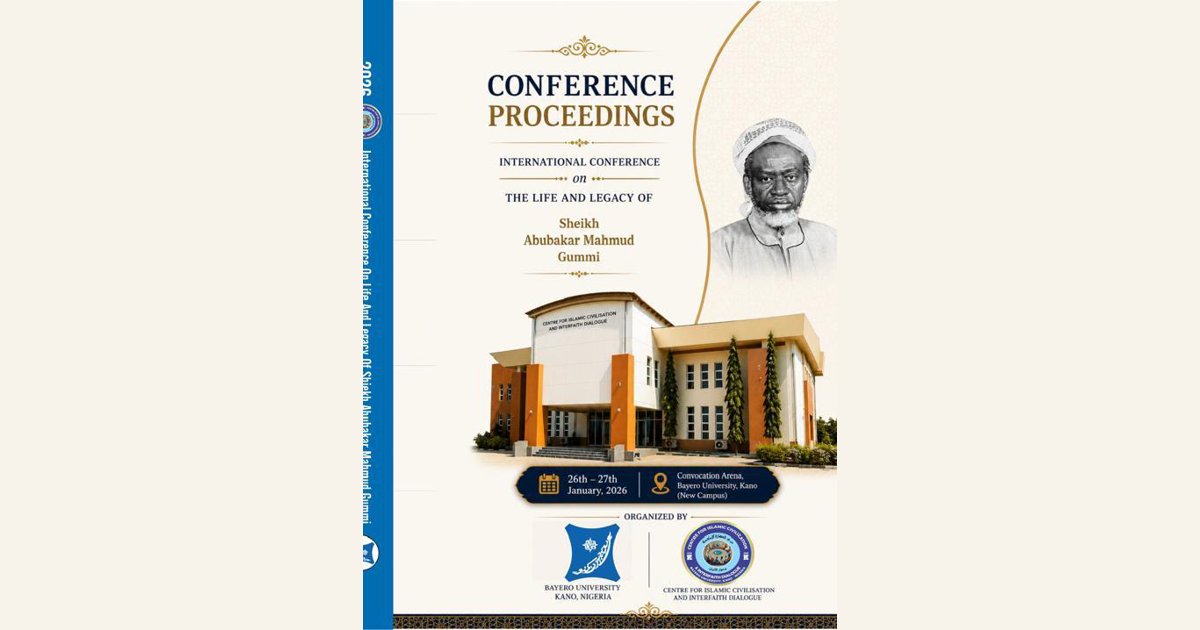
This paper examines the ideal character and behaviour of Shaykh Abubakar Mahmud Gumi and their implications for guidance and counselling in contemporary Nigeria. It highlights key moral values promoted by Shaykh Gumi, including honesty, discipline, sincerity, responsibility, tolerance, and commitment to truth. These values are examined in relation to prevailing social challenges such as moral decadence, indiscipline, youth restiveness, and religious intolerance. Adopting a qualitative approach through content analysis of Shaykh Gumi’s writings, sermons, and public engagements, the study demonstrates that his teachings provide a strong moral foundation for effective guidance and counselling practice. The paper argues that integrating Shaykh Gumi’s moral and behavioural principles into guidance and counselling can enhance ethical awareness, promote positive behavioural change, strengthen personal responsibility, and foster peaceful coexistence. The paper concludes that values-based counselling inspired by credible moral role models remains essential for promoting responsible citizenship, moral development, social stability, and peaceful coexistence in contemporary Nigeria. . Keywords: character,Behaviour,GuidanceandCounselling,MoralValues,ShaykhAbubakarGumi, Nigeri 1. Introduction Nigeria today faces numerous social, moral, and behavioural challenges that pose significant threats to national stability, social cohesion, and sustainable development. These challenges include corruption, indiscipline, youth restiveness, religious intolerance, moral decadence, and the erosion of family values. Despite the widespread presence of formal educational institutions and religious organisations, concerns about declining ethical standards and responsible citizenship remain persistent. This situation underscores the urgent need for effective guidance and counselling approaches that place greater emphasis on moral development, character formation, ethical awareness, and responsible behaviour.
Guidance and counselling, as an educational and psychological service, plays a vital role in helping individuals understand themselves, make informed decisions, develop positive behavioural patterns, and adjust effectively to the challenges of life. However, counselling practice cannot be entirely value-neutral, particularly in societies where moral, cultural, and spiritual values significantly influence individual behaviour and social relationships. In the Nigerian context, therefore, the integration of sound moral principles into guidance and counselling can contribute meaningfully to the development of individuals who are ethically responsible, socially conscious, and capable of contributing positively to society.
In this regard, the life, character, and teachings of Shaykh Abubakar Mahmud Gumi provide a rich moral framework with considerable relevance to contemporary guidance and counselling. Shaykh Gumi was not only a renowned Islamic scholar but also a prominent moral reformer who consistently emphasised truthfulness, discipline, sincerity, justice, personal responsibility, tolerance, and peaceful coexistence. His commitment to moral reform and his emphasis on the development of upright individuals offer valuable lessons for addressing some of the behavioural and ethical challenges confronting Nigerian society today.
This paper, therefore, examines the ideal character and behaviour of Shaykh Abubakar Mahmud Gumi and explores their implications for guidance and counselling in contemporary Nigeria. It argues that incorporating the moral values reflected in Shaykh Gumi’s life and teachings into counselling practice can strengthen character development, promote positive behavioural change, enhance ethical decision-making, and contribute to the cultivation of responsible and peaceful citizens.
2. Shaykh Abubakar Mahmud Gumi: Life and Intellectual Background
Shaykh Abubakar Mahmud Gumi (1922–1992) was one of Nigeria’s most influential Islamic scholars, reformers, and educationists. He served as the Grand Khadi of Northern Nigeria and played a significant role in Islamic education, jurisprudence, and social reform. Shaykh Gumi was known for his firm commitment to the Qur’an and Sunnah, his advocacy for Islamic reform (tajdid), and his courage in speaking truth to power. Through his sermons, books, radio programmes, and public lectures, Shaykh Gumi emphasized moral uprightness, social justice, accountability, and religious tolerance. He consistently condemned corruption, hypocrisy, blind imitation, and moral laxity. His teachings were not limited to religious rituals but extended to personal conduct, leadership ethics, family life, and societal responsibility. These qualities make him a suitable moral role model for guidance and counselling practice.
3. Conceptual Clarification
3.1 Character and Behaviour Character refers to the moral and ethical qualities that define an individual, such as honesty, integrity, responsibility, and discipline. Behaviour, on the other hand, refers to the observable actions and reactions of individuals in response to internal or external stimuli. In counselling, character and behaviour are closely related, as values and beliefs often shape actions and lifestyle choices.
3.2 Guidance and Counselling
Guidance and counselling is a professional process that assists individuals to understand themselves, solve personal and social problems, make appropriate decisions, and develop their potentials. It focuses on preventive, developmental, and remedial services aimed at promoting personal adjustment, moral development, and social responsibility. 4. Moral Values in Islam as the Foundation of Shaykh Gumi’s Teachings
Islam places great emphasis on moral excellence (akhlaq). The Qur’an and the Sunnah consistently promote good character as a fundamental aspect of faith. Allah says: “Indeed, you are of a great moral character” (Qur’an 68:4).
The Prophet Muhammad (SAW) also stated:“I have only been sent to perfect good character.” (Muwatta’ Malik)
Shaykh Gumi’s moral philosophy was deeply rooted in these Islamic teachings. He believed that societal reform begins with individual moral reform and that sustainable peace and development are impossible without ethical discipline.
5. Key Moral Values Promoted by Shaykh Abubakar Mahmud Gumi
5.1 Honesty and Truthfulness Honesty (sidq) was central to Shaykh Gumi’s teachings. He consistently emphasized truthfulness in speech, leadership, and social relations. The Qur’an commands: “And do not mix the truth with falsehood or conceal the truth while you know it.” (Qur’an 2:42)In counselling, honesty helps clients develop self-awareness, accountability, and trust, which are essential for behavioural change. 5.2 Discipline and Self-Control Shaykh Gumi emphasized discipline as a foundation for moral life. Islamic acts of worship, such as prayer and fasting, train individuals in self-control and time management:“Indeed, prayer has been prescribed for the believers at fixed times.” (Qur’an 4:103)Discipline is crucial in counselling youths facing challenges such as substance abuse, delinquency, and academic indifference. 5.3 Sincerity (Ikhlas) Sincerity in intention and action was a recurring theme in Shaykh Gumi’s teachings. Allah says:“Say: Indeed, my prayer, my sacrifice, my living and my dying are for Allah, the Lord of the worlds.” (Qur’an 6:162) Counsellors can use this value to help clients align their actions with positive intentions and ethical goals. 5.4 Responsibility and Accountability Shaykh Gumi emphasized personal and collective responsibility. The Prophet (SAW) said: “Every one of you is a shepherd and every one of you will be questioned about his flock.” (Sahih Bukhari)This principle is essential in counselling for leadership training, family counselling, and civic education. 5.5 Tolerance and Peaceful Coexistence Despite his firm stance on religious principles, Shaykh Gumi advocated tolerance, dialogue, and wisdom in addressing differences. The Qur’an instructs:“Invite to the way of your Lord with wisdom and good instruction.” (Qur’an 16:125) This value is particularly relevant for counselling in a multi-religious and multi-ethnic society like Nigeria.
5.6 Commitment to Justice and Moral Courage
Shaykh Gumi demonstrated moral courage by standing for justice, even when unpopular. Allah says:“O you who believe! Stand firmly for justice, as witnesses for Allah, even if it is against yourselves.” (Qur’an 4:135)Counsellors can draw from this value to promote ethical leadership and social responsibility. 6. Implications for Guidance and Counselling in Contemporary Nigeria Integrating Shaykh Gumi’s moral values into guidance and counselling has several implications: Enhancing ethical awareness among clients and students. Promoting positive behaviour change through value reorientation. Preventing social vices such as violence, corruption, and intolerance. Strengthening character education in schools and communities. Fostering peace, tolerance, and national unity. 7. Application of Shaykh Gumi’s Teachings in Counselling Practice 7.1 Values-Based Counselling Counsellors can adopt values-based counselling approaches that integrate honesty, discipline, sincerity, and responsibility into intervention strategies. 7.2 Culturally and Religiously Sensitive Counselling Shaykh Gumi’s teachings provide culturally relevant frameworks that resonate with Nigerian socio-religious realities. 7.3 Community and School-Based Counselling Counsellors can collaborate with schools, religious institutions, and community leaders to promote moral education and social harmony. 8. Challenges and Limitations Despite its relevance, applying Shaykh Gumi’s teachings in counselling faces challenges such as religious diversity, modernization, secular influences, and resistance to moral discipline. Counsellors must therefore apply these values with wisdom, flexibility, and respect for individual differences. 9. Conclusion The ideal character and behaviour of Shaykh Abubakar Mahmud Gumi provide a powerful moral framework for guidance and counselling in contemporary Nigeria. His emphasis on honesty, discipline, sincerity, responsibility, tolerance, and justice aligns with the core objectives of counselling practice. Integrating these values can help address Nigeria’s moral and social challenges, promote ethical behaviour, and foster peaceful coexistence. Values-based counselling inspired by credible moral role models remains indispensable for national development and social harmony. 10. Recommendations
Guidance counsellors should integrate moral and character education into counselling programmes. Counsellor training institutions should emphasize values-based and culturally relevant counselling approaches. Educational and religious institutions should collaborate to promote moral reorientation. Further empirical research should explore the impact of Islamic moral values on counselling outcomes in diverse Nigerian contexts. References Al-Qaradawi, Y. (2001). The Lawful and the Prohibited in Islam. Islamic Book Trust. Gumi, A. M. (1981). Al-‘Aqidah al-Sahihah bi-Muwafaqat al-Shari‘ah. Ibn Majah, A. M. (n.d.). Sunan Ibn Majah. Muslim, A. H. (n.d.). Sahih Muslim. Al-Buti, M. S. R. (2001). Al-Jihad fi al-Islam. Al-Sheikh, M. A. (2005). Al-Tarbiyah al-Islamiyyah.
Comments