
Introduction
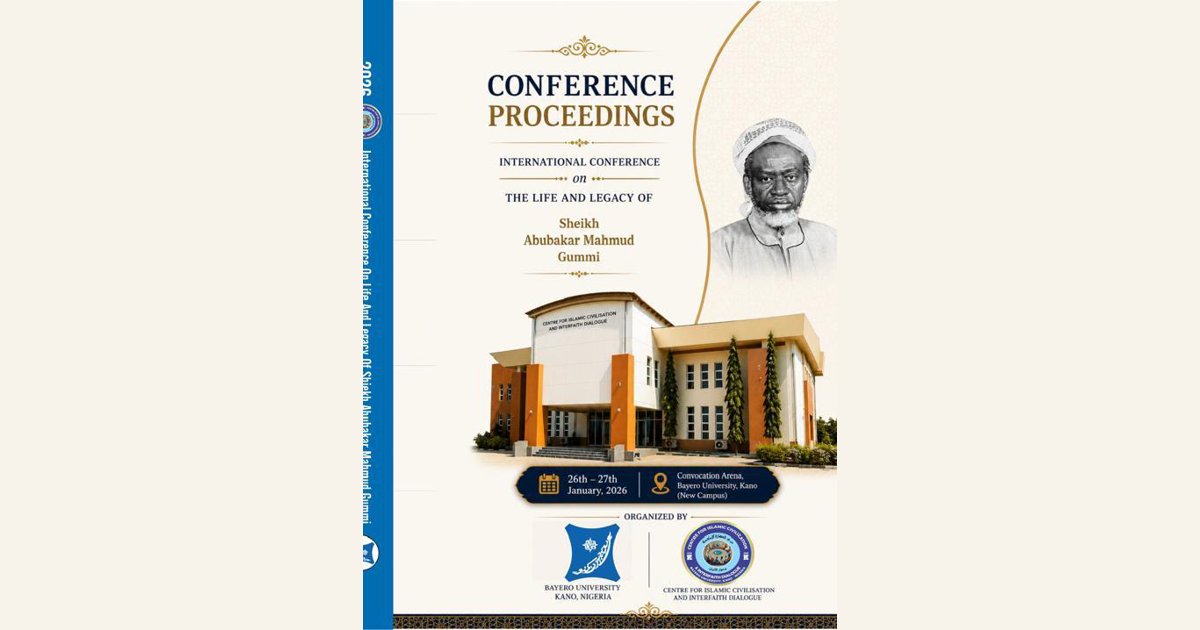
Sha.ykh Abubakar Mahmud Gumi (1924–1992) was among the most influential Islamic scholars and reformers in Nigeria’s modern history. He served as Grand Qadi of Northern Nigeria, spiritual adviser to governments, and a leading voice for Islamic reform and education (Balogun, 1993; Loimeier, 1997). Shaykh Abubakar Mahmud Gumi’s life spanned colonial rule, independence, and the early postcolonial period, during which he navigated multiple challenges to Islamic scholarship and leadership. His ideal character and behavior — marked by humility, intellectual integrity, courage, and service to society — make him a model for contemporary Muslim leaders (Saheed, 2015).
The life and legacy of Shaykh Abubakar Mahmud Gumi represent an important chapter in the intellectual and spiritual history of Nigeria. As a scholar, jurist, and reformer, his moral conduct and leadership profoundly shaped Islamic revivalism and education in West Africa. Shaykh Abubakar Mahmud Gumi grew up in an environment deeply rooted in Islamic learning and devotion. From his youth, he exhibited qualities of discipline, humility, and eagerness for knowledge.
The paper explores Shaykh Abubakar Mahmud Gumi’s character as an ideal representation of the moral and behavioral standards prescribed in the Qur’an and Sunnah. It focuses on his spiritual values, intellectual approach, moral integrity, and social engagement. By studying his personality and actions, we gain a better understanding of how Islamic ethics can guide leadership, scholarship, and reform in contemporary Muslim societies.
This paper examines the key features of Shaykh Abubakar Mahmud Gumi’s character and behavior, illustrating how his example can guide present-day efforts to promote justice, reform, and intellectual vibrancy in the Muslim world.
Brief Biography of Shaykh Abubakar Mahmud Gumi (1924–1992)
Shaykh Abubakar Mahmud Gumi was one of the most influential Islamic scholars and reformers in Northern Nigeria in the 20th century. He was born in 1922 at Gumi town,present-day Zamfara State, into a family known for Islamic learning.
Shaykh Abubakar Mahmud Gumi received his early Islamic education locally and later studied at the School for Arabic Studies (SAS), Kano, where he was trained in Arabic, Qur’anic studies, Hadith, Fiqh, and Islamic jurisprudence. His intellectual ability and reformist outlook distinguished him early in his career.
Shaykh Abubakar Mahmud Gumi served as a Qadi (Islamic judge) and later became the Grand Qadi of Northern Nigeria, a position that gave him wide influence in religious and legal matters. Shaykh Gumi was also a prominent radio and mosque preacher, using public sermons and lessons to promote Islamic awareness and moral reform.
Ideologically, Shaykh Abubakar Mahmud Gumi was known for his Salafi-oriented reformist approach, strongly criticizing what he regarded as bid‘ah (unwarranted religious innovations), particularly within Sufi practices common in Northern Nigeria. His teachings significantly inspired the emergence of Jama‘atuIzalatilBid‘ahwaIqamatisSunnah (Izala Movement), although he was more of an intellectual guide than a formal leader. Shaykh Abubakar Mahmud Gumi authored several important Islamic works, most notably: “Radd al-AzhanilaMa‘ani al-Qur’an” (Tafsir of the Qur’an in Hausa/Arabic), “Aqeedat al-Muslim”, and other writings on creed, worship, and Islamic reform. Shaykh Abubakar Mahmud Gumi died on 11th September,1992, leaving behind a lasting legacy as a scholar, jurist, preacher, and reformer whose ideas continue to shape Islamic thought, preaching, and movements in Nigeria and West Africa. The Ideal Character and Behavior of Sheikh Abubakar Mahmud Gumi His Ideal Character and Moral Virtues. Sheikh Abubakar Gumi’s character was molded by his deep understanding of the Qur’an and Sunnah. The following virtues defined his personality:
Knowledge and Wisdom
Shaykh Abubakar Mahmud Gumi’s wisdom (ḥikmah) in addressing sensitive issues earned him national and international recognition. He used logic, evidence, and calm reasoning to promote understanding and resolve conflicts, making his da‘wah appealing to both scholars and laypeople.
Gumi’s early life was devoted to Qur’anic education, followed by Western education in Sokoto Middle School and advanced legal studies at Kano Law School (Balogun, 1993). He later studied at the Bakht al-Rida Institute in Sudan, which shaped his understanding of Islamic law and pedagogy (Saheed, 2015). As a teacher at the School for Arabic Studies in Kano, Gumi combined Islamic learning with administrative duties, laying the groundwork for reform in religious education (Loimeier, 1997).
His scholarly works include a Hausa translation of the Qur’an and books like Al-ʿAqīdah as- Ṣaḥīḥah bi-Muwāfaqat ash-Shariah, which called Muslims to return to the Qur’an and Sunnah (Balogun, 1993). His radio and mosque tafsir sessions reached a wide audience, spreading Islamic literacy across Northern Nigeria (Paden, 2005). 1. Foundations of His Knowledge Shaykh Gumi’s knowledge was rooted in classical Islamic scholarship and strengthened by formal education. Early Islamic training: He memorized the Qur’an and studied Arabic grammar, tafsīr, ḥadīth, fiqh, and ʿaqīdah under traditional scholars in Northern Nigeria. Formal education: His exposure to modern education and interaction with colonial and postcolonial administrative systems gave him a rare ability to engage both Islamic and contemporary intellectual worlds. School of thought: He followed the Mālikī school of jurisprudence, dominant in West Africa, while emphasizing evidence-based reasoning from the Qur’an and authentic Sunnah. This combination made him both a traditional scholar and a modern intellectual.
2. Qur’anic and Hadith Scholarship
One of Shaykh Gumi’s greatest strengths was his mastery of Qur’anic interpretation and Prophetic traditions. He emphasized direct engagement with the Qur’an and Sunnah, discouraging blind imitation (taqlīd) when clear textual evidence existed. His sermons and writings frequently cited authentic hadith, reflecting his concern for textual accuracy. He promoted understanding Islam based on knowledge rather than inherited customs, a principle central to his reformist vision.
3. Wisdom in Religious Reform (Islāḥ)
Shaykh Gumi’s wisdom was most evident in his approach to Islamic reform. He criticized religious practices he considered innovations (bidʿah), especially those not supported by sound textual evidence. Despite his firm stance, his wisdom lay in using education, preaching, and dialogue rather than violence. He played a key intellectual role in inspiring reform movements, particularly the Izala movement (JamāʿatuIzālat al-BidʿahwaIqāmat as-Sunnah), though he himself was more scholarly than organizational. His reformism was therefore intellectual and pedagogical, not extremist.
4. Sociopolitical Wisdom
Beyond theology, Shaykh Gumi demonstrated exceptional wisdom in sociopolitical engagement. As Grand Qadi of Northern Nigeria, he applied Islamic legal principles with an understanding of social realities. He advised political leaders, stressing justice, moral responsibility, and accountability. He viewed Islam as a comprehensive way of life, relevant to governance, social harmony, and ethical leadership. His wisdom lay in balancing religious principles with societal stability.
5. Intellectual Courage and Independence
Shaykh Gumi was known for his intellectual boldness. He challenged both traditional elites and political authorities when he believed Islamic principles were compromised. He encouraged Muslims to ask questions, seek evidence, and think critically. His willingness to stand by his scholarly conclusions, even when controversial, reflects a high level of intellectual integrity.
6. Legacy of Knowledge and Wisdom
The enduring impact of Shaykh Abubakar Mahmud Gumi can be seen in:
- Generations of scholars and preachers influenced by his teachings. - A renewed emphasis on Qur’an and Sunnah–based Islam in Nigeria. - Ongoing academic discussions on Islamic reform, education, and sociopolitical thought in West Africa.
Shaykh Abubakar Mahmud Gumi embodied the classical Islamic ideal that knowledge without wisdom is incomplete, and wisdom without knowledge is blind. His deep scholarship, reformist insight, and sociopolitical awareness made him not only a learned scholar but also a wise guide for his society. His legacy remains a central reference point for understanding Islamic thought and reform in contemporary Nigeria. Sincerity and Integrity One of Gumi’s most notable traits was his fearlessness in speaking truth to power. Even while serving as Grand Qadi and adviser to governments, he did not hesitate to admonish rulers when they acted unjustly or neglected their duties (Independent, 1992). He consistently called for moral accountability and justice, insisting that both leaders and followers uphold Islamic values (Saheed, 2015).
He was renowned for his sincerity (ikhlās) in da‘wah and leadership. Sheikh Gumi never used his religious position for personal gain; instead, he dedicated his life to serving Allah and uplifting the Muslim community. His integrity made him a trusted voice among political and religious leaders.
He was also a reformist voice challenging religious innovations (bid‘ah) and syncretic practices. This brought him into direct confrontation with Sufi brotherhoods like the Tijaniyya, whose practices he criticized (Loimeier, 1997). Despite opposition, he remained steadfast in promoting what he saw as authentic Islam (Yusuf, 2013).
1. Sincerity (Ikhlāṣ) in Daʿwah and Scholarship
Shaykh Gumi’s sincerity was evident in his unwavering commitment to promoting what he understood as authentic Islamic teachings based on the Qur’an and Sunnah. His preaching was not driven by personal gain, popularity, or political favor, but by a deep sense of religious duty. Despite facing criticism and opposition—especially for his strong stance against religious innovations (bidʿah)—he remained consistent and resolute.
He devoted much of his life to public education, delivering tafsīr lessons, sermons, and lectures aimed at purifying Islamic practice and enlightening ordinary Muslims. This dedication reflects the Qur’anic principle:“Say: Indeed, my prayer, my sacrifice, my living and my dying are for Allah, the Lord of the worlds.” (Qur’an 6:162)
2. Intellectual Integrity and Moral Courage Shaykh Gumi was known for his intellectual honesty and moral courage. He openly criticized practices he believed contradicted Islamic teachings, even when such criticism targeted powerful traditional or political institutions. His refusal to compromise religious principles for social acceptance demonstrated a high level of integrity.
As Grand Qadi of Northern Nigeria, he upheld justice and fairness, emphasizing accountability before Allah. His legal opinions and public statements were grounded in evidence (dalīl), not sentiment or pressure, reinforcing his reputation as a trustworthy religious authority.
3. Integrity in Public Life and Leadership
In public affairs, Shaykh Gumi maintained a clear ethical boundary between religious guidance and worldly interests. He lived modestly and avoided exploiting his position for material benefit. This personal discipline strengthened public trust in his leadership and made his reformist message credible.
His role in inspiring movements such as JamaʿatuIzalatilBidʿahwaIqamatisSunnah (Izala) was rooted in reform, not self-promotion. Even when his views were controversial, his personal integrity prevented accusations of hypocrisy or moral inconsistency.
4. Legacy of Sincerity and Integrity
The enduring impact of Shaykh Gumi’s teachings lies not only in his writings and students but youalso in his moral example. For many Muslims in Nigeria and beyond, he represents a model of a scholar who combined knowledge with sincerity, and authority with humility.
The sincerity and integrity of Shaykh Abubakar Mahmud Gumi were central to his life and mission. Through honest scholarship, fearless preaching, and ethical leadership, he embodied the Islamic ideals of ikhlāṣ and amānah. These qualities continue to define his legacy as one of the most influential and principled Islamic scholars in modern Nigerian history. Humility and Simplicity Humility (tawāḍuʿ) and simplicity (zuhd in its practical sense) are among the most celebrated moral virtues in Islamic scholarship. These virtues were exemplified in the life and conduct of Shaykh Abubakar Mahmud Gummi
Humility and Simplicity in Islam
In Islamic ethics, humility is regarded as a manifestation of sincere faith and awareness of human limitation before Allah. The Qur’an praises those who “walk upon the earth humbly” (Qur’an 25:63), while the Prophet Muhammad (SAW) declared that humility elevates a believer in the sight of Allah (Ṣaḥīḥ Muslim). Simplicity, on the other hand, reflects detachment from excessive materialism and an orientation toward moral and spiritual priorities rather than worldly display.
Despite the fact that his high status, Gumi lived a simple life, avoided luxury, and remained approachable to ordinary Muslims (Gamji.com, 2005). He treated people with respect regardless of their social class, which enhanced his credibility as a scholar and leader (Saheed, 2015). His personal integrity was often cited as a reason for the widespread trust placed in him by the Muslim community.
Despite his status as a leading scholar, Sheikh Gumi remained humble and accessible. He lived modestly and treated people with respect, regardless of their social class. His humility reflected the Prophetic teaching that “the best of you are those who humble themselves before Allah.”
Shaykh Gummi’s life may be understood within this ethical framework, as his personal conduct consistently reflected these values, even when his social status could have justified extravagance or self-promotion.
Personal Lifestyle and Material Simplicity
One of the most striking aspects of Shaykh Gummi’s humility was his simple lifestyle. Despite serving as the Grand Qadi of Northern Nigeria and enjoying close relations with political leaders, he lived modestly and avoided ostentatious displays of wealth. His clothing was simple, his residence unpretentious, and his daily habits reflected moderation and restraint. This simplicity resonated strongly with the Sunnah of the Prophet Muhammad (SAW), whom Shaykh Gummi consciously sought to emulate in both personal and public life.
His rejection of material excess served as a silent critique of the growing materialism among some religious elites. By embodying simplicity, Shaykh Gummi reinforced the idea that true religious authority derives from knowledge, piety, and moral integrity rather than from wealth or social privilege.
Intellectual Humility and Openness to Evidence
Beyond material simplicity, Shaykh Gummi demonstrated profound intellectual humility. Although he was widely recognized as an authority in Qur’anic exegesis, Hadith, and Islamic jurisprudence, he consistently emphasized reliance on authentic textual evidence rather than personal opinion or inherited tradition. He encouraged critical engagement with sources and did not claim infallibility in his interpretations.
This intellectual humility distinguished him from dogmatic scholars and enhanced his credibility among students and contemporaries. He welcomed scholarly debate, corrected himself when presented with stronger evidence, and taught his followers to prioritize truth over personality. Such an attitude reflects the classical Islamic scholarly tradition, where humility before knowledge is considered a prerequisite for genuine scholarship.
Social Conduct and Accessibility
Shaykh Gummi’s humility was also evident in his interactions with ordinary people. He was accessible to students, traders, farmers, and the poor, engaging them with respect and empathy. He avoided elitism and maintained a sense of equality in his social relations, consistent with the Islamic principle that all believers are equal before Allah.
In his preaching and teaching, Shaykh Gummi avoided self-glorification. He focused on conveying Islamic principles clearly and practically, often using simple language to ensure comprehension by the wider public. This pedagogical simplicity enhanced his influence and enabled his reformist message to reach diverse segments of Nigerian society.
Humility in Leadership and Reform
As a leading figure in Islamic reform in Nigeria, Shaykh Gummi exercised leadership without arrogance. While he held firm views on religious matters, he did not seek personal dominance or cult-like loyalty. His reformist efforts were framed as a service to Islam rather than a quest for personal legacy.
Even when facing criticism and opposition, he demonstrated restraint and patience, responding with reasoned argument rather than personal attacks. This composure reflected moral humility and reinforced the ethical credibility of his reform agenda.
Legacy and Contemporary Relevance
The humility and simplicity of Shaykh Abubakar Mahmud Gummi remain central to his enduring legacy. In an era where religious authority is sometimes entangled with material ambition and political power, his life offers a compelling model of ethical leadership rooted in modesty, sincerity, and service.
For contemporary scholars, preachers, and students of Islam, Shaykh Gummi’s example underscores the importance of aligning knowledge with character. His life illustrates that humility does not diminish authority; rather, it strengthens it by grounding scholarship in moral authenticity and spiritual consciousness.
Shaykh Abubakar Mahmud Gummi’s humility and simplicity were not incidental aspects of his personality but essential components of his Islamic worldview. Through his modest lifestyle, intellectual openness, and respectful social conduct, he embodied the Qur’anic and prophetic ideals of ethical scholarship. His example continues to inspire Islamic thought and practice in Nigeria and beyond, serving as a reminder that true greatness in Islam lies in humility before Allah and sincere service to humanity
Justice and Courage
Justice (ʿadl) and courage (shajāʿah) are central moral virtues in Islamic ethical thought and leadership. 1. Justice and Courage in Islam In Islamic thought, justice is the foundation of moral and social order. The Qur’an commands believers to uphold justice even when it conflicts with personal interest or authority: “O you who believe! Stand firmly for justice, as witnesses for Allah, even if it be against yourselves…” (Qur’an 4:135) Courage, in turn, is the moral strength to uphold truth and justice in the face of opposition, fear, or loss. Classical scholars such as al-Ghazālī viewed courage as a balance between cowardice and recklessness, enabling moral action grounded in wisdom. Shaykh Gummi’s life reflects this integrated understanding: justice as commitment to divine truth and courage as the willingness to proclaim and defend it regardless of consequences.
2. Justice in Shaykh Gummi’s Thought and Practice i.Commitment to Truth and Fair Judgment
As a trained Islamic jurist and former Grand Qadi of Northern Nigeria, Shaykh Gummi consistently emphasized impartiality in judgment. He rejected favoritism based on ethnicity, lineage, political power, or Sufi affiliation, insisting that Islamic law applies equally to all believers. His legal opinions (fatāwā) and public teachings stressed:
- Equality before the law - Accountability of leaders and scholars - Protection of the weak from religious and social exploitation - This principled stance reflected the prophetic model of justice, where no individual is exempt from moral responsibility. ii. Justice in Religious Reform Shaykh Gummi’s critique of un-Islamic innovations (bidʿah) was rooted in a desire for doctrinal justice—returning Islamic belief and practice to the Qur’an and authentic Sunnah. He argued that misleading religious practices constituted an injustice to ordinary Muslims by obscuring authentic teachings.
His reformist mission through Jama‘atuIzalatilBid‘ahwaIqamatisSunnah (Izala) sought to:
- Purify Islamic practice - Educate the masses on authentic sources - Challenge inherited religious authority not grounded in evidence This approach, though controversial, was driven by a deep sense of justice toward the Muslim community.
3. Courage as a Defining Personal Virtue i. Speaking Truth to Power
One of Shaykh Gummi’s most notable traits was his moral courage in addressing political authorities. He openly advised rulers, military leaders, and traditional elites, often criticizing corruption, injustice, and misuse of power.
Unlike many scholars who aligned themselves uncritically with authority, Shaykh Gummi maintained intellectual independence. His courage was evident in:
- Public sermons that criticized unjust governance - Writings that challenged political manipulation of religion - Refusal to compromise religious principles for personal benefit
This aligns with the Prophetic tradition describing “the best jihad” as speaking the truth before an unjust ruler.
ii. Endurance of Opposition and Criticism
Shaykh Gummi’s reformist views attracted intense opposition, particularly from established religious orders and conservative elites. He faced:
- Public criticism and misrepresentation - Social and institutional resistance - Accusations of divisiveness Despite this, he remained steadfast, demonstrating courage not as aggression, but as patience, resilience, and consistency in the pursuit of reform.
4. Interconnection of Justice and Courage in His Legacy
Justice without courage remains theoretical, while courage without justice becomes destructive. Shaykh Gummi embodied the balance of both virtues. His courage was always guided by a strong sense of justice, and his pursuit of justice was sustained by moral bravery.
This synthesis allowed him to:
- Challenge entrenched religious and political systems - Advocate reform without fear - Inspire a new generation of scholars and activists committed to principled Islam
The justice and courage of Shaykh Abubakar Mahmud Gummi constitute a central pillar of his enduring legacy in Nigerian and African Islamic history. His unwavering commitment to truth, fairness, and reform—despite opposition—demonstrates how Islamic scholarship can serve as a force for moral accountability and social transformation. In an era marked by ethical compromise, Shaykh Gummi remains a compelling model of courageous justice grounded in faith.
As a judge and scholar, he displayed courage in speaking the truth. He was not afraid to advise or correct those in authority, yet he did so respectfully. His decisions as Grand Khadi were guided by fairness and adherence to Sharia principles, regardless of political pressure.
Gumi’s mission focused on purifying Islamic practices and reviving adherence to the Qur’an and Sunnah. He played a central role in the emergence of Jama‘atIzalat al-Bid‘ahwaIqamat as-Sunnah (Izala), a movement dedicated to eradicating religious innovations (Loimeier, 1997). He also worked to integrate Islamic and Western education, believing that Muslims must acquire modern knowledge to remain competitive in Nigeria’s plural society (Paden, 2005).
Public Engagement and Dialogue
Shaykh Abubakar Mahmud Gumi engaged the public through media, public lectures, and participation in interfaith dialogue. He advocated peaceful coexistence between Muslims and Christians, even while urging Muslims to be firm in their faith (Umar, 2001). His approach was to reform society through education and persuasion, not violence.
Public Engagement and Dialogue of Shaykh Abubakar Mahmud Gummi
1. Context and Orientation
Operating within Northern Nigeria’s plural religious landscape, Shaykh Gummi addressed a society marked by colonial legacies, emergent nationalism, and intra-Muslim diversity. He approached public engagement as a religious duty (da‘wah) and a civic responsibility, believing that scholarship must translate into public moral guidance. His orientation was reformist (islāḥī): returning Muslims to the Qur’an and authentic Sunnah while critically reassessing customary practices that lacked strong textual foundations.
2. Platforms of Engagement
Shaykh Abubakar Mahmud Gummi’s dialogue with the public was multi-layered:
Mosques and Public Lectures: Regular sermons and open lectures were his primary platforms. He favored clear language (often Hausa), logical argumentation, and direct reference to primary sources to ensure accessibility. Radio and Print Media: Through radio talks and widely circulated pamphlets and books, he reached audiences beyond local congregations, shaping public religious discourse across Northern Nigeria. Institutional Leadership: As a religious adviser and later Grand Qadi of Northern Nigeria, he engaged policymakers, judges, and traditional leaders, linking jurisprudence with public ethics. Scholarly Writing: His works—most notably Where I Stand—functioned as dialogical texts, anticipating objections and responding to critics in a reasoned manner.
3. Dialogical Method Shaykh Abubakar Mahmud Gummi’s public engagement was characterized by a reasoned, textcentered dialogue:
Evidence-Based Argument: He consistently anchored claims in Qur’anic verses and rigorously authenticated hadith, modeling scholarly accountability in public debate. Critical yet Respectful Tone: While firm in critique—especially of innovations (bid‘ah)—he framed disagreement as intellectual correction rather than personal attack.
Pedagogical Clarity: Complex juristic issues were simplified without distortion, reflecting his belief that public dialogue must educate rather than merely persuade.
Responsiveness: He welcomed questions and counter-arguments, seeing dialogue as a process that refines understanding.
4. Engagement with Intra-Muslim Diversity
One of the most consequential aspects of Shaykh Abubakar Mahmud Gummi’s public role was his engagement with Sufi orders and popular religious practices. His critiques sparked intense debates, yet they also revitalized discussions on orthodoxy, authority, and reform. Importantly, he distinguished between persons and practices, maintaining social coexistence while advocating doctrinal reform. This approach helped institutionalize debate within Nigerian Islam rather than suppress it.
5. Social and Moral Themes Beyond theology, Shaykh Abubakar Mahmud Gummi’s dialogue addressed pressing social concerns: Moral Rectitude and Justice: He emphasized honesty in governance, social equity, and accountability, urging leaders and citizens alike to embody Islamic ethics.
Education and Intellectual Renewal: He promoted learning—religious and secular—as essential to communal progress, frequently addressing students and teachers. Unity and Social Peace: Even amid controversy, he warned against sectarian violence and urged Muslims to resolve disputes through knowledge and dialogue.
6. Engagement with the State and Wider Society Shaykh Gummi maintained a principled engagement with political authority. While advising rulers and participating in state institutions, he preserved scholarly independence, critiquing policies that conflicted with ethical or religious principles. His public statements thus contributed to a tradition of constructive religious critique in Nigeria’s civic life.
7. Impact and Legacy The impact of Shaykh Gummi’s public engagement is evident in several areas:
Institutional Reform: His ideas influenced the emergence of reformist movements that prioritized scriptural literacy and public preaching. Public Religious Discourse: He normalized critical debate in mosques and media, expanding the space for reasoned disagreement. Educational Influence: Generations of scholars and preachers adopted his dialogical style— textual rigor combined with public accessibility.
Enduring Debates: While his positions remain contested, the debates he initiated continue to shape Nigerian Islamic thought, underscoring the lasting significance of his engagement.
Shaykh Abubakar Mahmud Gummi’s public engagement and dialogue were integral to his scholarly mission. Through accessible preaching, principled debate, and institutional participation, he bridged the gap between classical scholarship and modern public life. His legacy lies not only in the positions he defended but also in the culture of dialogue he fostered— one that values evidence, clarity, and moral responsibility in the public expression of Islam.
Compassion and Tolerance
He demonstrated compassion for the poor and underprivileged, establishing educational and social programs to uplift them. Sheikh Gumi avoided sectarianism and called for unity among Muslims, insisting that disputes be settled through dialogue and knowledge rather than hostility.
Compassion and Tolerance of Shaykh Abubakar Mahmud Gummi
1. Compassion as a Religious and Moral Principle Shaykh Gummi’s compassion was firmly rooted in Islamic teachings, particularly the Qur’anic emphasis on raḥmah (mercy) and the Prophetic model of kindness toward humanity. In his sermons, legal opinions, and writings, he consistently stressed that Islamic reform must be guided by concern for people’s spiritual and material well-being rather than harshness or coercion. He viewed knowledge as a trust (amānah) meant to uplift society, especially the poor, the ignorant, and the marginalized.
His compassion was evident in his approach to education and daʿwah (Islamic propagation). Shaykh Gummi devoted much of his life to teaching ordinary Muslims, using accessible language and practical examples. He believed that many religious deviations were the result of ignorance rather than malice, and therefore required patient instruction rather than condemnation. This pedagogical mercy helped broaden his influence across different social classes.
2. Tolerance in Intra-Muslim Differences One of the most striking aspects of Shaykh Gummi’s legacy was his tolerance in dealing with differences of opinion within Islam. Although he was a strong advocate of reform and often critical of certain traditional practices, he consistently argued that disagreement (ikhtilāf) should be managed through dialogue, evidence, and wisdom. He warned against declaring fellow Muslims unbelievers (takfīr) and emphasized unity of the ummah based on shared core beliefs.
Shaykh Gummi recognized the historical diversity of Islamic jurisprudence and theology. While he promoted adherence to the Qur’an and Sunnah, he acknowledged the legitimacy of scholarly disagreement and urged restraint, humility, and good manners in religious debate. This attitude contributed to reducing tensions in a religiously plural Muslim society like Northern Nigeria.
3. Interreligious Tolerance and Social Harmony Beyond intra-Muslim relations, Shaykh Gummi demonstrated notable tolerance toward people of other faiths. As a public figure operating in a multi-religious Nigerian context, he consistently emphasized peaceful coexistence, justice, and mutual respect. He maintained that Islam commands fairness and compassion toward non-Muslims and rejects oppression and injustice regardless of religious affiliation.
His engagement with national issues reflected this inclusive outlook. Shaykh Gummi often framed religious guidance in ways that supported social stability, moral governance, and communal harmony, thereby contributing to interreligious understanding rather than conflict.
4. Compassionate Leadership and Public Engagement
In leadership, Shaykh Gummi combined firmness in principles with gentleness in conduct. Even when addressing sensitive or controversial issues, he avoided personal attacks and sought reform through persuasion. His public engagements revealed a scholar deeply aware of societal challenges and empathetic to human struggles, which earned him respect even among critics.
5. Legacy of Mercy and Moderation The compassion and tolerance of Shaykh Abubakar Mahmud Gummi remain central to his enduring legacy. They illustrate that Islamic reform, when grounded in mercy, wisdom, and tolerance, can be both intellectually robust and socially constructive. His life stands as an example of how strong conviction can coexist with empathy and respect for diversity.
Shaykh Abubakar Mahmud Gummi’s compassion and tolerance were not peripheral traits but foundational elements of his scholarship and activism. By embodying mercy in teaching, tolerance in disagreement, and justice in public life, he contributed significantly to religious understanding and social cohesion in Nigeria and the wider Muslim world.
Mentorship and Legacy
Sheikh Gumi mentored a generation of scholars and activists who continued his reformist agenda after his death (Suleiman, 2017). His students became leaders in Islamic organizations, and his writings are still widely studied. His legacy is visible in Nigeria’s contemporary Islamic discourse and educational reforms.
Sheikh Abubakar Gumi’s influence transcended Nigeria’s borders. His preaching inspired a generation of scholars, including his students who continued his mission through education and reform. His writings, such as Rational Islam, reflect his intellectual depth and commitment to guiding Muslims toward an authentic understanding of Islam.
He founded the Jama‘atuIzalatilBid‘ahwaIqamatisSunnah (JIBWIS) movement, which remains one of the most influential Islamic reform groups in Nigeria today. Through his efforts, Islamic education was revitalized, and many Muslims were encouraged to return to the teachings of the Qur’an and Sunnah.
His Behavior in Leadership and Da‘wah
As a reformer, Sheikh Gumi advocated for the purification of Islamic practice from innovations (bid‘ah) and superstitions that contradicted authentic Islamic teachings. However, his reform efforts were rooted in wisdom, patience, and good manners. He emphasized that da‘wah should be conducted through knowledge, persuasion, and exemplary conduct rather than confrontation.
In his leadership, he upheld justice, transparency, and accountability. His tenure as Grand Khadi was marked by impartial rulings and moral uprightness. As an advisor to government officials, he promoted honesty and warned against corruption and oppression, reminding leaders that authority is a trust from Allah.
Theological and Ethical Lessons from His Life
Sheikh Gumi’s life teaches that Islamic character is inseparable from knowledge and worship. His conduct illustrates that: 1. Piety (Taqwa) is the foundation of leadership.
2. Justice and truth are essential in all dealings. 3. Knowledge must be accompanied by humility and action. 4. Da‘wah is most effective when practiced with wisdom and good manners. 5. Unity and tolerance are central to Muslim strength.
His moral and behavioral excellence remains a model for religious leaders, politicians, and educators seeking to combine faith with public responsibility.
Conclusion
The ideal character and behavior of Sheikh Abubakar Mahmud Gumi demonstrate a rare blend of scholarship, humility, moral courage, and reformist zeal. His life shows that leadership must be rooted in knowledge, integrity, and service to humanity. Although he faced criticism and controversy, his commitment to justice, education, and religious revival continues to inspire Muslims today. For modern scholars and leaders, Gumi’s example teaches the importance of balancing courage with wisdom, knowledge with humility, and reform with social harmony. His model remains relevant for addressing Nigeria’s contemporary challenges of moral decay, religious misunderstanding, and educational backwardness. Sheikh Abubakar Mahmud Gumi’s life is a shining example of the ideal Muslim character—one rooted in piety, wisdom, courage, and compassion. His behavior demonstrated the practical application of Islamic values in scholarship, leadership, and public service. He embodied the Qur’anic call to enjoin good, forbid evil, and act with justice.His teachings and actions continue to inspire generations to uphold Islamic ethics and moral integrity in all aspects of life. In an era of moral and spiritual decline, Sheikh Gumi’s legacy serves as a timeless reminder that true reform and progress arise from sincere devotion, humility, and adherence to divine guidance. References
Balogun, I. A. B. (1993). The life and work of Abubakar Gumi. Ibadan: Spectrum Books.
Gamji.com. (2005). Sheikh Abubakar Mahmud Gumi: His mission and legacy. Retrieved from http://www.gamji.com/article5000/NEWS5170.htm
Gumi, A. M. (1992). Rational Islam. London: Hodder and Stoughton.
Independent. (1992, September 15). Obituary: Sheikh Abubakar Mahmud Gumi. Retrieved from https://www.independent.co.uk/news/people/obituary-sheikh-abubakar-mahmud-gumi- 1551628.html
Kane, O. (2003). Muslim Modernity in Postcolonial Nigeria: A Study of the Society for the Removal of Innovation and Reinstatement of Tradition. Leiden: Brill.
Last, M. (2008). Reform in West Africa: The case of Nigeria. In N. Levtzion& R. Pouwels (Eds.), The history of Islam in Africa (pp. 393–409). Athens, OH: Ohio University Press.
Loimeier, R. (1997). Islamic reform and political change in northern Nigeria. Evanston, IL: Northwestern University Press.
Nasir, I. A. (2019). “The Legacy of Sheikh Abubakar Gumi and Islamic Reform in Nigeria.” Journal of Islamic Studies in Africa, 5(2), 45–63.
Paden, J. N. (2005). Muslim civic cultures and conflict resolution: The challenge of democratic federalism in Nigeria. Washington, DC: Brookings Institution Press.
Saheed, A. (2015). Sheikh Abubakar Mahmud Gumi: The reformist and his contributions to Islamic resurgence in Nigeria. International Journal of Humanities and Social Science, 5(9), 186– 193.
Sulaiman, I. (1986). A Revolution in History: The Jihad of Usman dan Fodio. London: Mansell.
Suleiman, M. S. (2017). Religious reform and society: Sheikh Abubakar Gumi and Islamic revivalism in Nigeria. Journal of Islamic Studies and Culture, 5(1), 45–57.
Umar, M. S. (2001). Muslim-Christian relations in Nigeria: The causes and consequences of confrontation. Islam and Christian–Muslim Relations, 12(3), 277–303. https://doi.org/10.1080/09596410120065264
Yusuf, H. O. (2013). Sheikh Abubakar Gumi and his da‘wah methodology. Journal of Islamic Studies, 24(2), 150–169.
Yusuf, A. (2020). “Sheikh Gumi and the Reformation of Islamic Education in Northern Nigeria.” African Journal of Religious Thought, 14(1), 102–118.
Comments