
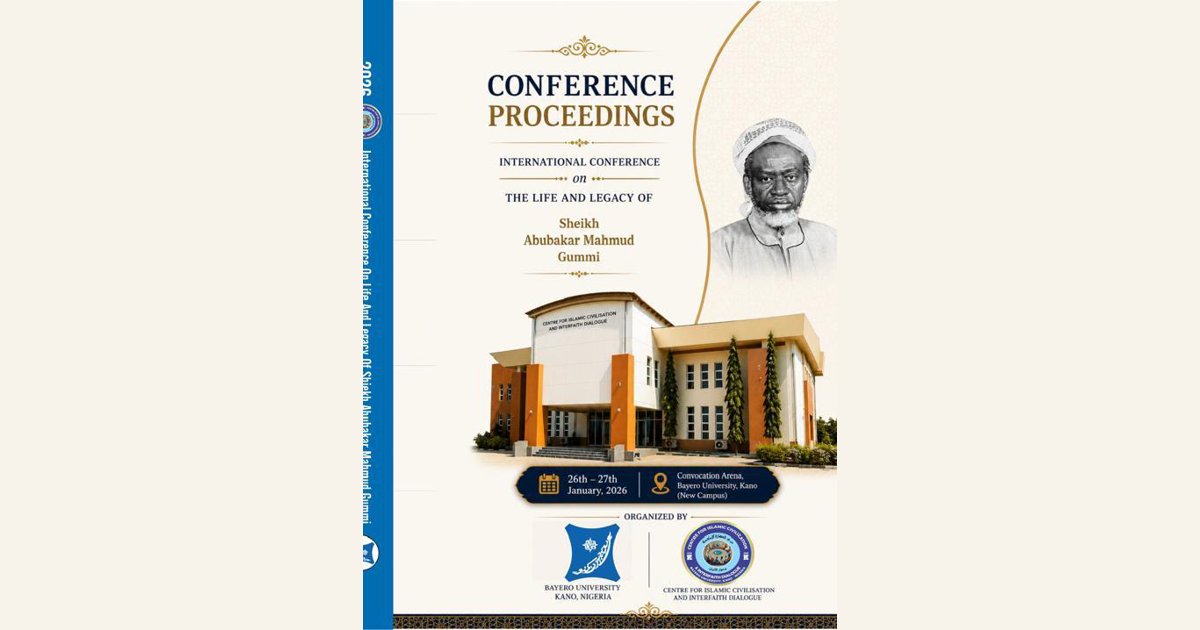
Introduction “Indeed, all praise is due to Allah. We seek His help, His forgiveness, His guidance, and His support. We seek refuge in Allah from the evil within ourselves and from the consequences of our deeds. Whomever Allah guides, none can misguide, and whomever He allows to stray, none can guide. I bear witness that there is no deity worthy of worship except Allah, and I bear witness that Muhammad is His servant and His Messenger. Whoever obeys Allah and His Messenger has attained right guidance, and whoever disobeys Allah and His Messenger has gone astray until he returns to the command of Allah.” After nearly fourteen centuries since the dawn of Islam upon the world, Muslims have faced numerous and diverse challenges, which at times necessitated changes in methodology or approach in addressing them. At other times, Muslims were profoundly influenced by non-Islamic currents, resulting in encroachments upon the immutable foundations of the religion in matters of creed, worship, and the system of governance. From this perspective emerges the importance of studying the views and orientations of contemporary scholars in their confrontation with these intellectual and practical attacks targeting Islam and Muslims. Shaykh ʿUthmān ibn Fūdī (may Allah have mercy on him) states in his book Ḥiṣn al-Ifhām min Juyūsh al-Awhām (Issue 77): “Among these delusions is that some people, blinded by envy, claim that the correct approach is to abandon engagement with contemporary writings, arguing that the works of the eminent imams of the past have left nothing for us to need, and that they possessed greater knowledge than those who write today. This is also false and delusional by consensus, for every scholar considers in his writings the aspirations and objectives of the people of his time, as he is most aware of them. Thus, the writings of every scholar in his own era are more beneficial to the people of that era than the writings of others.” Today, the Islamic world stands at a crossroads between modernity and tradition, and three major trends have prevailed within it: the Salafi trend, the Ikhwani (Muslim Brotherhood) trend, and the Shiʿi trend. The Shiʿi trend is primarily concentrated in Iran, Iraq, and Lebanon. The Modern Salafi Movement This movement adheres to understanding and practicing Islam according to the methodology of the righteous predecessors (al-salaf al-ṣāliḥ)—the Companions, the Successors, and those who followed them, who constitute the three best generations. Salafism, in its origin, was neither a political party nor an organized movement; rather, it is a creedal and scholarly methodology. It emerged prominently in the twelfth century AH with the call of Shaykh Muḥammad ibn ʿAbd al-Wahhāb (d. 1206 AH), and later spread with the establishment of the Kingdom of Saudi Arabia in the twentieth century CE. Its primary objective was the correction of creed, the eradication of polytheism and religious innovations, and the return of people to the scriptural texts with the understanding of the righteous predecessors. This raises an important question: Is there a difference between authentic Salafi methodology and contemporary movements that claim affiliation with it? The answer is: Yes. It is narrated from ʿImrān ibn Ḥuṣayn (may Allah be pleased with him) that the Messenger of Allah صلى هللا عليه وسلم said: “The best of you is my generation, then those who follow them, then those who follow them…” (Agreed upon) Among the most prominent authentic Salafi authorities are the historically recognized imams upon whose leadership the Ummah has agreed—the four Sunni juristic imams: •Abū Ḥanīfa (d. 150 AH): the Imam of juristic reasoning and jurisprudence. •Mālik ibn Anas (d. 179 AH): the Imam of the Abode of Migration (Madinah). •Al-Shāfiʿī (d. 204 AH): the founder of the science of legal theory (uṣūl al-fiqh). •Aḥmad ibn Ḥanbal (d. 241 AH): the Imam of Sunnah and Hadith. They were united upon the Sunnah and differed in subsidiary matters through valid ijtihād. Contemporary Salafism, however, primarily relies on the books of Hadith—chief among them Ṣaḥīḥ al-Bukhārī (d. 256 AH) and Ṣaḥīḥ Muslim (d. 261 AH)—and gives them precedence over the opinions of juristic imams in cases of conflict. It further relies on the juristic selections of Shaykh al-Islām Ibn Taymiyyah (d. 728 AH) and his students, such as Ibn al-Qayyim (d. 751 AH) and Ibn Kathīr (d. 774 AH), despite their adherence to legal schools. Additionally, modern Salafi reference frameworks include a number of contemporary scholars, among the most notable: •Shaykh ʿAbd al-ʿAzīz ibn ʿAbd Allāh ibn Bāz (d. 27 Muḥarram 1420 AH) •Shaykh Muḥammad Nāṣir al-Dīn al-Albānī (d. 22 Jumādā al-Ākhirah 1420 AH) •Shaykh Muḥammad ibn Ṣāliḥ al-ʿUthaymīn (d. 15 Shawwāl 1421 AH) It should be noted that Salafism cannot be confined to a single individual or a specific country. One of the most prominent features of the modern Salafi movement—besides creedal reform— is its stance on politics, namely prohibiting rebellion and public condemnation of rulers, and prioritizing doctrinal and educational reform. This stance is the primary source of its sharp disagreement with the Muslim Brotherhood, which accuses Salafism of rigidity, intolerance, and extremism. The Muslim Brotherhood Movement The Muslim Brotherhood was founded in 1928 in the city of Ismailia, Egypt, by Imam Ḥasan al-Bannā (1906–1949), in the context of the fall of the Ottoman Caliphate in 1924, Western colonialism, and the weakening of Islamic identity in public life.
From the outset, the movement adopted the slogan: “Islam is religion and state; Qur’an and sword.” The movement sought to reform the individual, then the family, then society, ultimately reaching the state. From this arose its disagreement with the Salafi movement: the Brotherhood did not prioritize creedal reform, while Salafis did not consider political engagement necessary under authoritarian regimes—whether monarchical or military. Given the absence of public awareness and the widespread ignorance of the fundamentals of religion among the masses, any attempt to change the ruling system appeared likely to result in widespread turmoil and corruption. Sayyid Quṭb (1906–1966) is regarded as the movement’s most prominent thinker. Among his best-known works are In the Shade of the Qur’an and Milestones, in which he advanced concepts such as divine sovereignty (ḥākimiyyah) and contemporary jāhiliyyah. He was executed in 1966. In summary, the Muslim Brotherhood is a political reform movement with an organizational character, whereas Salafism is a creedal, scholarly, reformist methodology. Their disagreement is methodological rather than doctrinal, yet it has significant implications for practice and daʿwah. In recent times, opinions regarding the Muslim Brotherhood have diverged: while some regard it as a terrorist organization and a source of extremism, fair-minded scholars—including Shaykh al-Albānī—have viewed it as an Islamic entity with errors, but one that has contributed to guiding youth toward religion, despite criticisms of its political thought and organizational history. The Da’awah of Shaykh Abubakar Gumi Whoever examines the lessons and writings of Shaykh Abubakar Mahmoud Gumi will clearly find his explicit declaration that his methodology is Salafi in creed, Maliki in jurisprudence, and Ikhwani in politics. He adopted from each trend what he considered sound and harmonized these approaches in a manner that served the interests of Muslims. The political environment in which he lived likely played a significant role in shaping this position. The Shaykh was born and lived during the final phase of British colonialism and witnessed how colonial authorities sought to alter religious identity and suspend Islamic law while retaining only individual acts of worship. He understood that the excellence of this Ummah lies in enjoining what is right and forbidding what is wrong, as Allah تعالى says: “You are the best nation brought forth for mankind: you enjoin what is right, forbid what is wrong, and believe in Allah.” (Qur’an 3:110) The Maliki school became widespread in West Africa and was adopted by Nigerian governments in matters of personal status law, and the Shaykh did not depart from it. In the introduction to his tafsīr Radd al-Adhhān ilā Maʿānī al-Qurʾān, he states:
“I shall clarify all of this, Allah willing, in its proper place, confining myself to the well-known positions of the Maliki school, while occasionally referring to the views of others…” He further clarified his creedal orientation in the conclusion of his tafsīr, stating that in the verses concerning divine attributes and names he followed the Salafi creed, benefiting from the works of Shaykh al-Islam Muḥammad ibn ʿAbd al-Wahhāb and the guidance of Shaykh ʿAbd al-ʿAzīz ibn Bāz. As previously mentioned, Sayyid Quṭb was among the foremost thinkers of the Muslim Brotherhood. The Shaykh studied his works and drew from his tafsīr, explicitly stating in the conclusion of his own tafsīr that he followed Quṭb in identifying the main thematic lessons of the surahs and often benefited from his wording without explicit attribution. This demonstrates that the Shaykh did not oppose the Ikhwani trend. He even popularized the statement, “Politics is more important than prayer and pilgrimage,” meaning that sound Islamic governance preserves the five essential objectives of the Shariah, under which prayer itself is included. This meaning is confirmed by the Islamic texts concerning the virtue of jihad and leadership. The Prophet صلى هللا عليه وسلم stated that nothing equals jihad in the path of Allah, and that the Imam is a shield behind whom people fight and are protected. Allah تعالى says: “Indeed, Allah will surely support those who support Him… Those who, if We establish them in the land, establish prayer, give zakah, enjoin what is right, and forbid what is wrong.” (Qur’an 22:40– 41) Thus, empowerment in the land precedes and enables the establishment of prayer and the other religious obligations. Conclusion This study concludes that Shaykh Abubakar Mahmoud Gumi presented a distinguished scholarly model in his engagement with contemporary Islamic movements, characterized by awareness of reality, adherence to foundational principles, and the ability to integrate intellectual schools without dissolving into any one of them. He maintained the Salafi methodology in creed as a guarantor of sound belief and methodological integrity, adhered to the Maliki school in jurisprudence as the stable practical framework of the society in which he lived, and recognized the importance of the political dimension in preserving religion and its higher objectives—bringing him closer to Ikhwani political thought without organizational or partisan affiliation. His writings and lessons demonstrate that he was not confined by narrow ideological classifications or rigid alignments, but operated within a framework of juristic balance and maqāṣid, prioritizing the unity and welfare of the Ummah over secondary methodological disputes. He also understood that addressing the crises of the Ummah cannot be achieved solely through individual reform or unrestrained political activism, but through the integration of sound creed, firmly grounded Islamic knowledge, and conscious collective action. The experience of Shaykh Abubakar Gumi highlights the importance of the God-conscious scholar who lives the concerns of his time, benefits from the legacy of the Salaf, and comprehends contemporary realities without compromising immutable principles or being swept away by slogans. His methodology may therefore be regarded as a model worthy of study and emulation in the contemporary Islamic world, where the need is acute for a comprehensive scholarly discourse that balances authenticity and renewal and lays the foundation for Islamic unity in confronting present intellectual and political challenges.

Comments