
1.0 Introduction
Islamic education has long served as a fundamental pillar supporting the intellectual, moral, and social progress of Northern Nigeria. Its origin traced back to early periods, when it was transmitted along trans-Saharan trade routes, and later solidified under the Kanem-Bornoempire and the Hausa city-states. Throughout the history, Islamic scholarship influenced societal values, governance system, and religious observance. Traditional educational institutions such as the makarantarallo, makarantanilimi, and tsangaya played crucial roles in teaching Qur’ānic memorization, Islamic jurisprudence, theology, and related fields. These centers prioritized both spiritual growth and scholarly discipline, embodied Islam’s comprehensive approach to knowledge, exemplified by the Prophetic directive to, “seek knowledge from the cradle to the grave.”
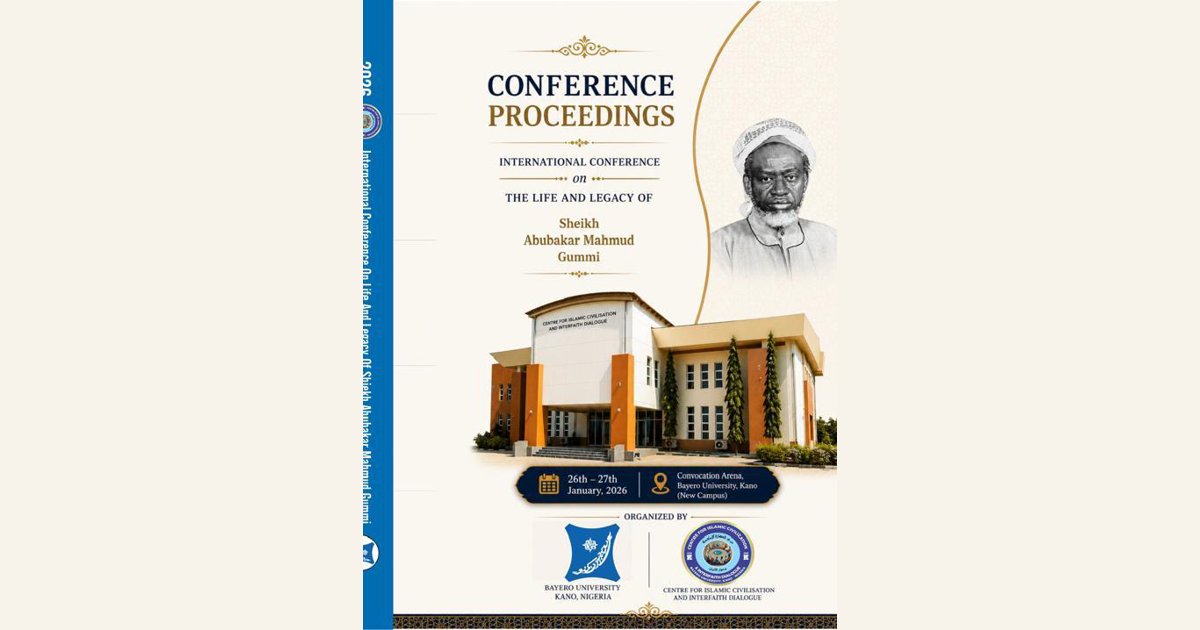
Within this historical and educational framework, Sheikh Abubakar Mahmud Gumi emerged as a key reformer in the twentieth century. Born in 1924 into a family renowned for its scholarly heritage, Gumi combined classical Islamic studies with Western and legal education, eventually pursuing advanced qualifications at institutions in Kano and Sudan. His interpretation of Islamic teachings emphasized the importance of authentic texts, understanding, and moral relevance. He actively challenged practices he viewed as inconsistent with the Qur’ān and Sunnah, including certain Sufi rituals and uncritical customs inherited from ancestors. Through sermons, Qur’ānic exegesis, radio programs, and mentorship, Gumi transformed the accessibility and methods of Islamic education, shaping intellectual debates and advocating for reform within Northern Nigerian society.
This study explores Sheikh Gumi’s influence on the structure and content of Islamic education, examines the societal effects of his reform’s approach, and evaluates the lasting importance of his work in promoting a more text-focused, critical, and inclusive mode of religious learning. By placing Gumi’s contributions within both historical and modern contexts, the research highlights the dynamic relationship between religious authority, practice, and educational innovation in Northern Nigeria.
2.0 Historical and Educational Background of Sheikh Gumi
Sheikh Abubakar Mahmud Gumi was a prominent Islamic jurist, scholar, and public intellectual whose impact spanned religious, educational, and judicial domains in Northern Nigeria (Paden, 1973). Born in November 1924 in Gummi, now part of Zamfara State, Nigeria, he came from a reputable family known for its strong Islamic scholarly tradition. His birth took place on the final Friday of Ramadan in the Islamic year 1344, into the family of Mahmud, an Islamic scholar and Alkali (judge) of Gummi. Under the care of his parents, especially his father who was dedicated to his upbringing, Gumi was given ample opportunities to showcase his knowledge and share his perspectives on various matters (Jangebe, 2015).
His early education began within his family, where he received Islamic instruction from his father, earning the nickname "Malam Mahmud Na Gumi." He memorized the Holy Qur'an and studied important texts from the Maliki school of thought, including Risalah of Abi Zaid al-Qirawani. He also attended a traditional Islamic school known locally as ‘Makarantar Allo’. Later, he was sent to a school guided by a Malam named Musa in Ambursa, Sokoto Province, where he was introduced to Islamic jurisprudence (Fiqh) and read various books and praise poetry about the Prophet. In 1933, at the age of nine, he began Western education at Dogon Daji Elementary School. During his time at the Western school, Abubakar Gumi distinguished himself through his academic achievements and dedication.( Jangebe, 2015).
He demonstrated exceptional skill and scholarly discipline. Recognized for his superior Islamic knowledge, he was appointedas HakiminSallah (Religious Prefect), a role in which he managed and coordinated all religious activities for the students. Later, due to his impressive academic achievements and intellectual diligence, he was promoted to Standard Two after completing only one term in Standard One. After spending a year at the elementary school in DogonDaji, he transferred in 1936 to Sokoto Middle School—now known as Sultan Ward Primary School in Sokoto—where Ahmadu Bello was one of his teachers. During his time there, he became acquainted with notable individuals such as ShehuShagari, WaziriMuhammaduJunaidu, and YahayaGusau. His six years at Sokoto Middle School were highly fruitful, marked by consistent excellence and significant academic accomplishments. Encouraged by these successes, he furthered his education at Kano Law School. The students at Kano Law School not only followed a formal legal curriculum but also had substantial opportunities for independent study and extra reading. After successfully completing his legal training, Gumi returned to Sokoto, where his skills were needed, and he served the local community for several years. In 1952, he enrolled in a two-year advanced studies program at the School for Arabic Studies in Kano, earning a Higher Elementary Training Certificate. Subsequently, in recognition of his outstanding academic record and intellectual abilities, Gumi was sponsored to pursue a Higher Diploma in Education at the Bakht al-Rida Institute of Education in the then British-administered Sudan, where he undertook advanced professional training from 1955 to 1956. (Jangebe, 2015)
Gaining admission to the Advanced Diploma in Education program at the Bakht al-Rida Institute marked a significant milestone in Sheikh Abubakar Gumi’s educational journey. This period was characterized by a renewed focus on academic pursuits, as he resumed full-time studies in the field. The curriculum included courses on educational principles, Arabic, History, Mathematics, English, and Drawing, with instruction conducted primarily in Arabic and English.
During this phase, he engaged openly with his classmates, fostering both strong academic collaborations and social bonds. The learning environment was generally perceived as productive and satisfying. As part of the program’s practical requirements, he gained teaching experience at Madrasah al-Ahfad, a peaceful educational establishment located in the suburbs of Omdurman, across the Nile from Khartoum.
In the later years of his life, Sheikh Abubakar Gumi distinguished himself as a prominent Islamic scholar and a highly respected authority on religious issues. Aside from formal education, he pursued private studies under several esteemedʿulamaʾ, often learning in their homes or during scholarly gatherings. This consistent mentorship greatly expanded his intellectual scope, enabling him to acquire extensive and varied knowledge across multiple Islamic disciplines.
In colonial Nigeria, under British rule, opportunities for reform-minded scholars who openly challenged colonial policies were generally scarce. Nonetheless, Sheikh Abubakar Gumi’s career was notably exceptional. He held various important public positions, demonstrating both his scholarly competence and the trust placed in him by political and religious leaders.
After completing his law studies, he was appointed as a clerk in the office of the Chief Judge of Sokoto Province. In 1956, he was chosen by the Sardauna of Sokoto to serve as Nigeria’s first Pilgrims Officer to the Holy Land. This appointment was followed by another significant role in 1960.As the Deputy Grand Qadi of Northern Nigeria, he later advanced to the position of Grand Qadi, a role he held from 1962 until 1967. In this capacity, he played a crucial role in overseeing the implementation of Islamic law across the region. (Shehu and Ismail. B. (2001)
In addition to his judicial and administrative duties, Sheikh Gumi made notable contributions to both the financial and educational sectors. He was appointed to the management board of the King Faisal Bank, founded in 1976.According to Umar and Muhammad. (1993). Moreover, he participated in the highest councils and governing bodies of several universities, including the Islamic University of Madinah in Saudi Arabia, Ahmadu Bello University in Zaria, and the University of Ibadan in Nigeria. These appointments highlight his widespread recognition as a scholar of significant influence and integrity.
3.0 Islamic Education in Northern Nigeria Before Sheikh Gumi
Islamic education has been fundamental to the intellectual, religious, and social growth of Northern Nigeria. Its origins traced back to the early days of Islam’s introduction through trans-Saharan trade routes and its subsequent institutional development within Islamic states, where education served as a key means of transmitting religious knowledge and organizing society.(Hannah, 2025)
The development of Islamic education in Northern Nigeria was a natural extension of Islam’s introduction to the region, a process that began around the eleventh century via the Kanem-Borno area, driven by enduring trans-Saharan commercial and scholarly exchanges. A pivotal event occurred in 1086 when Mai UmmeJilmi (HumaiibnSalemma), the ruler of Kanem, embraced Islam under the influence of the Muslim scholar Muhammad bin Mani.
This event laid the foundation for the formal integration of Islamic education within the political structure. Successive rulers reinforced this tradition, and by the thirteenth century, Kanem-Borno had established itself as a prominent hub of Islamic scholarship, from which knowledge spread to towns and villages throughout Northern Nigeria. Mosques evolved into multifunctional institutions that not only served religious functions but also became centers for teaching, literacy, and scholarly discussion. This development was facilitated by close collaboration between political leaders and the ulama, who were often granted exemptions from civic duties to dedicate themselves fully to scholarship. Through missionary work and intellectual pursuits, this educational influence extended into Hausaland and beyond, gaining further strength in the nineteenth century through the reform movement led by ShaykhUthmandanFodio, his son Muhammad Bello, and AbdullahiFodio. They prioritized education as a key component of social reform, criticizing widespread ignorance and advocating for mass literacy, including women's education, viewing it as a communal responsibility. Hannah (2025).
Within this historical framework, Islamic education took on organized forms, such as the elementarymakarantarallo, where students learned Qur’anic recitation, basic literacy, and arithmetic. More advanced institutions like the makarantarilimi provided specialized training in areas such as jurisprudence, theology, history, medicine, astronomy, and related fields. Additionally, the tsangaya boarding system for male students facilitated seasonal mobility, reflecting an adaptive response to the ecological and economic conditions of the Sahel. Furthermore, the Prophet instructions to his followers to “seek knowledge” illustrated that the pursuit of knowledge in Islam transcends geographical, social, and religious boundaries. Underpinning these educational institutions was a comprehensive philosophy of knowledge aimed at cultivating moral character, ethical consciousness, and intellectual discipline.(Hannah, 2025).
The growth of Islamic education in Northern Nigeria was largely supported by Islamic teachings that promoted travel for the sake of acquiring knowledge. This encouragement helped establish networks of scholarly movement that maintained and unified Islamic learning throughout the region before colonial influence. According to Ismail (2024), the expansion of Islamic education in Northern Nigeria can be largely credited to the efforts of early Muslim scholars. Historical records indicate that numerous scholars existed in Borno thousands of years ago. The influx of Arab traders into Northern Nigeria began in the early 8th century. The Kingdom of Kanem, which included Borno, became the primary seat of leadership and a hub for Islamic scholarship. From there, Islamic education spread to the Hausa city-states, including Katsina, Kano, Daura, Zamfara, Gobir, Kebbi, and Zazzau. The rulers of these regions were influenced by Arab traders, and through contact and instruction, many of them converted to Islam.
4.0 Sheikh Gumi’s Perspective on Islamic Knowledge
Sheikh Abubakar Mahmud Gumi viewed Islamic knowledge as a comprehensive and divinely inspired system, with its highest authority in the Qur’ān and Sunnah of Prophet Muḥammad (peace be upon him). He maintained that authentic religious understanding must be rooted in divine revelation and supported by explicit textual evidence (dalīl), rather than based on inherited customs, local traditions, or practices without scriptual backing (Gumi, 1972). This view aligns with the Qur’ānic emphasis on divine guidance as the essential standard for truth.
Allah says:
“Then if you disagree over anything, refer it to Allah and the Messenger” (Qur’ān 4:59).
At the heart of Gumi’s epistemological approach was his opposition to blind imitation (taqlīd), especially when it led to the uncritical acceptance of beliefs and practices that were disconnectedfrom the primary sources of Islam. He often pointed to the Qur’ānic denunciation of unquestioning adherence to ancestral customs, citing the verse:
“When it is said to them, ‘Follow what Allah has revealed,’ they reply, ‘No, but we will follow what our ancestors used to do’” (Qur’ān 2:170).
For Gumi, such attitudes were contrary to the Qur’ānic encouragement of understanding, reflection, and intellectual responsibility.
While recognizing the importance of classical jurists and established legal schools in Islamic history, Gumi argued that their authority was secondary rather than absolute. He believed that scholarly opinions should always be assessed in light of the Qur’ān and Sunnah, echoing the Prophet’s guidance:
“I have left among you two things; you will never go astray as long as you hold fast to them: the Book of Allah and my Sunnah”
This ḥadīth served as a fundamental basis for Gumi’s emphasis on the primacy of scripture in religious education.
Furthermore, Gumi stressed that genuine Islamic knowledge depends on understanding (fahm), not mere memorization or wrote learning. He often referenced Qur’ānic verses that highlight the importance of intellectual insight, such as:
“Are those who know equal to those who do not know?” (Qur’ān 39:9),
And
“This is a Book We have revealed to you so that they may reflect upon its verses and that those of understanding may be reminded” (Qur’ān 38:29).
These verses reinforced his conviction that Islamic education should foster comprehension, reasoning, and moral awareness rather than just ritual observance.
In this context, Gumi’s stance is consistent with well-established Prophetic teachings that prioritize knowledge based on comprehension. The Prophet (peace be upon him) famously said: “Whoever Allah wishes good for, He grants him understanding of the religion”
من يرد هلل به خيرا، يفقهه في الدين
(Al-Bukhārī). Gumi understood this ḥadīth as indicating that genuine religious virtue is not solely about external rituals but involves an informed and conscious commitment to divine guidance.
Scholars like Loimeier (1997) place Gumi within the wider Islamic, which focused on purifying faith (taṣfiyat al-ʿaqīdah), rejecting innovations in religion (bidʿah), and engaging with the core texts of Islam. This reform approach was particularly pertinent in the socio-religious landscape of 20th-century Northern Nigeria, where Islamic practices had become intertwined with local traditions and colonial influences. Gumi’s perspective on Islamic knowledge thus served both as a theological stance and as a reform effort aimed at reestablishing scriptual authority and revitalizing intellectual engagement.
Ultimately, Sheikh Gumi regarded Islamic knowledge as a force for transformation and action. He believed that knowledge from the Qur’ān and authentic Sunnahshould be reflected in ethical behavior, social justice, and responsible leadership. This belief aligns with the broader understanding that true knowledge calls for practical application and moral responsibility: “The Qur’ān serves as either a proof in your favor or against you” (Ṣaḥīḥ Muslim, ḥadīth no. 223). This highlights Gumi’s perspective that knowledge, when not accompanied by sincere practice, is not only inadequate but can also be morally condemnable. In this context, Gumi aimed to cultivate a Muslim community rooted in genuine learning, critical thinking, and moral discipline.
5.0 CONTRIBUTIONS TO ISLAMIC KNOWLEDGE 5.1 Focus on Qur’ānic and Ḥadīth Studies
One of Sheikh Abubakar Mahmud Gumi’s most notable achievements in Islamic scholarship was his dedicated effort to promote the understanding of Qur’ānic exegesis (tafsīr) among the broader Muslim populace. Through regular tafsīr sessions—particularly during the month of Ramadan—Gumi endeavored to bridge the divide between traditional Qur’ānic scholarship and the religious comprehension of ordinary believers. His approach prioritized clarity, fidelity to the text, and practical application, allowing individuals with varying educational backgrounds to engage deeply with the Qur’ān (Umar, 2001).
Beyond Qur’ānic studies, Gumi placed significant importance on the role of ḥadīth as a core source of Islamic knowledge. He consistently advocated for the study of authentic collections, especially Ṣaḥīḥ al-Bukhārī and Ṣaḥīḥ Muslim, viewing them as vital references for understanding Islamic beliefs and practices. By emphasizing the importance of reliable isnād chains and textual integrity, Gumi helped raise public awareness of the prophetic traditions influence on religious life and ethical conduct (Loimeier, 1997). This focus underscored the authority of the Sunnah and served to counteract the dissemination of practices lacking firm textual backing.
Prophetic admonition:
“The Qur’ān serves either as evidence supporting you or against you” (Ṣaḥīḥ Muslim, ḥadīth no. 223). This highlights Gumi’s perspective that knowledge, when not accompanied by sincere practice, is not only inadequate but may also be morally culpable. Guided by this principle, Gumi aimed to cultivate a Muslim community rooted in genuine learning, critical thinking, and ethical discipline.
5.2 Public Preaching and Use of Mass Media
Sheikh Gumi expanded Islamic knowledge beyond mosques and study circles by using radio broadcasting, especially through Radio Nigeria Kaduna. His lectures reached a wide audience across Northern Nigeria and neighbouring regions, making structured Islamic learning available to people regardless of educational background (Paden, 1973). This use of mass media marked a significant shift in the transmission of Islamic knowledge, transforming it into a public and inclusive activity (Umar, 2001).
5.3 The Impact on Institutions and Ideas
Apart from his individual roles in teaching and preaching, Sheikh Gumi left a profound and lasting mark on Islamic scholarship in Northern Nigeria through both institutional and intellectual channels. His reform ideas played a crucial role in shaping the ideological basis of JamāʿatuIzālat al-BidʿahwaIqāmat al-Sunnah (Izala), a movement committed to cleansing Islamic beliefs and promoting authentic scriptual study. While Gumi was not directly involved in the daily operations of the movement, his teachings provided the foundational intellectual framework that guided Izala’s educational and reform efforts (Loimeier, 1997). Through Izala and similar initiatives, Islamic knowledge was organized more systematically and reached a broader audience, especially among the youth. Activities such as study groups, lectures, and structured teaching sessions prioritized direct interaction with the Qur’ān and the Sunnah, encouraging a culture rooted in scriptual literacy and critical thinking. As Umar (2001) notes, these initiatives sparked renewed enthusiasm for Islamic scholarship and played a significant role in transforming religious awareness in the region, thereby ensuring the lasting influence of Sheikh Gumi’s intellectual contributions.
6.0 Influence on Islamic Knowledge and Society: Sheikh Gumi’s Criticism of Ṣūfism
Sheikh Abubakar Mahmud Gumi played a crucial role in shaping Islamic scholarship and the Muslim community in Northern Nigeria by emphasizing the importance of authentic scriptual teachings. A key aspect of his intellectual approach was his persistent critique of Ṣūfism, which he evaluated in relation to the Qur’ān and the Sunnah. Gumi insisted that Islamic knowledge should be based on unequivocal textual evidence and challenged religious practices that he believed lacked such foundations—particularly certain Ṣūfī rituals and claims to spiritual authority (Gumi, 1972).
He was especially critical of practices like venerating saints, visiting tombs for supplication, and the existence of mystical spiritual hierarchies. Gumi argued that these practices could lead to religious innovations (bidʿah) and, in some cases, threaten the core Islamic principle of tawḥīd (monotheism). By questioning the legitimacy of Ṣūfī authority structures, he aimed to shift religious loyalty away from charismatic or mystical leaders towards scholars who base their authority on deep knowledge of the scriptures and direct engagement with the texts (Hiskett, 1984; Loimeier, 1997).
The social impact of Gumi’s critique was significant. His ideas sparked vigorous debates within Muslim communities and contributed to a redefining of religious identities in Northern Nigeria. While his reform stance gained support among younger Muslims and scholars committed to scriptual principles, it also faced opposition from traditional Ṣūfī orders like the Qādiriyya and Tijāniyya, leading to a transformation in the discourse surrounding religious authority and practice (Paden, 1973).
Although surrounded by controversy, Gumi’s criticism of Ṣūfism had a profound and enduring impact on educational and institutional developments. His stance rekindled interest in Qur’ānic exegesis, ḥadīth studies, and doctrinal matters, providing an intellectual basis for reform movements like JamāʿatuIzālat al-BidʿahwaIqāmat al-Sunnah (Izala). These movements formalized his focus on scriptual knowledge. As a result, Islamic scholarship became more centered on textual sources and was more broadly propagated, leaving a lasting, though sometimes debated, influence on religious thought and practice in the region (Umar, 2001).
7.0 Conclusion
In summary, Sheikh Abubakar Mahmud Gumi significantly shaped Islamic scholarship in Northern Nigeria by revolutionizing the methods of religious education, access, and comprehension. His focus on Qur’anic and Hadith sciences, combined with his efforts in preaching and reforming education, expanded Islamic literacy and strengthened religious awareness. Despite facing opposition from traditionalists, his dedication to scriptual study and public enlightenment has ensured that his intellectual legacy continues to influence contemporary Islamic scholarship.
8.0 Findings
This study reveals that Sheikh Abubakar Mahmud Gumi’s approach to Islamic knowledge was fundamentally rooted in the authority of the Qur’ān and the authentic Sunnah. His reformist perspective prioritized evidence from texts, comprehension, and critical analysis over the unexamined transmission of inherited religious customs. Such a methodology transformed religious education by framing Islamic knowledge as an active, disciplined engagement with divine revelation rather than a static tradition. Additionally, the research indicates that Gumi’s reform initiatives had a substantial impact on Islamic education and religious practices in Northern Nigeria. Through public lectures, Qur’ānic exegesis, radio broadcasts, and the intellectual groundwork he laid for reform groups like JamāʿatuIzālat al-BidʿahwaIqāmat al-Sunnah (Izala), Islamic knowledge became more accessible, organized, and centered on textual understanding. Although his criticisms of traditional religious practices sparked debate and opposition, they ultimately led to enduring shifts in religious authority and learning patterns throughout the region.
9.0 Recommendations
Islamic education in Northern Nigeria should continue to prioritize the Qur’ān, authentic ḥadīth, and classical Islamic sciences, with an emphasis on understanding and critical thinking rather than simple memorization. Educational programs should aim to enable learners to incorporate religious knowledge into daily life while cultivating intellectual depth, in line with Sheikh Gumi’s reformi ideals. Furthermore, modern communication tools such as radio, television, and digital platforms should be harnessed to expand access to Islamic knowledge, especially for rural and underserved communities. Support for reform-driven initiatives like Izala should be reinforced, and dialogue between different religious interpretations encouraged to promote mutual understanding, all while upholding the integrity of scriptual teachings.
EFERENCES
Muwadda Malik
Bukhari& Muslim
Gumi, A. M. (1972). ʿAqīdat al-ṢaḥīḥahbimāWāfaqa al-Sharīʿah. Zaria: Northern Nigeria Publishing Company.
Hiskett, M. (1984). The Development of Islam in West Africa. London: Longman.
H.A. Jangebe. (2015). Biography of Sheikh Abubakar Mahmud Gumi. Zaria: Northern Nigeria Press.
HannahHoechner.(2025).Islamic education in northern Nigeria.Journal for Religion in Education University of Bamberg press. Anglia, UK.
Ismail, A. (2024). Historical Overview of Islamic Education in Northern Nigeria. Kano: University Press.
Loimeier, R. (1997). Islamic Reform and Political Change in Northern Nigeria. Evanston, IL: Northwestern University Press. Paden, J. N. (1973). Religion and Political Culture in Kano. Berkeley: University of California Press.
Shehu, Ismail. B. (2001).The Light of Truth. Kano: GidanDabino Publishers.
Umar, M. S. (2001). Islamic Education and the Public Sphere in Northern Nigeria. Ibadan: Spectrum Books.
Umar, Muhammad Sani. (1993). Changing Islamic Identity in Nigeria from 1960s to the 1980s: From Sufism toanti-Sufism, in Louis Brenner, (Ed). Muslim Identity and Social Change in Sub-Saharan Africa.Bloomington: Indiana University Press.154-178.
Comments