
1.0 Introduction
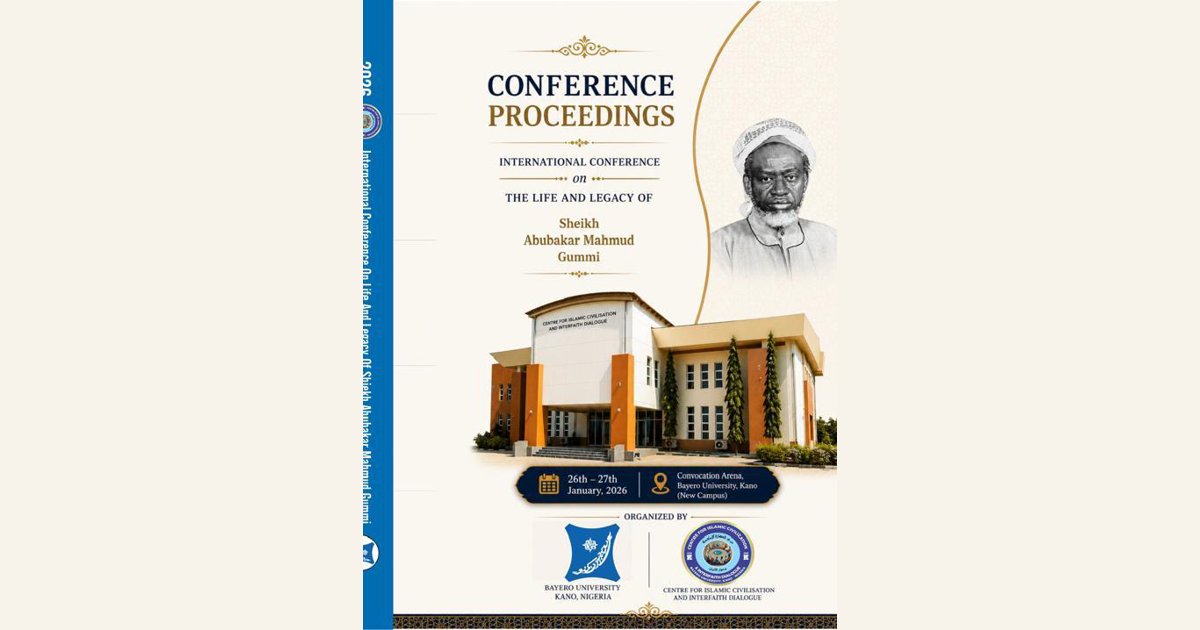
The history of Islam in Northern Nigeria cannot be adequately understood without reference to the life and legacy of Shaykh Abu Bakr Mahmud Gumi. A scholar, jurist, teacher, reformer and Grand Kadi, Gumi played a pivotal role in shaping the intellectual and religious landscape of the region during the colonial and postcolonial periods. His da‘wah transcended ethnic, sectarian and political boundaries, focusing on moral purification, educational enlightenment and the reform of Muslim practices in strict accordance with the Glorious Qur’an and the Sunnah.The Glorious Qur’anic foundation of his approach is encapsulated in the Divine injunction. The Almighty Allah says:
ﭽ ﮦ ﮧ ﮨ ﮩ ﮪ ﮫ ﮬ ﮭ ﮮ ﮯ ﮰ ﮱ ﯓ ﯔ ﯕ ﯖ ﯗ
ﯘ ﯙ ﯚ ﯛ ﯜ ﯝ ﯞ ﯟ ﯠ ﭼ :النحل ٥٢١
Invite (mankind, O Muhammad SAW) to the Way of your Lord (i.e. Islâm) with wisdom (i.e. with the Divine Inspiration and the Qur'ân) and fair preaching, and argue with them in a way that is better. Truly, your Lord knows best who has gone astray from His Path, and He is the Best Aware of those who are guided. (An-Nahl: 16:125) Shaykh Gumi’s life and scholarship embodied this principle and combined deep learning with practical wisdom, communicating Islam effectively to both the educated elite and the wider populace. His da‘wah was transformative rather than rhetorical, influencing education, governance and public morality.This paper examines Gumi’s biography, moral personality and da‘wah methodology and evaluates his relationship with later reform movements, particularly the Jama‘atuIzalatilBid‘ahwaIqamatis Sunnah (Izalah). It further reflects on the enduring lessons his balanced, evidence-based and reform-oriented model offers contemporary Muslim scholars in Northern Nigeria.
1.1 Biography and Educational Background (1924–1992)
Shaykh Abubakar Mahmud Gumi was born on 7 November 1924 in Gumi, then part of Sokoto Province (now Zamfara State), into a family renowned for Islamic scholarship. His father, Mallam Mahmud, was an accomplished scholar, who initiated him into Qur’anic memorization and the study of Arabic grammar (naḥw) and jurisprudence (fiqh). From an early age, Gumi distinguished himself through intellectual curiosity and discipline. He attended Sokoto Middle School in 1942, graduating with distinction and later proceeded to Teachers’ Training College, Katsina. His advanced Islamic education continued at the School for Arabic Studies (SAS), Kano, under eminent scholars, such as Shaykh ‘Abd al-Raḥmān al-Maghribī. In the 1950s, he furthered his studies at the Bakht al-Rida Institute of Education in Sudan, where he received advanced training in Arabic, Qur’anic exegesis (tafsīr) and Islamic Law.
After his return to Nigeria, Gumi joined the Northern Nigerian Judicial Service as a qāḍī. He later rose to become the Grand Khadi of the Northern Region and subsequently the Grand Kadi of the Federal Republic of Nigeria. His scholarly stature gained international recognition when he was awarded the King Faisal International Prize for Service to Islam the first African recipient of the honor.331Gumi was also a founding spiritual leader of the Izalah movement in 1978, which sought to purify Islamic practices and restore adherence to the Glorious Qur’an and the Sunnah. His major works include Reviving Islam in Modern Nigeria (1989) and Where I Stand (1992), which articulate his reformist vision and theological positions.
1.1.2Moral Personality and Ideal Character
Shaykh Gumi’s moral personality was anchored in the Islamic virtues of sincerity (ikhlāṣ), humility (tawāḍu‘), justice (‘adl) and truthfulness (ṣidq). His life reflected the Glorious Qur’anic ethic of justice and benevolence. The Almighty Allah says:
ﭽﭺ ﭻ ﭼ ﭽ ﭾ ﭿ ﮀ ﮁ ﮂ ﮃ ﮄ ﮅ ﮆ
ﮇﮈ ﮉ ﮊ ﮋ ﮌ ﭼ :النحل ٠٩
Verily, Allâh enjoins Al-Adl (i.e. justice and worshipping none but Allâh Alone - Islâmic Monotheism) and Al-Ihsân [i.e. to be patient in performing your duties to Allâh, totally for Allâh's sake and in accordance with the Sunnah (legal ways) of the Prophet SAW in a perfect manner], and giving (help) to kith and kin (i.e. all that Allâh has ordered you to give them e.g., wealth, visiting, looking after them, or any other kind of help, etc.): and forbids Al-Fahshâ' (i.e all evil deeds, e.g. illegal sexual acts, disobedience of parents, polytheism, to tell lies, to give false witness, to kill a life without right, etc.), and Al-Munkar (i.e all that is prohibited by Islâmic law: polytheism of every kind, disbelief and every kind of evil deeds, etc.), and Al-Baghy (i.e. all kinds of oppression), He admonishes you, that you may take heed.(Surah: Al -Nahal: 16:90). As a judge and scholar, he was widely regarded as principled, disciplined and incorruptible. Scholars, such as John Paden and Roman Loimeier described him as morally upright and intellectually rigorous.Gumi lived modestly, avoided showiness and maintained strict discipline in worship and scholarship. His sermons were marked by clarity, simplicity and profound ethical reflection. He remained accessible to students, traditional rulers and political leaders alike, exemplifying the Prophetic ideal:
The best among you are those who learn the Qur’an and teach it” (Ṣaḥīḥ al-BukhārīBook 61, Hadith 545).).
Despite his critique of religious innovations, Gumi maintained respectful relations with Sufi leaders, including Shaykh Nasiru Kabara and Shaykh Ibrahim Saleh. His tolerance and scholarly etiquette (adab al-ikhtilāf) ensured that disagreement did not degenerate into hostility, making his moral conduct itself a powerful instrument of da‘wah.
1.1.3 Statement of the Research Problem
331Paden, John N. Religion and Political Culture in Kano. Berkeley: University of California Press, 1973.
Despite extensive literature on Islamic propagation in Nigeria, few studies systematically link the personal virtues and ethical conduct of important du’at like Shaykh Gummi to contemporary trends in da’wah. Understanding this connection is critical as effective propagation relies not only on knowledge but also on exemplary character and ethical behavior. This study seeks to fill that gap by assessing Gummi’s ideal character and evaluating its relevance to modern da’wah challenges. 1.1.4 Research Objectives and Questions i. Examine Shaykh Gumi’s character and behavior as a model for contemporary da’wah. ii. Analyze how his ethical and pedagogical approaches align with modern trends in Islamic propagation. iii. Evaluate the implications of his methods for contemporary and future du’at. 1.1.5 Research questions include: i. What are the defining characteristics of Shaykh Gumi’s ethical and pedagogical conduct? ii. How do these traits influence contemporary da’wah practices in Nigeria? iii. What lessons can be drawn for modern Islamic propagation? 2.0Da‘wah Methodology in Northern Nigeria: The Glorious Qur’anic and Prophetic Foundations
2.1 The Meaning of Da’wah
In the past and the present, numerous published on da’wah and missionary activities in Islam have reshaped the meaning of the concept. Therefore, pertaining to the term “da’wah”, scholars, such as Alfayrouz Abadi, opined that “The term “Da’wah” and ‘du’a’ are nouns and have the same connotation as both derive from the Arabic verb ‘da’a,’ which connotes past tense he called.‘Yad’u’ he is calling (present tense) and call (demand).332 It also means to attract the attention of someone towards Allah.” While Ibn Taymiyyah asserted that: Da’wahis an invitation to have faith in Allah (SWT), believe in what His Messengers had brought and obey their instructions.333
Northern Nigeria covers the areas from across the River Niger to the borders with Niger, Chad and Cameroun Republics and constitutes about sixty percent of the national population. Among its noted socio-political and cultural strengths is the predominance of a mixed population of Muslims, Christians and an insignificant percentage of Animists or traditional worshippers in addition to the existence, side by side, of varying ethnic and tribal groups. Regardless of these socio-cultural and political diversities, Northern Nigeria was in the past united, stable and peaceful as a member of the federation of the Nigerian state.334 It was with this level of unity, commitment and understanding that the people of Northern Nigeria fought gallantly together with other sections of the country to save from disintegration during the civil war of 1967-70. Consequently, the country remained intact to date. However, as in almost all the states in the North, more specifically in the North-west and North east, peace and stability have eluded the
332 Alafyrouz, Abadi, Al-Qamus Al-muhit, Mu’assah al-Halaby Al-Qahirah, (nd), and also see Muhammad bin Abibakr Abdulkadir, Mukhtar Al-sihah Da’irah Al-ma’ajam Beirut Lebanon, 1987. 333Ibn Taymiyya, Ahmad ibn Abdulhaleem, Public Duties in Islam: The Institution of the Hisba. Trans. Muhtar Holland. Leicester: Islamic Foundation, 1982. 334Kwanashie, G. A. The making of the North in Nigeria 1900-1965, Arewa House, Ahmadu Bello University, Zaria, Arewa House Study Series, Ahmadu Bello University Press, Zaria, Nigeria, 2002.
people.335Shaykh Gumi viewed da‘wah as a communal obligation (farḍkifāyah) rooted in knowledge, wisdom (ḥikmah) and good counsel (maw‘izahḥasanah): In line with this Allah says:
ﭽ ﮖ ﮗ ﮘ ﮙ ﮚ ﮛ ﮜ ﮝ ﮞ ﮟ ﮠ ﮡ ﮢ ﮣ ﮤ
ﭼﮥ :آل عمران ٤٠١
Let there arise out of you a group of people inviting to all that is good (Islâm), enjoining Al-Ma'rûf(i.e. Islâmic Monotheism and all that Islâm orders one to do) and forbidding Al-Munkar(polytheism and disbelief and all that Islâm has forbidden). And it is they who are the successful. (Surat Al-Imran:104)
He emphasized gradual reform through teaching and persuasion, following the Prophetic model.
i.
Education and Literacy: The first and ignorance (jahl) was, for Gumi, the primary obstacle to reform. He therefore prioritized education by promoting Arabic and Islamic studies within formal schooling, translating Islamic texts into Hausa and English, and delivering influential radio tafsīr lectures on Radio Kaduna. These programs, especially during Ramadan, reached millions and democratized access to Islamic knowledge.336 ii. Purification and Reform (Iṣlāḥ): Gumi’s reformist project focused on purifying Islamic practice from bid‘ah and superstition while avoiding extremism. His critiques were evidence-based and scholarly, grounded in the principle of preaching with baṣīrah. Almighty Allah says:
ﭽ ﮀ ﮁ ﮂ ﮃ ﮄ ﮅ ﮆ ﮇ ﮈ ﮉ ﮊ ﮋ ﮌ ﮍ ﮎ ﮏ ﮐ ﮑ ﮒ ﮓ
ﭼ :يوسف ٨٠١
Say (O Muhammad SAW): "This is my way; I invite unto Allâh (i.e. to the Oneness of Allâh - Islâmic Monotheism) with sure knowledge, I and whosoever follows me (also must invite others to Allâhi.e to the Oneness of Allâh - Islâmic Monotheism) with sure knowledge. And Glorified and Exalted be Allâh (above all that they associate as partners with Him). And I am not of the Mushrikûn(polytheists, pagans, idolaters and disbelievers in the
335 Yakubu, A. M. (ed.) (et. al.) Crisis and Conflict Management in Nigeria since 1980, Vol. Two, Governance and Conflict Management, Nigerian Defence Academy Book Series No. 1, Baraka Press and Publishers, Kaduna, Nigeria; see also, Habu Muhammed, (ed.) (2012) Nigeria’s Convulsive Federalism: Perspectives on Flash-Points of Conflict in Northern Nigeria, Foludex Press LTD, Ibadan, Nigeria, 2005. 336336 Paden, John N. Religion and Political Culture in Kano. Berkeley: University of California Press, 1973.
Oneness of Allâh; those who worship others along with Allâh or set up rivals or partners to Allâh)." (Surat Yusuf:108) iii. Use of Media and Modern Tools: A pioneer in media da‘wah, Gumi effectively used radio, television, print and public lectures. His multilingual proficiency in Arabic, Hausa and English enabled him to communicate across social strata. iv. Moderation and Inclusiveness: Gumi consistently rejected extremism and sectarianism, advocating unity (waḥdah) and moral accountability.
ﭽ ﭵ ﭶ ﭷ ﭸ ﭹ ﭺ ﭻ ﭼ ﭽ ﭾ ﭿ ﮀ ﮁ ﮂ ﮃ ﮄ ﮅ ﮆ
ﮇ ﮈ ﮉ ﮊ ﮋ ﭼ :الحجرات ٣١
O mankind! We have created you from a male and a female, and made you into nations and tribes, that you may know one another. Verily, the most honourable of you with Allâh is that (believer) who has At-Taqwa [i.e., one of the Muttaqûn (pious Verily, Allâh is All-Knowing, All-Aware. (Hujurat:13)
His da‘wah embodied wasatiyyah (moderation), fostering coexistence in a plural society.
3.0 Continuities and Divergences with Contemporary Izalah ‘Ulama
While contemporary Izalah scholars share Gumi’s commitment to purification, education, and reform, notable differences persist. Gumi’s calm, dialogical style contrasts with the confrontational tone adopted by some later preachers. His theological balance and political nonpartisanship further distinguish his legacy. As Loimeier observes, the divergence lies more in tone than in objectives.337
3.1 Similarities and Differences Between Shaykh Gumi and Present Izalah ‘Ulama 3.1.1 Similarities
There are significant continuities between Gumi’s vision and that of the present Izalah scholars.
i.
Aimed of Purification: Both emphasize purifying Islam from bid‘ah and upholding the Sunnah. ii. Educational Emphasis: Both stress Qur’anic schools, literacy, and modern Islamic education as tools of enlightenment. iii. Public Preaching: Gumi’s model of public tafsīr lectures and open-air preaching was adopted by Izalah clerics such as Shaykh Isma‘ila Idris and Shaykh Muhammad Sani Yahaya Jingir. iv. Political Engagement: Both Gumi and Izalah scholars recognize the role of politics in protecting Islamic values in society. v. Commitment to Islamic Reform: Both Gumi and present Izalah ulama are committed to promoting Islamic reform and advocating for a return to authentic Islamic practices.
337Loimeier, Roman. Islamic Reform and Political Change in Northern Nigeria. Evanston: Northwestern University Press, 1997.
vi.
Critique of Innovations: Both groups critique innovations and deviations from Islamic principles. 3.1.2Differences
Despite their shared reformist orientation, several important differences exist:
i.
Tone and Style:Gumi’s da‘wah style was calm, scholarly, and persuasive, focusing on dialogue. In contrast, some Izalah preachers have adopted confrontational methods that sometimes deepen sectarian divides. ii. Theological Flexibility:Gumi maintained a balanced relationship with Sufi groups despite criticizing their excesses. Contemporary Izalah leaders, however, have often taken a stricter stance, sometimes labeling opponents as misguided (ahl al-bid‘ah). iii. Political Neutrality:While Gumi used his influence to advise political leaders, he avoided partisan politics. Some Izalah figures have been more directly involved in political alliances, which sometimes compromises their religious credibility. iv. Scholarly Depth:Shaykh Gumi’s da‘wah was grounded in classical scholarship and jurisprudence. Some present preachers lack comparable scholarly training, relying more on rhetoric than textual analysis.Roman Loimeier (1997) notes that the difference between Gumi and later Izalah clerics lies in the tone of reform, not the goal of reform. Gumi sought gradual persuasion, while many contemporary movements favor radical confrontation.338 v. Approach to Islamic Reform: While Gumi's approach to Islamic reform was centered on promoting a puritanical and legalistic interpretation of Islam, present Izalah ulama may have different approaches to Islamic reform. vi. Engagement with Modernity: Present Izalah ulama may be more engaged with modernity and contemporary issues, whereas Gumi's focus was more on promoting Islamic principles and values in a traditional context. 4.0 Lessons Derived by Contemporary Scholars from Shaykh Gumi’s Legacy Gumi’s legacy offers enduring lessons: knowledge-based preaching, moral integrity, wisdom in disagreement, unity of the ummah, constructive engagement with modern society and the ethical use of media. His model demonstrates that credibility in da‘wah flows from personal discipline and scholarly depth.Gumi’s reformism represents a non-militant, intellectual continuation of the Sokoto reform tradition. By integrating scholarship, governance and media, he shaped a sustainable model of Islamic revival. His influence on the Izalah movement underscores both his enduring impact and the risks of departing from moderation.The lessons of his moderation, sincerity, and commitment to truth are urgently needed in today’s polarized religious climate. As the Prophet (peace be upon him) said: The scholars are the inheritors of the prophets(Abu Dawud, Hadith 3641).339 Shaykh Gumi fulfilled this prophetic trust with honor, leaving behind a legacy that blends faith, intellect and integrity.
338Loimeier, Roman. Islamic Reform and Political Change in Northern Nigeria. Evanston: Northwestern University Press, 1997. 339Abu Dawud, Hadith 3641.
The life and da‘wah of Shaykh Abubakar Gumi offer timeless lessons for today’s scholars (‘ulama’) in Nigeria and beyond. The lessons derived from his da’wah by present ulama in the field of da'wah in northern Nigeria include:
i.
Knowledge-Based Preaching: Gumi demonstrated that effective da‘wah must be rooted in authentic knowledge. Modern preachers should avoid speculative or sensational preaching and instead rely on sound Qur’anic and Prophetic teachings. ii. Moral Integrity: His humility, sincerity and incorruptibility are moral examples for all preachers. He showed that credibility in da‘wah begins with personal discipline. iii. Wisdom in Approach: Gumi taught that dialogue is more effective than condemnation. He never resorted to hate speech or mockery. As the Prophet said:
Make things easy and do not make them difficult; give glad tidings and do not drive people away. (Ṣaḥīḥ al-Bukhārī, Hadith 69)
iv.
Unity of the Ummah: He worked to bridge divides between Sufi, Salafi, and traditional scholars, emphasizing the shared faith of Islam over sectarianism v. Relevance to Modern Society: His engagement with government, education, and media demonstrates that Islam must address the realities of modern life while remaining faithful to its principles. vi. Importance of Islamic Education: Gumi's emphasis on Islamic education and the importance of promoting Islamic knowledge and values. vii. Critique of Innovations: Gumi's critique of innovations and deviations from Islamic principles and the importance of promoting authentic Islamic practices. viii. Need for Unity among Muslims: Gumi's advocacy for unity among Muslims and the importance of promoting Islamic solidarity. 5.0 His Interaction with Scholars of Different Ideologies Shaykh Abubakar Gumi’s intellectual openness and diplomatic character allowed him to engage fruitfully with scholars of various ideologies. His contemporaries included Sufi scholars like Shaykh Nasiru Kabara (Qadiriyyah) and Shaykh Ibrahim Saleh al-Hussaini (Tijaniyyah). Although they differed in theological emphasis, Gumi maintained respectful dialogue with them, especially on issues of national concern. Shaykh Gumi supposed in ta‘awun ‘ala al-birr wa altaqwa (cooperation in goodness and piety) as commanded in the Glorious Qur’an:
ﯬ ﯭ ﯮ ﯯ ﯰ ﯱ ﯲ ﯳ ﯴ ﯵ ﯶ ﯷ ﯸ ﯹ ﯺ ﯻ ﯼ ﯽ ﯾ ﯿ
ﭼ:المائدة
…Help you one another in AlBirrand AtTaqwa(virtue, righteousness and piety); but do not help one another in sin and transgression. And fear Allâh. Verily, Allâh is Severe in punishment. (Surah Al-Mai’dah:2)
He collaborated with Sufi scholars in campaigns for peace, Islamic education, and interfaith understanding. Even in his criticism of innovation, he distinguished between the act and the person, maintaining adab (scholarly etiquette) in disagreement.He also had intellectual engagement with Christian leaders and Western-educated elites, encouraging peaceful coexistence. His friendship with Sir Ahmadu Bello, the Sardauna of Sokoto, showed his belief that scholars must guide rulers toward justice and moral governance. Gumi once remarked, as recorded in Where I Stand (1992), that a scholar who fears to tell the truth before power is not worthy of his turban.
Thus, Gumi’s interactions exemplify an inclusive da‘wah rooted in conviction, tolerance, and intellectual integrity.Shaykh Abubakar Gumi interacted with other ulama from different ideologies, including Sheikh Sa'id Hayatu: Gumi met Sheikh Sa'id Hayatu, a prominent Islamic scholar and leader of the Mahdiyya movement.Aminu Kano: Gumi interacted with Aminu Kano, a co-founder of the Northern Teachers Association and proprietor of several Muslim schools.Sir Ahmadu Bello: Gumi engaged with Sir Ahmadu Bello, the premier of Northern Nigeria, to promote Islamic values and principles in governance.These interactions complemented Gumi's approach to da'wah in Northern Nigeria and helped to promote Islamic solidarity and unity among Muslims.The life and legacy of Shaykh Abubakar Gumi represent a crucial turning point in the evolution of Islamic thought and reform in postcolonial Northern Nigeria. His approach blended the traditional authority of Islamic scholarship with the strategic use of modern education, governance, and media. This dual approach allowed him to navigate between conservative Islamic institutions and emerging secular political structures without compromising his faith.
5.1.1 Shaykh Gumi’s Reformist Orientation
Gumi’s reformism must be understood within the broader context of Islamic revivalism in the twentieth century. Like the earlier reformist tradition of Shaykh Uthman ibn Fodio in the nineteenth century, Gumi’s da‘wah was driven by the desire to restore orthodoxy and moral discipline in society. However, unlike the jihadist model of the Sokoto Caliphate, Gumi’s reformism was intellectual and moral rather than militant. He operated in a colonial and postcolonial environment where dialogue and persuasion were more effective than confrontation.His model anticipated later Islamic revivalist trends across the Muslim world that focused on education, mass media, and social reform rather than violence or political revolution. In this sense, Gumi was both a continuation and a transformation of the Sokoto legacy.
5.1.2 Influence on the Izalah Movement
Gumi’s teachings directly inspired the formation of the Izalah movement in 1978, which adopted his call for purifying Islamic practices and emphasizing Sunnah. However, while Izalah expanded his reformist mission, it sometimes diverged from his moderation. Gumi’s nuanced balance between orthodoxy and tolerance was replaced by a more polemical approach among some successors.Nevertheless, the Izalah movement remains a testimony to Gumi’s enduring influence. His emphasis on knowledge, discipline, and the avoidance of extremism continues to guide many of its leading clerics today. As Loimeier (1997) observes, “without Gumi, the modern
Islamic reform movement in Northern Nigeria would have lacked both direction and intellectual legitimacy.340
5.1.3 Theological Moderation and Social Responsibility
One of Gumi’s greatest achievements was his ability to demonstrate that da‘wah could be reformist without being divisive. He integrated social responsibility into Islamic preaching, echoing the Qur’anic principle:
ﭽ ﭞ ﭟ ﭠ ﭡ ﭢ ﭣ ﭤ ﭥ ﭦ ﭧ ﭨ ﭩ ﭪ ﭫ
ﭬ ﭭ ﭮ ﭯ ﭰ ﭱ ﭲ ﭳ ﭴ ﭵ ﭶ ﭷ ﭼ آل
:عمران ٠١١ You [true believers in Islâmic Monotheism, and real followers of Prophet Muhammad SAW and his Sunnah (legal ways, etc.)] are the best of peoples ever raised up for mankind; you enjoin Al-Ma'rûf(i.e. Islâmic Monotheism and all that Islâm has ordained) and forbid Al-Munkar(polytheism, disbelief and all that Islâm has forbidden), and you believe in Allâh. And had the people of the Scripture (Jews and Christians) believed, it would have been better for them; among them are some who have faith, but most of them are Al-Fâsiqûn(disobedient to Allâh - and rebellious against Allâh's Command). (Surat Al-Ali-Imran:110) For Gumi, the purpose of da‘wah was not merely to condemn but to reform society through ethical education and public engagement. He criticized corruption, injustice, and moral decay with courage and fairness, advising political leaders without fear. His sermons during the regime of General Murtala Mohammed (1975–1976) and later under President Shehu Shagari (1979– 1983) exemplified his fearless advocacy of truth. Shaykh Gumi’s legacy also underscores the importance of wasatiyyah (moderation) in a religiously diverse society. His intellectual diplomacy prevented sectarian conflicts from escalating, especially in the volatile religious atmosphere of 1980s Northern Nigeria.
5.1.4 Educational Legacy
Education was the cornerstone of Gumi’s da‘wah. His establishment of Islamic schools and promotion of literacy reflected his belief that ignorance breeds deviation. His integration of Arabic and Western curricula paved the way for a new generation of educated Muslims who could engage with both religious and secular knowledge systems. In line with the Almighty Allah says:
ﭽ ﯦ ﯧ ﯨ ﯩ ﯪ ﯫ ﯬ ﯭ ﯮ ﯯ ﯰ ﯱ ﯲ ﯳ ﯴ ﯵ ﯶ ﯷ
ﯸ ﯹ ﯺ ﯻ ﯼ ﯽ ﯾ ﯿ ﰀ ﭼ :الزمر ٩
340Loimeier, Roman. Islamic Reform and Political Change in Northern Nigeria. Evanston: Northwestern University Press, 1997.
Is one who is obedient to Allâh, prostrating himself or standing (in prayer) during the hours of the night, fearing the Hereafter and hoping for the Mercy of his Lord (like one who disbelieves)? Say: "Are those who know equal to those who know not?" It is only men of understanding who will remember (i.e. get a lesson from Allâh's Signs and Verses). (Surat Al-Ali-Imran:110) Through his students many of whom became prominent judges, professors and imams Gumi institutionalized Islamic knowledge in modern Nigerian society.
6.0 Findings
The study found out that Shaykh Gumi’s da‘wah combined theology, education, governance and media engagement. His approach was both intellectual and practical moral leadership and moral integrity and discipline established a new standard for Islamic scholarship in northern Nigeria. Moderation in da ‘wah: non-confrontational method distinguished him from many reformists, making his message more inclusive and sustainable. Educational transformation and his promotion of integrated education bridged the gap between traditional Islamic learning and modern schooling systems. Continuing influence the Izalah movement and numerous contemporary preachers continue to reflect elements of his ideology, even when diverging in tone or method inter-scholarly dialogue his cooperation with scholars of different sects and ideologies showed his deep commitment to unity within diversity.
The research found out that Shaykh Gumi’s da‘wah shared theology, education, governance and media engagement.His moral integrity set a benchmark for Islamic scholarship.His moderate methodology fostered inclusiveness and sustainability.His educational initiatives bridged traditional and modern learning.His inter-scholarly engagement strengthened unity amid diversity.
7.0 Recommendations
Based on the analysis and findings, the following recommendations are made for contemporary Islamic scholars and da ‘wah institutions:
For Future Research
• Comparative studies on other Islamic leaders in Nigeria. • Longitudinal studies on the impact of character-driven da’wah. • Examination of digital da’wah strategies imitating Gumi’s approach. For Government and Policymakers
• Support character education in Islamic schools. • Promote ethical leadership programs for religious educators. • Integrate best practices from Shaykh Gumi into national religious education frameworks. For Individuals (Scholars and Du’at)
• Emulate his humility, integrity and ethical engagement. • Contextualize Islamic teachings for contemporary audiences. • Engage communities actively while fostering trust and inclusivity.
Similarly, adopt a knowledge-based approach, preachers should emulate Gumi’s scholarly rigor, grounding every message in the Glorious Qur’an and the Sunnah. Promote unity and tolerance, modern da‘wah movements should avoid sectarian labeling and encourage cooperation for common good. Reinforce moral discipline: The personal ethics of scholars must mirror the teachings they preach. Gumi’s honesty and humility remain timeless models. Leverage modern media wisely andjust as Gumi used radio effectively, today’s scholars should use social media and digital tools to spread authentic Islamic teachings.Integrate education and da‘wah. Islamic organizations should invest in institutions that blend religious and modern education, ensuring balanced development. Strengthen scholarly dialogue and Islamic councils should revive forums for inter-madhhab and inter-group dialogue, preserving the spirit of mutual respect exemplified by Gumi. Encourage Government collaboration. Faith-based guidance should support moral governance, justice and anti-corruption measures as Gumi practiced during his advisory roles. 8.0 Conclusion Shaykh Abubakar Mahmud Gumi remains a towering figure in Nigerian Islamic history. His life exemplified reform through knowledge, ethics and compassion. In an era of polarization, his moderation and intellectual integrity offer an indispensable blueprint for contemporary da‘wah. As the Prophet (peace be upon him) declared. The scholars are the inheritors of the prophets. Gumi fulfilled this trust with distinction, leaving a legacy that continues to guide Islamic thought and practice in Northern Nigeria.The life and legacy of Shaykh Abubakar Mahmud Gumi remain a monumental chapter in the history of Islamic scholarship and reform in Nigeria. His da‘wah transcended sectarianism, politics and ethnicity, aiming instead at moral purification and educational advancement. By embodying the Qur’anic principle of inviting to righteousness with wisdom, Gumi demonstrated that Islamic reform must be rooted in knowledge, ethics and compassion. His contribution to northern Nigerian Islam through education, judicial service, public preaching and inter-scholarly dialogue continues to shape the region’s religious consciousness.
References
Abubakar Gumi. Wikipedia: The Free Encyclopedia, Wikimedia Foundation, 2024. African Broadcasting Corporation News Nigeria. Remembering Sheikh Abubakar Gumi: 32 Years
Since His Passing. Abc News Nigeria, 2024 Al Hilali Muhammad Taqi-ud-din and Muhammad Muhsin Khan: The Noble Qur’an English
Translation of the Meanings and Commentary. Madinah: King Fahad Complex, 1427 A.H. Al-Bukhari, Muhammad ibn Isma‘il. Al-Jami’usSahih : Translation of the Meaning of Sahih al-
Bukhari Arabic-English. Translated by Muhammad Muhsin Khan. Riyadh: Darussalam, 1997. Brigaglia, Andrea. Islamic Authority and Historical Knowledge in West Africa. Leiden: Brill, 2006. Comparative Islamic Reform Philosophies in Muslim West Africa: A Societal Contextual
Comparison of Shehu Danfodiyo 1754-1817 and Abubakar Gumi 1924-1992 - International Journal of Research and Innovation in Social Science Gumi, Abubakar Mahmud. Reviving Islam in Modern Nigeria. Gaskiya Corporation, 1989. Gumi, Abubakar. Where I Stand. Ibadan: Spectrum Books, 1992. Ibn Khaldun. Muqaddimah. Trans. Franz Rosenthal. Princeton: Princeton University Press, 1967.
Ibn Taymiyya, Ahmad ibn Abdulhaleem, Public Duties in Islam: The Institution of the Hisba.
Trans. Muhtar Holland. Leicester: Islamic Foundation, 1982. International Journal of Research and Innovation in Social Science. Comparative Islamic Reform
Philosophies in Muslim West Africa: A Societal Contextual Comparison of Shehu Danfodiyo (1754–1817) and Abubakar Gumi (1924–1992).” Vol. 5, no. 6, 2021. Islamic Reform in Nigeria: The Contribution of Sheikh Abubakar Mahmud Gumi. PDF, 2020. Kane, Ousmane. Muslim Modernity in Postcolonial Nigeria: A Study of the Society for the Removal of Innovation and Reinstatement of the Sunnah. Leiden: Brill, 2003. Kwanashie, G. A. The making of the North in Nigeria 1900-1965, Arewa House, Ahmadu Bello
University, Zaria, Arewa House Study Series, Ahmadu Bello University Press, Zaria, Nigeria, 2002. Lavers, John Ellis. Islamic Education and Da’wah in Northern Nigeria. Ibadan: Spectrum Books,
2001.
Loimeier, Roman. Islamic Reform and Political Change in Northern Nigeria. Evanston:
Northwestern University Press, 1997. Muslim ibn Hajjaj, al-Jami’us Sahih, Al-Mansoura, Dar al Gadid al-Gadeed, 1428, A.A\2007, C.E. Paden, John N. Religion and Political Culture in Kano. Berkeley: University of California Press, 1973. Smith, Abdullahi. A Little New Light: Selected Historical Writings of Professor Abdullahi Smith.
Zaria: Gaskiya Corporation, 1987.
Sunnah Sak. Sheikh Abubakar Mahmud Gumi: A Legacy of Truth, Islamic Scholarship and Da‘wah
(An Abridged Biography). Sunnah Sak Publications, 2021. Wikipedia contributors. “Abubakar Gumi.” Wikipedia, The Free Encyclopedia, 2025, https://en.wikipedia.org/wiki/Abubakar_Gumi.
Yakubu, A. M. (ed.) (et. al.) Crisis and Conflict Management in Nigeria since 1980, Vol. Two,
Governance and Conflict Management, Nigerian Defence Academy Book Series No. 1, Baraka Press and Publishers, Kaduna, Nigeria; see also, Habu Muhammed, (ed.) (2012) Nigeria’s Convulsive Federalism: Perspectives on Flash-Points of Conflict in Northern Nigeria, Foludex Press LTD, Ibadan, Nigeria, 2005.
Comments