
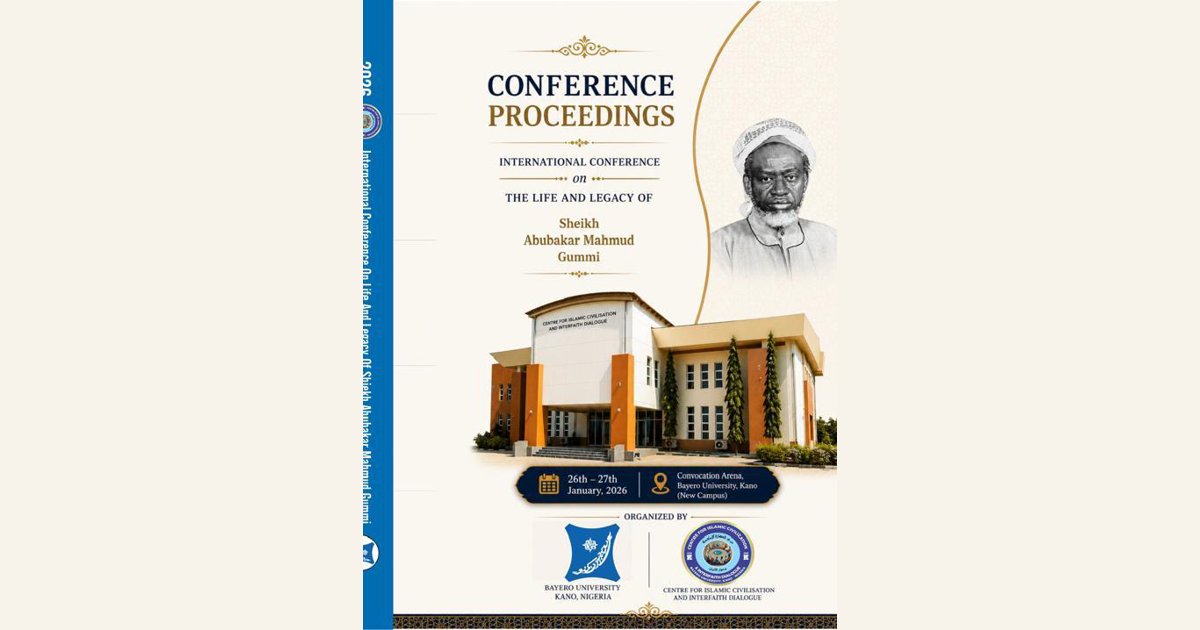
Amid this backdrop, Sheikh Abubakar Mahmud Gumi emerged as a transformative reformer, often regarded as the father of Salafism in Nigeria. His tenure as Grand Qadi and broader activities aimed to purify Shari'a from innovations, aligning it with pristine Islamic principles derived from the Qur'an and Sunnah. Gumi's reforms addressed not only judicial practices but also education, politics, and social governance, advocating a "back to the source" approach influenced by Wahhabi and Salafi thought. This paper examines Gumi's biography, the historical context of Northern Nigeria's judiciary, his specific reforms, fight against bidah, political influences, and legacy, demonstrating how his contributions fostered a more robust and ethical Islamic legal framework. By analyzing primary and secondary sources, including Gumi's own writings and scholarly assessments, the study underscores his enduring relevance to contemporary debates on Shari'a implementation in a multi-religious nation like Nigeria.
The significance of Gumi's work lies in its response to Muslim decline, which he attributed to deviations from authentic Islam. As a scholar who bridged traditional and modern education, Gumi challenged entrenched traditions, promoting unity and ethical leadership to safeguard Islamic governance. His efforts remain critical for understanding the evolution of Islamic jurisprudence in West Africa.
Biography of Sheikh Abubakar Gumi
Sheikh Abubakar Mahmud Gumi was born on November 7, 1924, in Gummi,presently in Zamfara State, into a family renowned for Islamic scholarship, referred to as bait ilm (house of knowledge). His father, Malam Mahmud Na Gumi, an Alkali (judge), initiated his education in Qur'anic memorization and foundational texts of the Maliki school, such as Risalah Abi Zaid al-Qirawani. At the age of nine in 1933, Gumi enrolled in Dogon Daji elementary school, excelling academically and serving as Hakimin Sallah (Religious Prefect), overseeing religious activities. He transferred to Sokoto Middle School in 1936, where he interacted with future leaders like Ahmadu Bello and Shehu Shagari. Further studies included Kano Law School in 1952 for a higher elementary training certificate and Bakht al-Ruda Institute in Sudan (1955–1956) for a Higher Diploma in Education, covering principles of education, Arabic, history, mathematics, English, and drawing. Gumi's career trajectory reflected his dual expertise in Islamic and secular systems. Under British colonial rule, he served as a scribe to the chief judge in Sokoto province, becoming the first Nigerian Pilgrims’ Officer to the Holy Land in 1956. In 1960, he was appointed Deputy Grand Qadi of Northern Nigeria, ascending to Grand Qadi from 1962 to 1967. Post-1967, after the abolition of the Grand Qadi position due to regional restructuring, Gumi focused on teaching, public debates, and organizational leadership. He co-founded Jama'atu Nasril Islam (JNI) with Ahmadu Bello, served as Nigeria's Grand Mufti from 1976, and held advisory roles in institutions like the Islamic University of Madinah, Ahmadu Bello University, and the University of Ibadan. Influenced by scholars like Malik IbnAnas and Muhammad Ibn Abdul Wahab, Gumi adhered to the Maliki school while embracing Salafi principles, rejecting Sufi mysticism.
His literary output was prolific, including RaddulAzhanila Ma'anil Qur'an (a Hausa tafsir), Al-Aqidah al-Sahiha bi Muwafaqat al-Shariah (The Correct Belief in Line with the Law), and translations like TarjamarMa’anin al-Kur’an (The Meanings of the GloriousQur’an). For his service to Islam, Gumi received the King Faisal International Prize in 1987 and the Commander of the Order of the Federal Republic (CFR) from the Nigerian government. He passed away on September 11, 1992, in London, leaving a legacy through his family, students, and the Izala movement founded by his disciple IsmailaIdris.
This blended educational background uniquely positioned Gumi to reform the judicial system by integrating orthodox Islamic principles with practical governance needs.
Historical Context of the Islamic Judicial System in Northern Nigeria
The pre-colonial Islamic judiciary in Northern Nigeria was established during the 19th-century jihad of Usman dan Fodio, creating the Sokoto Caliphate where Alkalis (judges) administered Maliki-based Shari'a in courts handling personal, family, inheritance, and criminal matters. Emirs held executive authority, ensuring Shari'a's enforcement across the region. British colonialism disrupted this system through indirect rule, limiting Shari'a to personal and family law while introducing English common law for criminal cases, thus subordinating traditional authorities and fostering religious syncretism. This led to a decline in religious purity, with bid'ah proliferating through the mixing of Islamic rituals with local customs. Sufi brotherhoods like Tijaniyya and Qadiriyya dominated, promoting mystical practices that reformers like Gumi viewed as deviations from Sunnah.
Post-1960 independence, the Northern Region retained Shari'a courts but grappled with federal secularism. Innovations and backwardness persisted, necessitating reformers to revive authentic jurisprudence. Gumi's era saw increased calls for purification, influenced by global Islamic revivalism.
Gumi's Role as Grand Khadi, Reforms and Contributions
Appointed by Premier Ahmadu Bello as Grand Qadi in 1962, Gumi centralized Shari'a interpretation and oversight in Northern Nigeria's courts. He organized the judiciary impeccably, applying Islamic law in personal and family matters while advising on ethical governance. As Grand Mufti from 1976, he extended his influence nationally, interpreting Shari'ah for broader application. Gumi challenged doctrines like those of the Ahmadiyya movement, deeming them incompatible with orthodox Islam, and critiqued emirs' acceptance of colonial titles. In the 1949 Maru episode, he boycotted prayers over improper tayammum, leading to a colonial inquiry that abolished the practice per the Sultan of Sokoto's directive. This exemplified his commitment to judicial purity, insisting on water-based ablution unless justified.
Gumi's reforms targeted bid'ah in faith and mu'amalat, rejecting all innovations in rituals as major sins while allowing practical adaptations in social dealings. He categorized bid'ah per Ibn Rajab al-Hanbali: "Any form of worship which has no basis in the Shari'ah to warrant its legislation." Gumi warned against innovations, citing hadiths like "Every bid'ah is a sin and a sin leads to Hell" and "Whosoever introduces into matter of ours [Islam], something that does not belong to it, it is to be rejected."
As Pilgrims’ Officer (1975–1978), he enforced Hajj criteria, requiring financial capability (istidaah), maturity, and proper recitation knowledge, reforming oversight and registration processes. His
Hausa Qur'an translation democratized access, benefiting millions in Hausa-speaking regions. Through media debates at Sultan Bello Mosque and publications in Gaskiya tafi kwabo and New Nigeria, Gumi critiqued Sufi mysticism and promoted Salafi revival. He influenced the Izala movement (JIBWIS), combating bid'ah and re-establishing Sunnah across West Africa.
Gumi's educational contributions, including teaching jurisprudence and founding JNI, supported judicial reforms by training scholars in authentic Islam.
Influence on Politics and Governance
Gumi integrated politics with Islam, asserting "Siyasa Tafi Muhimmanchi da Sallah" (politics is more important than prayer) to protect faith. He advocated Muslim unity in elections, supporting candidates like Shehu Shagari and mobilizing women in 1979–1983 polls. His ethical leadership model emphasized justice, accountability, shura (consultation), and protection of necessities like life and religion. This political thought reinforced judicial reforms by urging Shari'a's role in governance, condemning corruption, and fostering accountable systems.
Impact and Legacy
Gumi's reforms accelerated Shari'a acceptance, influencing its 1999–2000 reintroduction in states like Zamfara. His legacy persists in JNI, Izala, and educational initiatives, addressing contemporary issues like corruption. Criticisms include exacerbating Sufi-Salafi divides, but his work promoted scriptural renewal. Conclusion
Sheikh Gumi's profound reforms purified and strengthened Northern Nigeria's Islamic judicial system, rooting it in authentic sources while addressing modern challenges. His integrated approach to judiciary, education, and politics ensures his relevance today.
References
1. Jangebe, H. A. (2015). Islamic Reform in Nigeria: The Contribution of Sheikh Abubakar Mahmud Gumi. International Journal of Humanities and Social Science, 5(9).
2. Sheikh Abubakar Gumi. Historical Nigeria.
3. Sheikh Gumi's life and Islamic career.
4. Islamic Ethical Leadership: Sheikh Abubakar Gumi's Perspective on Governance. SSR Publisher.
5. Islamic Reform in Nigeria: The Contribution of Sheikh Abubakar Mahmud Gumi. Academia.edu.
6. An Assessment of Sheikh Abubakar Mahmud Gumi's Thought on Politics. ISRG Publishers.
7. Abubakar Gumi. KundinMasanawa.
8. Development of Islamic Education in Northern Nigeria: The Contribution of Sheikh Abubakar Mahmud Gumi. IUT Journal of Advanced Research and Development.
9. Shaikh Abu Bakr Mahmoud Gumi. King Faisal Prize.
10. Detailed extraction from ResearchGate publication.
11. Sheikh Abubakar Gumi. Historical Nigeria.
Comments